


Visa Crisis Delays South Africa’s World Cup Departure
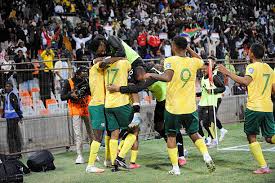
South Africa’s senior national football team, Bafana Bafana, has been forced to postpone its departure for the 2026 FIFA World Cup after a sweeping visa crisis stranded several players and officials in Johannesburg, throwing the country’s first World Cup campaign in 16 years into early disarray.
The squad had been scheduled to depart for a pre-tournament training camp in Mexico City on Sunday, but the trip collapsed at the eleventh hour after multiple members of the travelling delegation were unable to secure entry documents in time. According to local media reports, visas for at least 20 members of the contingent were still being processed at the United States Embassy in Johannesburg as of the planned departure date, an unusual bottleneck given that South African passport holders typically require US transit or entry clearance for connecting routes and pre tournament logistics tied to the joint World Cup hosting arrangement.
In a statement issued on Sunday, the South African Football Association (SAFA) confirmed it was grappling with significant difficulties obtaining travel documentation for several players and members of the technical staff. The association said it was racing against the clock to ensure the squad arrives in Mexico City without further delay.
“We are working around the clock to make sure the team travels to Mexico City at the earliest opportunity,” SAFA said.
The football governing body further disclosed that an emergency meeting was scheduled for later on Sunday to chart a path through the impasse and salvage the team’s preparation timeline.
The development drew a sharp public reaction from South Africa’s Sports Minister, Gayton McKenzie, who described the situation as both embarrassing and unjust to the players and technical crew. Writing on X, McKenzie said he had formally demanded explanations from those responsible and insisted that accountability must follow.
The 2026 FIFA World Cup, the first to be jointly hosted by three nations, the United States, Canada and Mexico, kicks off on June 11. It is also the first edition to feature an expanded 48 team format, a structural shift from the 32 team competition that defined the tournament for nearly three decades. The expansion increases the total number of matches to 104 and stretches the competition over 39 days, placing unprecedented logistical demands on participating federations.
Bafana Bafana, drawn in Group A alongside co hosts Mexico, the Czech Republic and South Korea, is set to open its campaign against Mexico on June 11. The fixture marks the country’s return to football’s biggest stage for the first time since the 2010 edition it hosted on home soil, ending a 16 year absence that has weighed heavily on a generation of South African football followers.
The squad played out a goalless draw against Nicaragua in a warm up fixture in Soweto on Friday and is scheduled to face Jamaica in another preparatory match on June 5, a game now complicated by the unresolved travel logjam.
The visa crisis arrives amid broader scrutiny of US entry procedures in the build up to the tournament, with several federations reportedly navigating similar administrative hurdles tied to the host nation’s documentation requirements. For SAFA, however, the immediate task is salvaging a preparation programme that was meticulously planned around acclimatisation in Mexico, a country whose altitude profile is widely regarded as critical to performance in the opening fixture.