
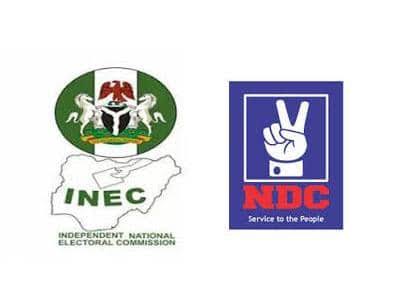
A Federal High Court in Abuja has ordered the Independent National Electoral Commission to upload and use the modified digital logo of the Nigeria Democratic Congress, resolving a dispute that had left the new opposition party campaigning with two competing symbols months before the 2027 general elections.
The judgment was delivered on September 8, 2026 by Justice J. O. Abdulmalik in Suit No. FHC/ABJ/CS/1814/2026, which the party filed against the commission on August 11, 2026, according to reports published on Wednesday. The ruling became public knowledge on September 9 when the party’s national leader, Senator Henry Seriake Dickson, announced it in a statement issued on his X account and circulated to newsrooms.
What the court decided matters less for its legal novelty than for its timing. With campaign materials already in circulation and a national ballot being prepared, the symbol that appears beside a party’s name on that ballot is not a design question. It is the single most important form of identification for millions of voters, particularly in constituencies where literacy levels make the logo, rather than the party name, the practical unit of choice.
According to Dickson, a former governor of Bayelsa State who now represents Bayelsa West in the Senate, the party approved a modified version of its logo at its first National Executive Council meeting and forwarded it to INEC, which uploaded it. He said the commission later removed the modified version without communicating any reason to the party and reverted to the logo with which the association was originally registered. After what he described as sufficient time given to the commission to correct the matter, the party went to court.
The account of INEC’s conduct comes from the party, and INEC had not issued a public response to the judgment at the time of reporting. The commission’s position on the substance of the case has not been independently stated.
Reports of the judgment describe the modified design as a digitally rendered two finger victory sign on a blue background with the acronym NDC lettered in red, as approved at the party’s first NEC meeting. Dickson said both the original and the modified versions carry the victory sign, and that the difference lies in the digital rendering rather than the core symbol. He described the modified logo as the version approved in the party’s constitution.
The order, as reported, directs the commission to forthwith upload and utilise the modified digital logo. Dickson said the ruling upheld the party’s position and ensured that due process was respected, and he urged candidates and members to begin using the approved logo immediately on banners, posters and other publicity materials. He acknowledged that some candidates may already have printed materials bearing the earlier version and asked them to switch, while telling members there was no cause for alarm.
“We are democratic fighters. We do not run away from battles,” he said, describing the logo dispute as part of what he called administrative machinations the party had faced.
That phrase carries the weight of a longer record. The NDC’s existence has been shaped by litigation from the beginning. INEC announced its registration in February 2026, and the party received its certificate of registration that month, but the commission did so in compliance with a court order rather than through the standard verification exercise. At INEC’s quarterly consultative meeting with party leaders in February, commission chairman Professor Joash Amupitan said the Democratic Leadership Alliance was the only association registered from among 171 applicants, and that the NDC was registered in obedience to a court judgment. Party officials trace the application back to 2017, when recognition was refused over concerns that the proposed logo resembled that of another party. The 2026 registration followed the resolution of that long running case.
The party’s profile changed sharply in May 2026, when Peter Obi and Rabiu Kwankwaso left the African Democratic Congress and adopted the NDC as their platform. Obi is the party’s presidential candidate for 2027. That realignment turned a newly registered party into a central vehicle of opposition politics, and it also drew closer scrutiny. Dr Umar Ardo, a promoter of a rival association, publicly questioned the registration process and threatened court action, arguing that the NDC had not appeared among the associations cleared during the commission’s earlier verification stages. Dickson responded by releasing documentation including a 2017 INEC approval letter.
A further complication arrived in June, when the Federal High Court in Lokoja set aside its own earlier judgment that had compelled INEC to register the party, in proceedings connected to a challenge over the logo brought by an association known as the Peace Movement Party. The party maintained that the Lokoja ruling did not amount to deregistration, said it would appeal, and continued to insist its candidates would appear on the ballot. Dickson later confirmed that the party had been granted access to the INEC portal to upload candidate names, which it did within the commission’s timetable.
More recently, the relationship has strained again over candidate lists. In late August, the NDC rejected 10 names published by INEC as its candidates for Anambra State House of Assembly constituencies, alleging that they were inserted without authorisation. INEC rejected the allegation, saying candidate nomination is by law the exclusive responsibility of parties, that portal access codes were issued in person to national chairmen, and that it holds a Form EC9E bearing the disputed names signed by the party’s national chairman and national secretary. The party rejected that explanation and asked the commission to account for the source of the list. That dispute remains unresolved.
Read against that sequence, the logo judgment is one item in a running series of contests between a party built through the courts and the body that administers elections. Dickson said the NDC would issue a formal statement and begin publicity to guide candidates and educate voters on the approved symbol.
For voters, the practical question is narrow and consequential. It is which mark will appear on the ballot paper in 2027, and whether the identification exercise now beginning leaves enough time for recognition to settle before polling day.