

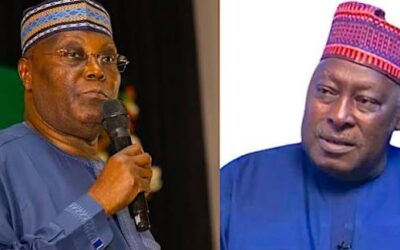
INEC Intervenes in PDP Crisis, Summons Warring Factions to Abuja Meeting.
In a decisive move to address the escalating leadership crisis within the Peoples Democratic Party (PDP), the Independent National Electoral Commission (INEC) has summoned the party’s two rival factions to a critical reconciliation meeting at its national headquarters in Abuja. The intervention by the nation’s electoral umpire underscores the severity of the internal conflict, which threatens the stability and operational capacity of the major opposition party.
The summons were issued to the camps led by acting National Chairman, Alhaji Ibrahim Turaki, and the Chairman of the National Caretaker Committee, Dr. Mohammed Ibrahim. Both groups have been locked in a protracted struggle for control of the party’s structure and its national secretariat, a dispute that has paralyzed key administrative functions and sparked concerns over the party’s preparedness for future electoral contests.
The meeting, scheduled for this week, is viewed as a high-stakes attempt to mediate the dispute and prevent a full-blown factional split that could irreparably damage the party. INEC, vested with the constitutional mandate to monitor and regulate the internal affairs of political parties, is stepping in to broker a resolution and ensure the PDP adheres to its own constitution and the provisions of the Electoral Act.
Alhaji Turaki arrived at the commission’s headquarters accompanied by key members of his claimed National Working Committee (NWC), several secretariat staff, and prominent party stalwarts, including former Governor Babangida Aliyu of Niger State. Their presence signaled a show of strength and a claim to legitimacy.
In a parallel show of force, Dr. Mohammed’s delegation included principal members of his National Caretaker Committee, most notably the committee’s Secretary, Senator Sam Anyanwu. The attendance of such high-profile figures from both sides highlights the meeting’s significance as a potential turning point in the crisis.
Political analysts suggest that INEC’s primary objective is to forge a path toward a unified, legally recognized leadership ahead of the upcoming electoral cycle. The commission is expected to press for a resolution grounded in the party’s extant constitution and previous court rulings pertaining to the crisis. Failure to reach a consensus could lead to INEC recognizing one faction over the other or, in a worst-case scenario, declaring the party’s national executive offices vacant, which would trigger a fresh national convention.
The outcome of this intervention is being closely monitored by stakeholders across the political landscape, as it will have significant implications not only for the PDP’s future but also for the health of Nigeria’s multi-party democracy and the balance of opposition politics.