

Nigeria Sovereign Investment Authority Crosses $3 Billion Asset Milestone.
The Nigeria Sovereign Investment Authority (NSIA) has surpassed the $3 billion mark in total assets, signaling a maturation from its foundational mandate as a stabilization fund into a sophisticated architect of national economic systems. Established over a decade ago by an Act of Parliament to manage Nigeria’s sovereign wealth, the Authority has evolved into a pivotal institution blending financial discipline with strategic interventions designed to dismantle structural barriers to growth and opportunity.
This transformation was underscored in 2025 as NSIA achieved a perfect 100% rating on the Global SWF Governance, Sustainability & Resilience Index and maintained its elite 9/10 score on the Linaburg-Maduell Transparency Index. These accolades reinforce its standing among the world’s most accountable and well-governed sovereign investors.
Financial Resilience and Growth.
The Authority’s financial performance in 2025 has been definitive. By mid-year, net assets reached $3.10 billion, crossing the $3 billion threshold for the first time—a significant leap from the $1 billion base at inception. This represents a resilient Compound Annual Growth Rate (CAGR) of 9.9% across multiple economic cycles. The growth was propelled by government contributions and retained earnings, with Core Total Comprehensive Income rising 6% year-on-year to ₦202.10 billion in the first half of the year.
Catalyzing Innovation and Technology.
Under the leadership of Managing Director & CEO Aminu Umar-Sadiq, NSIA is strategically pivoting to fuel Nigeria’s innovation ecosystem. A landmark initiative is the $28 million Impact Innovation Fund, established in partnership with the Japan International Cooperation Agency (JICA). This fund blends concessional financing with NSIA capital to provide critical early-stage funding for tech startups addressing social challenges, aiming to validate products and drive commercial scale.
This effort amplifies the success of the NSIA Prize for Innovation (NPI), which in its third edition drew over 5,000 applications and awarded more than $250,000 in grants. The NPI has become a vital gateway for entrepreneurs, providing not only capital but also technical mentorship and exposure, with many alumni successfully raising subsequent investment rounds.
Transforming Healthcare Infrastructure and Capacity.
In healthcare, NSIA’s subsidiary, MedServe, was appointed by the Federal Ministry of Health as Project Manager for upgrading oncology and nuclear medicine facilities across six tertiary hospitals. Building on a proven track record that includes operating an advanced oncology center and two diagnostic facilities, MedServe commissioned three upgraded centers in 2025 at the University of Benin Teaching Hospital, the University of Nigeria Teaching Hospital, and the Federal Teaching Hospital Katsina. These centers, now calibrated and initiating patient treatment, are set to serve thousands annually, dramatically expanding access to modern cancer care.
Recognizing that infrastructure alone is insufficient, NSIA concurrently launched a $2 million oncology training programme, aiming to qualify 500 clinicians. To date, 186 professionals have completed intensive training in specialized fields, logging over 10,000 training hours.
Driving Sustainable Energy Solutions.
NSIA is deploying a multi-faceted strategy to address Nigeria’s energy deficit. Through its Renewable Investment Platform for Limitless Energy (RIPLE), the Authority is investing across the renewable value chain, leveraging successes like the 10MW Kano Solar project—the nation’s largest grid-connected solar plant. Complementing this is the Distributed Renewable Energy (DRE) Fund, launched in partnership with global entities like Africa50 and the International Solar Alliance, to unlock private capital for off-grid and mini-grid projects in underserved communities.
Strengthening Agriculture and Housing.
The Authority’s management of the Presidential Fertilizer Initiative (PFI) continues to yield profound structural impact. From just four operational blending plants in 2017, the initiative has revitalized the industry, supporting over 80 active plants, creating more than 100,000 jobs, and producing approximately 130 million bags of fertilizer. In 2025, NSIA worked with the Ministry of Finance Incorporated to ensure the program’s legacy is preserved under a new governance framework.
In housing, NSIA’s support for the Renewed Hope Cities and Estates Initiative in Kano has resulted in a project that is 75% complete and 8% ahead of schedule, demonstrating efficient execution in large-scale affordable housing development.
Building Financial Ecosystems and Market Depth.
Beyond direct project investment, NSIA excels at creating financial architectures that address systemic gaps. In 2025, it was instrumental in capitalizing the ₦100 billion National Credit Guarantee Company (NCGC) to expand credit access for households and MSMEs. This builds on previous successes like co-developing InfraCredit, which has mobilized over ₦300 billion from domestic markets for infrastructure.
A pioneering 2025 achievement was the launch of the Green Guarantee Company (GGC)—the world’s first climate-focused guarantor—in partnership with the Green Climate Fund, UK’s FCDO, and Norfund.
Continental Leadership and Strategic Outlook.
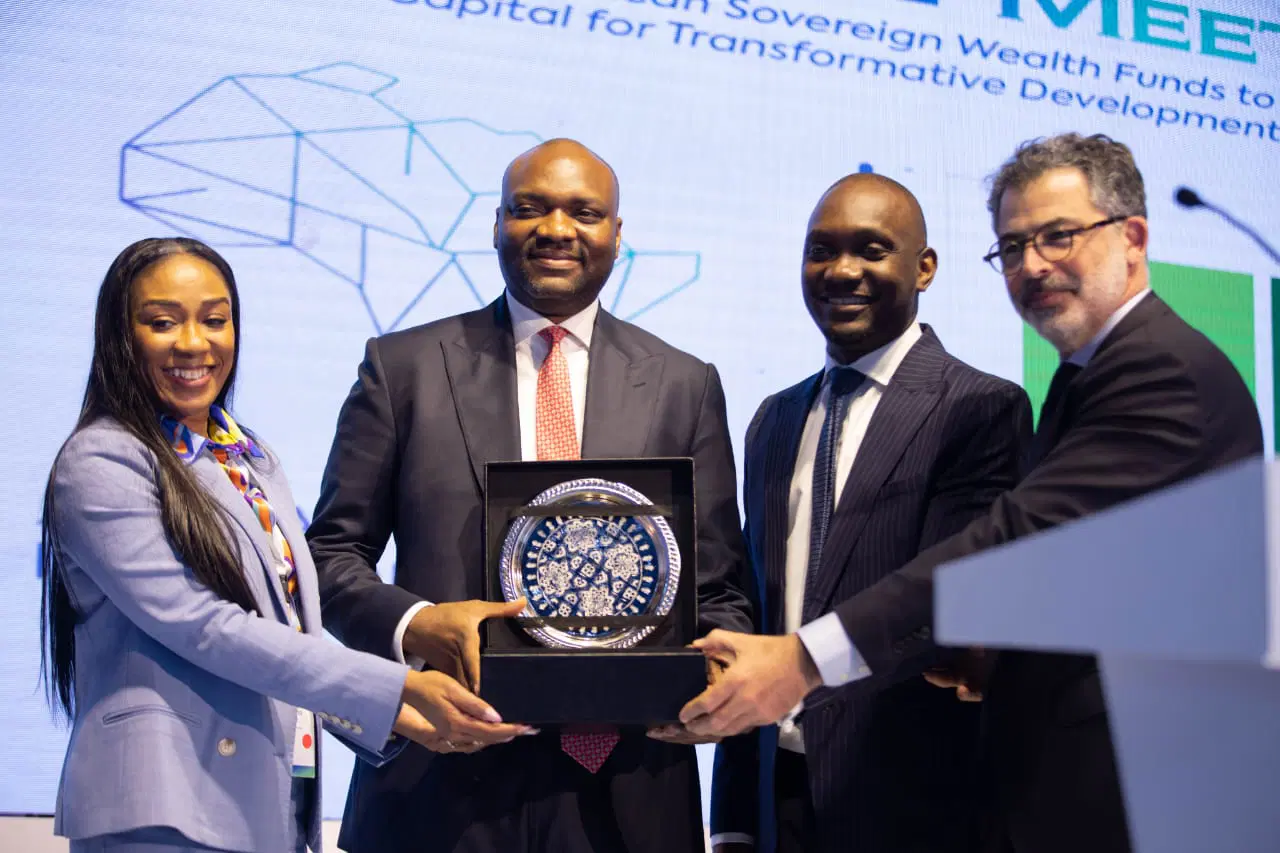
NSIA further cemented its thought leadership by hosting the fourth Africa Sovereign Investors Forum (ASIF 2025), which launched the ASIF Investment Platform. Co-stewarded with Morocco’s Ithmar Capital, this vehicle is designed to mobilize pan-African capital for transformative investments in infrastructure, energy, and agriculture.
Cumulatively, NSIA’s initiatives have created over 245,000 jobs. As 2025 concludes, the Authority anticipates a strong year-end performance, supported by an improving global trade environment and expected monetary policy shifts in key markets.
Positioned with strategic and financial strength, NSIA enters 2026 focused on its core mission: to build a more resilient Nigeria by constructing the systems that enable shared prosperity for current and future generations. Its journey from a $1 billion fund to a $3 billion national development architect underscores a potent model of sovereign investment—where financial returns are inextricably linked to tangible human progress.