
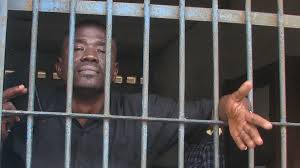
Nigeria’s correctional facilities are holding 81,710 inmates as of the second quarter of 2025, marking a 16.82 per cent increase from the 69,946 recorded in 2017, according to fresh statistics that have spotlighted the growing strain on the country’s prison infrastructure.
The National Bureau of Statistics disclosed the figures in its Nigerian Correctional Service Statistics for 2017 to Q2 2025, released Wednesday in Abuja, painting a picture of expanding inmate populations set against insufficient capacity and a rising backlog of unsentenced detainees.
The report, which aggregates data from correctional centres nationwide, tracks key indicators including total inmate population, facility capacity, numbers of unsentenced inmates, admissions, and offence categories. The findings reveal persistent challenges in the administration of criminal justice in Africa’s most populous nation, where pre-trial detention and institutional overcrowding have long been subjects of concern among rights groups and justice sector stakeholders.
Lagos State recorded the highest inmate population in Q2 2025 with 9,209 inmates held across correctional centres with a combined capacity of just 4,167, producing an overcrowding ratio of 221 per cent. The figure underscores the acute pressure on detention facilities in Nigeria’s commercial capital, where a large population and high crime rates have historically burdened the justice system.
Other states with high inmate populations include Ogun with 4,939 inmates, Kano with 4,667, and Enugu with 3,536. The clustering of large inmate numbers in these states reflects both demographic weight and the prevalence of criminal prosecutions in urbanised and economically active regions.
Read Also: Weak Facilities and Recurrent Jailbreaks in Nigeria
At the other end of the spectrum, Kogi State recorded the lowest inmate population at 530, followed by Bayelsa with 696 and Benue with 777. These figures highlight significant regional disparities in both crime rates and the operational reach of law enforcement and judicial institutions across Nigeria’s 36 states.
A particularly troubling dimension of the data concerns unsentenced inmates—individuals held in custody while awaiting trial. The number of such detainees rose from 47,610 in 2017 to 53,790 in Q2 2025, representing a 12.98 per cent increase over the reference period. The persistence of large numbers of unsentenced inmates points to enduring inefficiencies within Nigeria’s criminal justice system, where lengthy trial processes, court backlogs, and limited legal aid services have left thousands languishing in detention without conviction.
The issue of pre-trial detention has drawn sustained criticism from civil society organisations and international human rights bodies, who argue that prolonged incarceration without trial violates constitutional guarantees of speedy justice and undermines the presumption of innocence. Efforts by the federal and state governments to decongest prisons through special court sittings and legal aid interventions have yielded limited progress, as the pace of new admissions continues to outstrip the rate of case resolution.
Between 2017 and Q2 2025, the combined capacity of Nigeria’s correctional centres increased from 53,752 to 65,035, representing a 20.99 per cent rise. While the expansion in capacity signals government investment in prison infrastructure, the growth has not kept pace with the surge in inmate numbers, leaving facilities nationwide stretched beyond their design limits. The resulting overcrowding has implications for living conditions, health outcomes, and security within correctional centres, where inmates frequently face poor sanitation, inadequate medical care, and heightened risks of communicable diseases.
The NBS data further revealed that by the end of 2024, Nigeria’s correctional facilities had recorded a total of 176,536 inmate admissions across various offence categories. Remand and awaiting trial cases accounted for the highest admissions with 94,614 inmates, while condemned cases—those sentenced to death—had the lowest with 2,883 inmates. The dominance of remand cases in admissions underscores the system’s heavy reliance on custodial detention pending trial, rather than alternative measures such as bail or non-custodial sentencing.
Read Also: From Online Radicalisation to a Prison Cell: Frenchwoman Jailed for Life Inside IS Orbit
In terms of specific offences, stealing recorded the highest number of admissions at 55,722, followed by a category labelled “other offences” at 46,043, and armed robbery at 10,090. The prevalence of property crimes such as stealing reflects broader socio-economic challenges, including poverty, unemployment, and limited economic opportunities, which have historically driven petty and organised theft across Nigeria.
At the lower end of the offence spectrum, bribery and corruption recorded just 27 admissions, followed by cybercrime with 48 and smuggling with 118. The relatively modest figures for corruption-related offences have raised questions among observers about the effectiveness of anti-corruption prosecutions in a country where graft remains a pervasive governance challenge. Critics argue that the low admission numbers may reflect both the difficulty of securing convictions in corruption cases and the limited reach of enforcement agencies in prosecuting high-level offenders.
Nigeria’s correctional system has undergone significant reforms in recent years, most notably the passage of the Nigerian Correctional Service Act in 2019, which replaced the outdated Prisons Act of 1972. The new legislation rebranded the Nigerian Prisons Service as the Nigerian Correctional Service and introduced a legal framework emphasising rehabilitation and reintegration over purely punitive detention. However, implementation of the reform agenda has been hampered by resource constraints, inadequate staffing, and limited investment in rehabilitation programmes.
The historical context of Nigeria’s prison challenges dates back decades, rooted in colonial-era infrastructure that was never designed to accommodate the scale of the country’s contemporary criminal justice needs. Many of the country’s correctional centres were built in the mid-20th century and have since fallen into disrepair, while population growth, urbanisation, and rising crime rates have placed unprecedented demands on the system.
Efforts to address the crisis have included periodic presidential pardons, the establishment of mobile courts to expedite trials, and increased funding for legal aid programmes. State governments, particularly in Lagos, Kano, and Oyo, have also launched initiatives aimed at decongesting facilities and improving conditions for inmates. Despite these interventions, the upward trajectory of the inmate population and the persistence of overcrowding suggest that systemic reforms remain incomplete.