


The “Sapa” Economy: How Nigerians Are Innovating Survival in a Cashless Crisis
Modupe Olalere
In Nigeria today, millions wake up to what they call the “Sapa” economy, a reality where wallets feel empty, bank accounts seem inaccessible, and even daily necessities require ingenuity. “Sapa,” a slang term for financial hardship, has become part of everyday conversation, trending on social media, and even shaping business ideas.
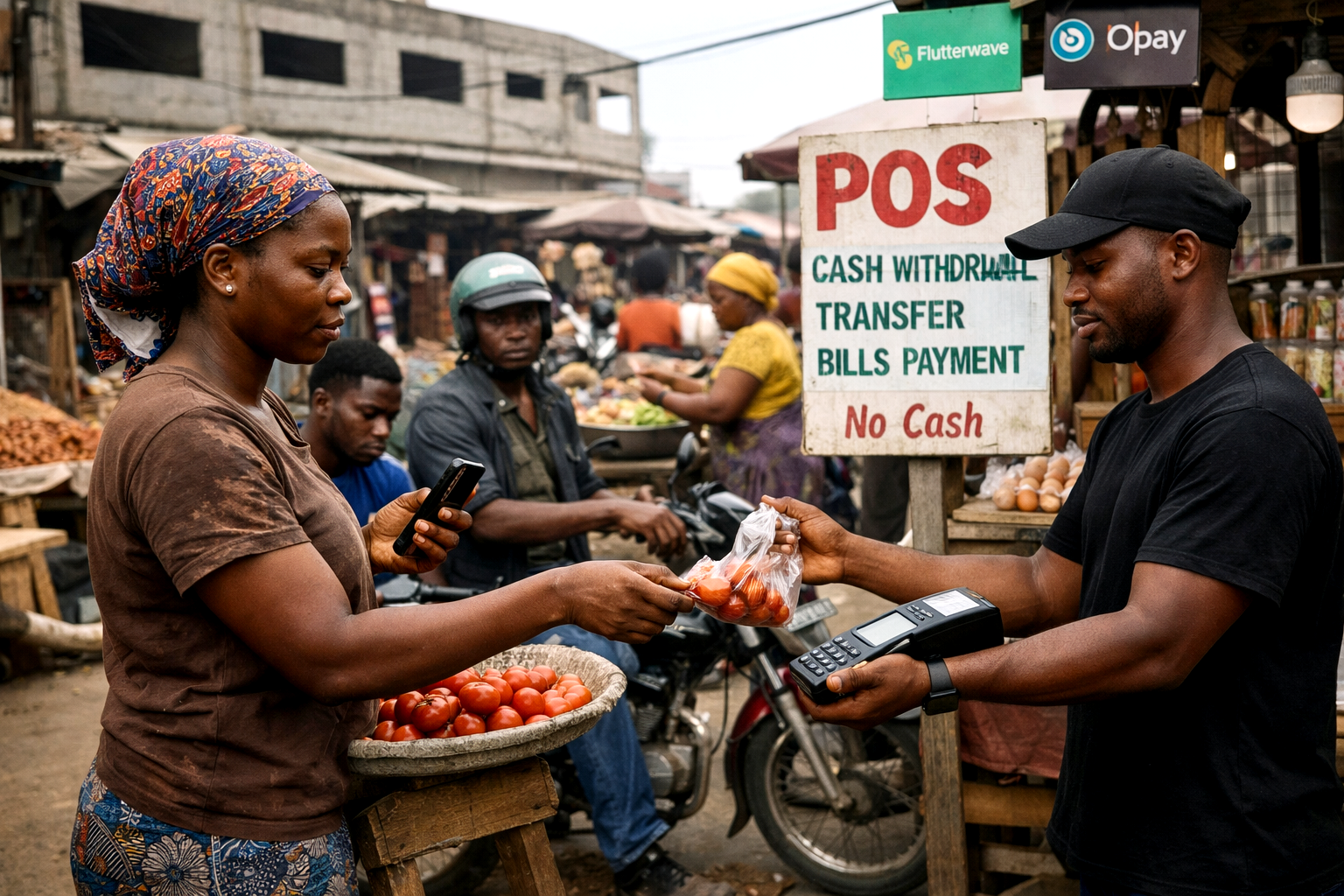
Over 70% now rely on digital transactions, yet cash hunger drives street-level hacks that keep daily trade alive. POS agents handled N18 trillion in 2024, a 69% increase from the previous year, proving that survival thrives in scarcity.
What is remarkable is how Nigerians are responding to this cashless crisis: rather than succumbing to despair, they are creating innovative ways to survive, proving that necessity truly drives invention.
The “Sapa” economy is not just about having no money. It is about finding ways to stretch every naira, to turn limited resources into opportunities, and to develop creative coping mechanisms in a system where cash liquidity is unreliable. With intermittent ATM access, delayed salaries, and rising living costs, citizens are increasingly experimenting with new financial practices, mobile technology, and community support structures. A recent survey by the Nigeria Bureau of Statistics reported that over 60% of Nigerians have experienced at least one cash shortage in the last six months, forcing them to adopt alternative strategies.
The push toward a cashless economy, driven by banks and government initiatives, has accelerated the Sapa economy’s impact. For many, the challenge is balancing digital transactions with daily survival. Markets and small businesses often operate on a mixture of cash, mobile money, and barter systems.
In Lagos, for example, roadside traders have started accepting digital payments through QR codes, even when internet connectivity is poor. “We cannot wait for banks to fix everything. We must find our own ways to make ends meet,” says Funke Olayinka, a local market trader.
Mobile payment platforms such as Flutterwave, Paga, and Opay have also become lifelines. Nigerians are now able to pay for food, transport, and services using phones instead of cash. Still, connectivity issues and network glitches create frequent obstacles, requiring both patience and creativity. Households have developed informal networks, pooling money for essentials, borrowing from friends, or swapping goods. These adaptations illustrate how ordinary citizens transform daily hardship into small-scale innovations.
The Sapa economy has also fueled the rise of side hustles and micro-entrepreneurship. Young Nigerians are leveraging digital skills to sell products online, offer freelance services, or monetize social media followings.
Platforms such as Instagram and TikTok have become avenues for small-scale commerce, while informal savings groups, known locally as “Ajo” or “Esusu,” provide financial support in times of cash shortages. Economist Bayo Oladipo notes, “The Sapa economy has forced Nigerians to be both resourceful and resilient, turning scarcity into creativity.”
Read Also: The Police for the People: An Order to End Private Armies
Beyond technology, the Sapa economy thrives on community-level innovation. In both urban and rural areas, informal support systems have expanded. Neighbors share transportation, food, or labor, creating a safety net that functions without formal banking.
During cash shortages, families develop rotating savings schemes and barter arrangements, exchanging goods such as tomatoes, kerosene, or phone credits in place of money. This communal approach ensures that survival is a collective effort rather than an individual struggle.
Social media has amplified these survival strategies. Hashtags such as #SapaDiaries and #SapaLife trend regularly, showcasing memes, practical tips, and real-life stories about coping with financial scarcity. Influencers share advice ranging from budget-friendly meal prep to low-cost business ideas, creating a digital repository of knowledge.
Blogger Ifeoma Chukwu explains, “The online Sapa community is a space where Nigerians teach each other how to survive, step by step, even when money is tight.” The digital exchange of ideas has become as important as physical networks in navigating the cashless crisis.
Young people, in particular, are leading innovations in the Sapa economy. From offering online tutoring and design services to launching small-scale delivery operations, they are converting constraints into opportunities. Universities and vocational centers have also reported increased interest in entrepreneurship courses as students seek alternatives to traditional employment, which is often irregular or delayed. According to the National Bureau of Statistics, youth unemployment hovers around 35%, which fuels creativity in generating income and navigating financial scarcity.
Interestingly, the Sapa economy has also influenced traditional businesses. Cafes, salons, and retail shops now offer mobile payment discounts, loyalty rewards, and flexible pricing to accommodate customers who cannot always pay in cash. Even transport services, from buses to motorbike taxis, are experimenting with prepaid digital cards and collaborative payment schemes. This hybrid approach—part digital, part community-based—underscores how deeply the cashless crisis has reshaped consumer behavior and business models.
In response to the cashless crisis, some Nigerians have turned to micro-investments and alternative currencies. Platforms such as Cowrywise and PiggyVest allow small daily savings to accumulate over time, while cryptocurrencies are cautiously explored by tech-savvy citizens. These options provide a sense of control and security in an otherwise unpredictable financial environment. Economist Ngozi Eze remarks, “When cash is unreliable, Nigerians innovate in both formal and informal sectors. They are constantly experimenting with tools that stretch resources, preserve value, and maintain dignity.”
Another notable trend is the rise of collaborative consumption. Residents share housing, cooking, and transportation costs, forming mini-economies within neighborhoods. Bulk purchasing of groceries and household items is common, as it reduces individual financial strain. Even cultural practices, such as communal meals and gift-giving cycles, are being adapted to cope with scarcity. The Sapa economy, therefore, is not just a financial crisis; it is a societal shift in how Nigerians perceive money, resources, and mutual aid.
Finally, the Sapa economy highlights resilience as a defining feature of modern Nigerian society. It shows that even in a cashless crisis, citizens refuse to wait passively. They adapt, innovate, and collaborate. From digital hustles to community bartering, the strategies emerging from the Sapa economy reflect a pragmatic response to financial hardship and a refusal to be defeated by circumstances.