
Carney Declares End of Rules-Based Order, Urges Middle Powers to Unite Against Great Power Coercion
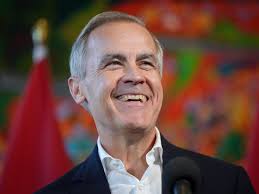
Canada’s Prime Minister Mark Carney has delivered a blunt assessment of the global system, declaring that the rules-based international order has ruptured and calling on middle powers to abandon what he termed “living within the lie” of multilateral institutions that no longer function as advertised.
Speaking at the World Economic Forum’s Annual Meeting 2026 in Davos on Monday, Carney warned that the world has entered an era where great powers weaponise economic integration, using tariffs as leverage, financial infrastructure as coercion, and supply chains as vulnerabilities to be exploited.
“Let me be direct. We are in the midst of a rupture, not a transition,” Carney told the gathering of global leaders and business executives. “Over the past two decades, a series of crises in finance, health, energy and geopolitics have laid bare the risks of extreme global integration. But more recently, great powers have begun using economic integration as weapons.”
The Canadian leader invoked the late Czech dissident and former president Václav Havel’s 1978 essay *The Power of the Powerless*, which examined how ordinary citizens sustained communist regimes by participating in rituals they privately knew to be false. Carney drew a parallel between Havel’s fictional greengrocer who displayed regime slogans to avoid trouble and countries that have continued to invoke the principles of a rules-based order even as its foundations crumble.
“For decades, countries like Canada prospered under what we called the rules-based international order. We joined its institutions, we praised its principles, we benefited from its predictability,” Carney said. “We knew the story of the international rules-based order was partially false—that the strongest would exempt themselves when convenient, that trade rules were enforced asymmetrically. And we knew that international law applied with varying rigour depending on the identity of the accused or the victim.”
He added: “This bargain no longer works.”
Read Also: Nigeria, S’Africa Should Reciprocate Travel Restrictions by UK, Canada – Moghalu
The remarks represent one of the most forthright assessments by a Western leader of the deteriorating global architecture that has underpinned international relations since the end of the Second World War. The multilateral institutions established in the aftermath of that conflict—including the United Nations, the World Trade Organisation, and various security alliances—have come under increasing strain as geopolitical rivalries intensify and major powers pursue unilateral strategies.
Carney acknowledged that American hegemony had historically provided public goods, including open sea lanes, a stable financial system, collective security, and frameworks for resolving disputes. However, he argued that the pretence of mutual benefit through integration has become untenable when integration itself becomes a source of subordination.
“You cannot live within the lie of mutual benefit through integration, when integration becomes the source of your subordination,” he said.
The Prime Minister warned that while the impulse toward strategic autonomy—building self-sufficiency in energy, food, critical minerals, finance, and supply chains—is understandable, a world of fortresses would ultimately be “poorer, more fragile and less sustainable.” He cautioned that as great powers abandon even the pretence of rules and values, the gains from transactionalism will diminish, forcing allies to diversify and hedge against uncertainty.
“Hegemons cannot continually monetise their relationships,” Carney said. “Allies will diversify to hedge against uncertainty. They’ll buy insurance, increase options in order to rebuild sovereignty—sovereignty that was once grounded in rules, but will increasingly be anchored in the ability to withstand pressure.”
Rather than building individual fortresses, Carney urged middle powers to pursue collective investments in resilience, shared standards, and complementary strategies that would be less costly than every nation attempting to secure complete self-sufficiency. He outlined what he termed “value-based realism”—a concept also embraced by Finnish President Alexander Stubb—which combines principled commitment to fundamental values with pragmatic recognition that progress is often incremental and that not every partner will share all values.
Read aLSO: Nigeria’s World Cup Hopes Revived Amid DR Congo Eligibility Probe
“We aim to be both principled and pragmatic—principled in our commitment to fundamental values, sovereignty, territorial integrity, the prohibition of the use of force, except when consistent with the UN Charter, and respect for human rights, and pragmatic and recognising that progress is often incremental, that interests diverge, that not every partner will share all of our values,” he explained.
Carney detailed a series of strategic shifts undertaken by his government since taking office, including tax cuts on incomes, capital gains, and business investment; the removal of all federal barriers to interprovincial trade; and fast-tracking a trillion dollars of investments in energy, artificial intelligence, critical minerals, and new trade corridors. He announced that Canada would double its defence spending by the end of the decade, with investments structured to build domestic industries.
On the international front, the Prime Minister outlined an ambitious diversification strategy that has seen Canada conclude 12 trade and security deals across four continents in six months, including a comprehensive strategic partnership with the European Union and participation in the European defence procurement arrangements known as SAFE. He revealed that Canada has recently concluded strategic partnerships with China and Qatar, and is negotiating free trade pacts with India, the Association of Southeast Asian Nations, Thailand, the Philippines, and Mercosur, the South American trade bloc.
Carney emphasised Canada’s commitment to what he termed “variable geometry”—forming different coalitions for different issues based on common values and interests. He cited Canada’s position as a core member of the coalition supporting Ukraine and one of the largest per capita contributors to its defence and security. He reaffirmed Canada’s unwavering commitment to NATO’s Article 5 mutual defence clause and announced unprecedented investments in over-the-horizon radar, submarines, aircraft, and ground forces to secure the alliance’s northern and western flanks.
In remarks that appeared directed at recent geopolitical tensions, Carney declared that Canada “stands firmly with Greenland and Denmark, and fully supports their unique right to determine Greenland’s future.” He added that Canada “strongly opposes tariffs over Greenland and calls for focused talks to achieve our shared objectives of security and prosperity in the Arctic.”
The statement comes amid heightened attention to Arctic sovereignty and strategic competition in the region, which holds significant reserves of critical minerals and is experiencing increased maritime activity as climate change opens new shipping routes.
Carney also outlined Canada’s role in championing efforts to build a bridge between the Comprehensive and Progressive Agreement for Trans-Pacific Partnership and the European Union, which would create a new trading bloc of 1.5 billion people. He described initiatives to form buyers’ clubs for critical minerals anchored in the Group of Seven nations to diversify away from concentrated supply, and cooperation with like-minded democracies on artificial intelligence governance to ensure countries are not forced to choose “between hegemons and hyper-scalers.”
“This is not naive multilateralism, nor is it relying on their institutions. It’s building coalitions that work—issues by issue, with partners who share enough common ground to act together,” Carney said. “What it’s doing is creating a dense web of connections across trade, investment, culture, on which we can draw for future challenges and opportunities.”
The Prime Minister argued forcefully that middle powers must act together because they lack the market size, military capacity, and leverage that great powers possess to dictate terms. He warned that bilateral negotiations with hegemons inevitably involve negotiating from weakness and accepting what is offered, with countries competing to be the most accommodating.
“This is not sovereignty. It’s the performance of sovereignty while accepting subordination,” Carney said. “In a world of great power rivalry, the countries in between have a choice—compete with each other for favour, or to combine to create a third path with impact.”
He insisted that the power of legitimacy, integrity, and rules would remain strong if middle powers chose to wield them together, but cautioned that this required what Havel called “living the truth”—naming reality honestly, acting consistently by applying the same standards to allies and rivals, and building what they claim to believe in rather than waiting for the old order to be restored.
“When middle powers criticise economic intimidation from one direction, but stay silent when it comes from another, we are keeping the sign in the window,” Carney said, invoking his earlier metaphor.
The Prime Minister argued that reducing vulnerability to retaliation by building strong domestic economies and diversifying internationally is not merely economic prudence but “a material foundation for honest foreign policy.”
“Countries earn the right to principled stands by reducing their vulnerability to retaliation,” he said.
Carney sought to position Canada as uniquely equipped to lead this effort, describing the country as an energy superpower with vast reserves of critical minerals, the most educated population in the world, and pension funds that are among the world’s largest and most sophisticated investors. He emphasised Canada’s fiscal capacity to act decisively and its values as a pluralistic society that works.
“Our public square is loud, diverse and free. Canadians remain committed to sustainability. We are a stable and reliable partner in a world that is anything but—a partner that builds and values relationships for the long term,” Carney said.
He concluded by declaring that Canada was removing “the sign from the window” and accepting that the old order is not returning.
“We know the old order is not coming back. We shouldn’t mourn it. Nostalgia is not a strategy, but we believe that from the fracture, we can build something bigger, better, stronger, more just,” Carney said. “This is the task of the middle powers, the countries that have the most to lose from a world of fortresses and most to gain from genuine cooperation.”
The address represents a significant articulation of Canada’s foreign policy direction under Carney’s government and a challenge to other middle powers to abandon accommodation strategies in favour of collective action. It also signals a fundamental reassessment of the post-war international architecture that has shaped global relations for nearly eight decades.
The World Economic Forum’s Annual Meeting in Davos has historically served as a venue for leaders to articulate visions of global governance and economic cooperation. Carney’s remarks stand in stark contrast to the optimistic rhetoric about globalisation and multilateralism that has often characterised such gatherings, reflecting a broader shift in international politics toward realism, strategic competition, and the reassertion of national sovereignty.
Whether middle powers will heed Carney’s call to unite in building alternative structures of cooperation, or whether the fracturing of the international system will continue along lines of bilateral accommodation with great powers, remains an open question that will shape the contours of global politics in the years ahead.