
“Enough Is Enough”: Venezuela’s Acting President Pushes Back Against US Pressure
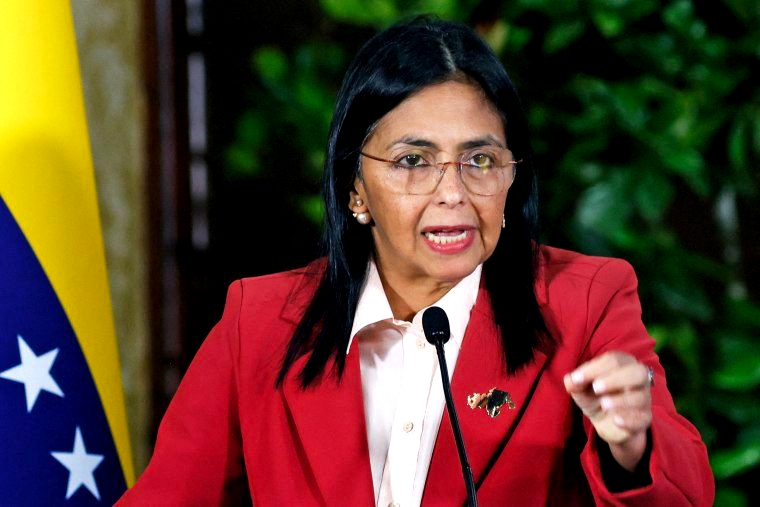
Venezuela’s acting president, Delcy Rodríguez, has openly rebuked Washington, declaring she has had “enough” of what she described as persistent US interference in the country’s internal affairs, nearly a month after assuming interim leadership following the capture of former president Nicolás Maduro.
Speaking on Sunday to oil workers in Puerto La Cruz, Rodríguez struck a defiant tone as she called for Venezuelans to resolve their political differences without external dictates.
“Enough already of Washington’s orders over politicians in Venezuela,” she said during the state-broadcast event. “Let Venezuelan politics resolve our differences and our internal conflicts. This Republic has paid a very high price for confronting extremism and fascism.”
Rodríguez, a former deputy to Maduro, has been navigating a delicate balancing act since being backed by the United States to lead Venezuela on an interim basis—seeking to stabilize the country internally while managing growing demands from Washington, particularly over oil production and foreign policy realignments.
The White House has maintained sustained pressure on Caracas since Maduro and his wife, Cilia Flores, were seized in a January raid and taken to the United States to face criminal charges. Among Washington’s demands are the resumption of oil production, the release of political prisoners, and a strategic pivot away from alliances with China, Russia, Iran, and Cuba.
Despite her sharp rhetoric, Rodríguez stopped short of open confrontation. At a separate public appearance on Monday, she emphasized that Venezuela does not fear the United States but insists on mutual respect.
“We are not afraid. But our relationship must be based on respect—for international law, human dignity, and the history of Venezuela,” she said.
US President Donald Trump, who initially claimed Washington would “run” Venezuela after Maduro’s capture, later endorsed Rodríguez as interim leader and recently described her as a “terrific person,” saying bilateral relations were progressing well.
Read Also: Venezuelan Opposition Leader Machado Hands Trump Nobel Peace Prize Medallion During White House Visit
Seeking Stability Amid Deep Divisions
For over two decades, oil-rich Venezuela has remained locked in tense relations with the United States. Now, Washington appears focused on establishing a stable authority in Caracas to safeguard energy interests, particularly Venezuela’s vast reserves of extra-heavy crude, which are compatible with US refineries.
At home, Rodríguez faces mounting internal fractures—ranging from hardline Maduro loyalists to disillusioned leftists and “Chavistas No-Maduristas,” who accuse the former leadership of abandoning Hugo Chávez’s socialist ideals.
Meanwhile, opposition figures continue to assess their role in a post-Maduro political landscape. Trump has publicly suggested a leadership role for opposition figure María Corina Machado, who recently met him at the White House.
Prisoner Releases Signal Tentative Shift
Amid diplomatic pressure, Venezuela has begun releasing political detainees. On Sunday alone, 104 prisoners were freed, according to rights group Foro Penal, bringing the total number of releases since January 8 to at least 266—one of the largest such gestures in recent years.
As Rodríguez consolidates her grip on power, her message is increasingly clear: cooperation with Washington may continue, but Venezuela, she insists, will not be governed by foreign command.