
Long-standing voting patterns in Kano State place the state firmly within Nigeria’s tradition of opposition politics, a reality that could shape the outcome of the 2027 general elections if current political alignments change.
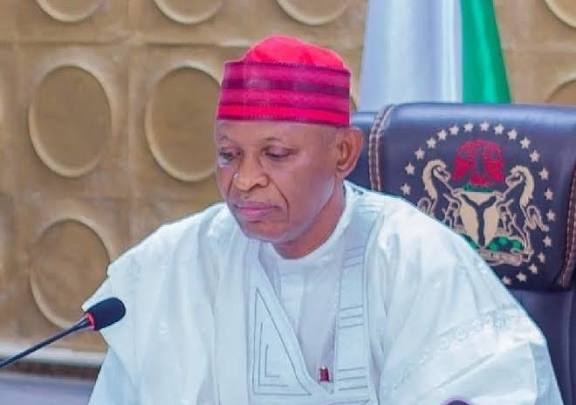
This was the central argument advanced by political analyst and former presidential aide, Dr. Umar Ardo, who has cautioned that Kano State Governor, Abba Kabir Yusuf, risks electoral defeat should he leave the New Nigeria People’s Party (NNPP) for the All Progressives Congress (APC). Ardo’s position was contained in a detailed political analysis circulating publicly amid reports of a possible realignment by the governor.
“The resignation of Gov. Abba Yusuf of Kano State from the NNPP leading towards the 2027 general elections is a big mistake. If he eventually joins the APC,” Ardo stated, describing such a move as evidence of a failure to appreciate Kano’s political history.
Read Also: Opposition Slams Tinubu’s GCON Award To Chagoury, Alleges
According to him, the trajectory of Kano politics since independence reveals a consistent tendency to oppose the party controlling power at the national level. “The reason is simple — it will mean he does not understand the evolutionary history of Kano politics,” he said. “If he had, he would have known that Kano politics has always essentially aligned with opposition politics and never purposefully leaned toward the centre.”
Ardo, who retired from the Nigerian Immigration Service as a Deputy Comptroller of Immigration, traced this pattern back to the First Republic. He recalled that while much of Northern Nigeria aligned with the Northern People’s Congress (NPC) in the early years after independence, Kano voters charted a different course. “In the First Republic, while the North and the nation formed NPC governments, Kano overwhelmingly voted an opposition party, the NEPU,” he said, referring to the Northern Elements Progressive Union.
The same trend, he argued, resurfaced during the Second Republic between 1979 and 1983. While the National Party of Nigeria (NPN) dominated federal power with strong backing across the North, Kano voters again chose an opposition platform. “Likewise, in the Second Republic, while the North and the nation voted NPN, Kano still tilted toward the opposition and voted for the PRP,” Ardo noted, referencing the Peoples Redemption Party.
Read Also: APC Clears Air On Tinubu–Shettima 2027 Ticket Amid Growing Speculation
At the return to democratic rule in 1999, Kano’s electoral behaviour again reflected this historical disposition. Ardo observed that the state rejected the All Nigeria Peoples Party (ANPP), which was widely regarded as conservative, and instead voted for the Peoples Democratic Party (PDP), then perceived as more liberal. “Under the present dispensation as well in 1999, Kano rejected the perceived conservative party, the ANPP, and overwhelmingly voted the perceived liberal PDP,” he said.
However, he added that Kano’s support for the PDP proved short-lived once the party consolidated power at the federal level. “But when it turned out that the PDP formed the national government as well, Kano promptly voted it out after only one term in 2003 and voted in the opposition party, the ANPP,” Ardo explained.
The pattern, according to the analyst, repeated itself in the lead-up to the 2015 general elections. Kano aligned with the newly formed APC when it stood in opposition to the PDP-led federal government. “Then in 2015, along with other opposition parties, Kano joined the bandwagon and fused into the newly formed APC in opposition to the national government of the PDP,” he said.
Ardo described Kano’s eight-year stay within the APC between 2015 and 2023 as occurring “under controversial circumstances,” before the state returned to what he termed its traditional opposition stance. “But in 2023, it moved back to its opposition stance by voting in a fringe opposition party, the NNPP,” he said.
He also referenced the legal disputes that followed the 2023 governorship election, arguing that public sentiment in Kano resisted efforts to realign the state with the ruling party at the centre. “Even when the courts, at the tribunal and Court of Appeal levels, tried to move the state into the ruling national party, the APC, Kano electorate staunchly stood against the move,” Ardo stated.
According to him, the Supreme Court’s eventual decision reinforced this position. “And the Supreme Court, perceiving the danger fraught in the process, reversed the move in its final verdict — hence, keeping Kano politics where it has always been, predominantly in the opposition.”
Based on this historical reading, Ardo warned that a defection by Governor Yusuf to the APC would contradict Kano’s established electoral behaviour. “To this end, therefore, by now moving out of the opposition NNPP party and joining the APC, the ruling party at the centre, Gov. Yusuf and the APC are automatically courting defeat in 2027,” he said.
He further suggested that Kano’s voting history makes it difficult for the same party to simultaneously control both the state and the federal government. “Either the APC wins national government and loses Kano State, or it wins Kano State and loses the national election. But they can not win both, as Kano’s election pattern over the years doesn’t support that,” Ardo argued.
Concluding his analysis, he maintained that the implications of Kano’s political history are clear. “The trajectory is clear; now the choice is left for the APC and Gov. Yusuf to make,” he said.