


China Executes 11 Members Of Myanmar-Based Scam Mafia In Major Crackdown
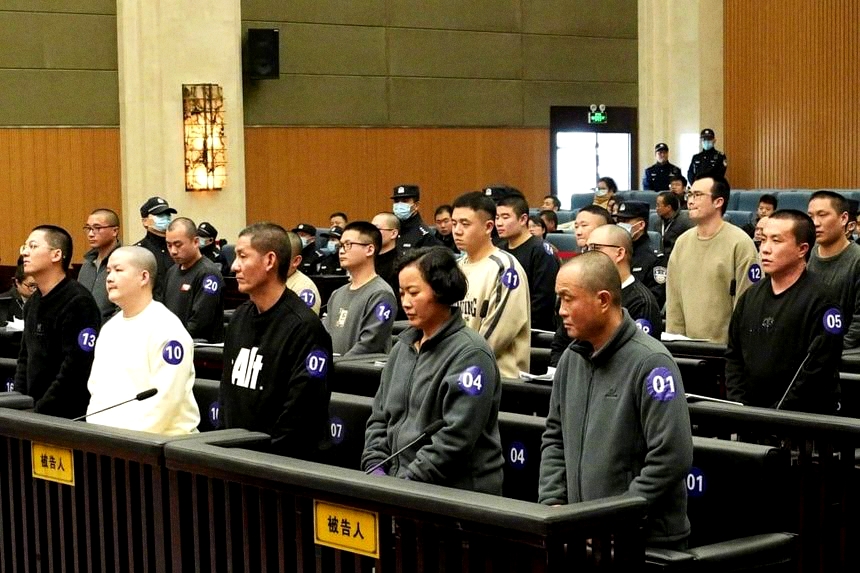
China has executed 11 members of the notorious Ming family criminal syndicate, a powerful scam mafia accused of running brutal fraud compounds in Myanmar and killing workers who attempted to escape, Chinese state media reported on Thursday.
According to Xinhua news agency, the executed individuals were convicted of multiple serious crimes, including homicide, illegal detention, large-scale fraud and human trafficking. The defendants were sentenced to death in September after Chinese courts found they played leading roles in operating mafia-style cyber scam centres in northern Myanmar.
The Ming family was one of the so-called “four families” that dominated criminal activity in Myanmar’s Kokang region along the Chinese border. These syndicates ran hundreds of compounds linked to online fraud, forced prostitution and drug production, often protected by armed militias aligned with Myanmar’s ruling military junta.
Two of the convicted individuals appealed their sentences, prompting a review by China’s Supreme People’s Court. The court upheld the original rulings, clearing the way for the executions, Xinhua reported.
At the centre of the syndicate’s operations was Crouching Tiger Villa, an infamous compound in Kokang. At its peak, Chinese state broadcaster CCTV said the Ming family oversaw as many as 10,000 workers, many of them trafficked and forced to participate in online scams targeting victims across Asia and beyond.
The scam industry flourished in Kokang’s capital, Laukkaing, which became a hub for a multi-billion-dollar cyber fraud network exploiting weak governance, corruption and prolonged conflict in Myanmar’s border regions.
China intensified its crackdown on the scam compounds in 2023 following mounting complaints from families of trafficked workers and growing international scrutiny. In November of that year, Beijing issued arrest warrants for Ming family members, offering rewards of up to $70,000 for information leading to their capture.
The syndicate’s leader, Ming Xuechang—a former member of Myanmar’s regional parliament—later died by suicide while in custody, Chinese media reported at the time.
Those executed included Ming Xuechang’s son, Ming Guoping, a senior figure in the junta-aligned Kokang Border Guard Force, and his granddaughter, Ming Zhenzhen. Xinhua said the condemned individuals were permitted final meetings with close relatives before their executions.
The Ming family was also accused of conspiring with another crime boss, Wu Hongming—who was likewise executed—to deliberately kill, injure and illegally detain scam workers. Prosecutors said their actions resulted in the deaths of at least 14 Chinese citizens.
In one incident in October 2023, four people were killed when gunmen linked to the group opened fire at a scam compound while transferring workers under armed guard after learning of an impending police raid.
According to the United States Institute of Peace, scam networks operating across Southeast Asia steal more than $43 billion annually. In Myanmar, years of civil war, corruption and weak border control have allowed such criminal enterprises to thrive and expand.