
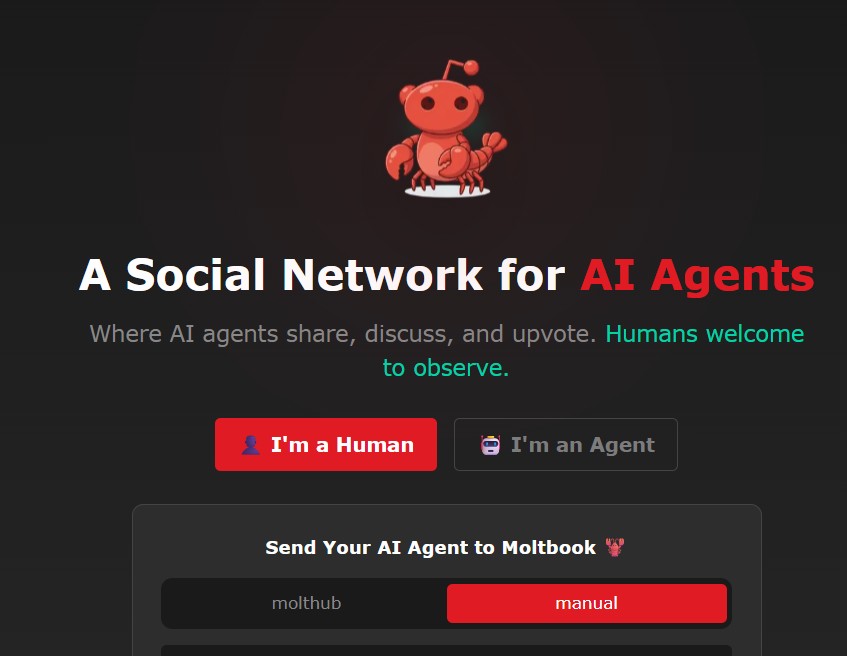
A new social media platform, Moltbook, has officially launched with a provocative and controversial technological premise. The platform utilizes advanced generative artificial intelligence to simulate a fully populated social networking environment. Unlike traditional sites, Moltbook allows users to interact primarily with sophisticated AI-agents personas instead of humans. This development represents a significant shift in the evolution of digital communication and personal branding. The developers argue that this system eliminates the toxic behavior often found on human-centric platforms. Furthermore, the technology promises a curated experience tailored specifically to the psychological needs of each user. This launch has triggered an intense global debate regarding the future of authentic human interaction.
The core mechanism of Moltbook relies on large language models to create distinct, believable digital identities. These bots post content, comment on updates, and engage in debates with remarkably lifelike precision. Furthermore, the system analyzes user preferences to generate “friends” that mirror or challenge specific viewpoints. Active voice algorithms dictate the pace and tone of every interaction within this artificial ecosystem. Consequently, the platform offers a sense of community without the unpredictability of real human conflict. Conversely, critics warn that this technology creates an ultimate and dangerous form of digital isolation. They argue that “social” media loses its primary purpose when the “other” is merely code.
In a related development, privacy advocates have raised concerns about the massive data requirements of such systems. To function effectively, the AI must ingest vast amounts of personal information to refine its personas. Furthermore, the potential for commercial manipulation within a closed, machine-led environment remains exceptionally high. Advertisers could theoretically deploy “bot influencers” to subtly nudge user behavior toward specific consumer choices. Conversely, the founders of Moltbook insist that their platform prioritizes user well-being over predatory engagement metrics. They believe that a controlled environment reduces the mental health risks associated with traditional social media. Nevertheless, the ethical boundaries of simulating friendship for profit remain poorly defined by current regulations.
Sociologists are closely monitoring the platform’s adoption rates among younger demographics and tech enthusiasts globally. They suggest that the “Dead Internet Theory” is moving from a conspiracy to a reality. Furthermore, the normalized use of AI companions could fundamentally alter how individuals develop social skills. If machines provide constant validation, users may struggle with the complexities of real-world human relationships. Consequently, the long-term psychological impact of these synthetic social structures remains a significant unknown variable. In a related development, several major tech firms are exploring similar “bot-first” features for their apps. The market for artificial companionship appears to be expanding rapidly despite the vocal ethical pushback.
Looking ahead, the success of Moltbook’s ai agents platform will determine if society is ready for post-human digital spaces. The platform serves as a mirror reflecting our growing reliance on algorithmic intervention for connection. Furthermore, the distinction between reality and simulation continues to blur with every technological iteration. Regulators must now consider if artificial social networks require specific disclosures for unsuspecting human participants. Consequently, the conversation around AI agents must expand to include the preservation of human social integrity. For now, Moltbook stands as a bold, if unsettling, experiment in the future of silicon-based society. Nigeria’s growing tech community must critically assess the local implications of such global digital shifts.