


Sagamu–Ijebu Ode: Motorists Stranded as Gridlock Paralyzes Movement
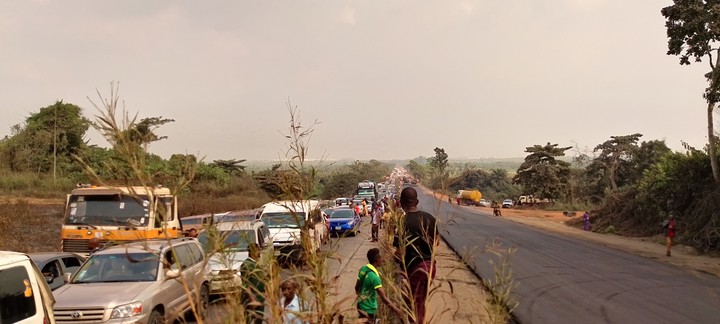
Thousands of motorists and commercial drivers plying the Sagamu–Ijebu Ode Expressway are currently enduring severe daily hardships. This critical arterial road, which links Lagos to the eastern and northern regions, remains trapped in a persistent gridlock. Commuters report losing invaluable man-hours as vehicles move at a snail’s pace through multiple construction-induced diversions. The federal government initiated a comprehensive reconstruction of this sixty-kilometer stretch using durable reinforced concrete pavement technology recently. However, the slow pace of work by the designated contractors has triggered widespread frustration among regular road users. Consequently, many travelers now face the grim choice between grueling delays or taking risky, unofficial alternative routes.
The bottleneck primarily centers around the Sagamu Interchange, where construction debris and partial lane closures restrict traffic flow. Vehicles heading toward Ijebu Ode and beyond must often merge into a single, narrow, and uneven carriageway. Furthermore, the partial blockage of major sections has inadvertently led to a spike in local road accidents. Some impatient drivers frequently resort to “one-way” driving, which significantly escalates the risk of head-on vehicular collisions. Transport unions complain that their daily earnings have plummeted because passengers now avoid the route entirely to save time. Conversely, government officials maintain that the current discomfort is a necessary precursor to a world-class road infrastructure.
The Federal Ministry of Works recently inspected the site to address the growing public outcry over the delays. Officials attributed the sluggish progress to the technical complexities involved in casting high-grade reinforced concrete for heavy-duty use. In a related development, traffic management agencies have deployed additional personnel to maintain order and curb lane indiscipline. They insist that the lack of patience among motorists often worsens the congestion during the peak morning hours. Nevertheless, the motoring public demands a more aggressive construction schedule to restore normalcy to this economic lifeline. The government must balance the pursuit of structural longevity with the immediate need for free-flowing interstate commerce.
Ultimately, the Sagamu–Ijebu Ode corridor serves as a strategic barometer for Nigeria’s broader infrastructure development ambitions under the current administration. Successful completion of this project will undoubtedly reduce long-term maintenance costs and enhance safety for millions of citizens. Yet, the immediate reality for the Lagos commuter remains one of sweat, exhaustion, and profound financial loss. Authorities must ensure that contractors work around the clock to meet the established project delivery deadlines. Only a swift and visible increase in site activity will calm the frayed nerves of the Nigerian traveling public. The Journal Nigeria will continue to monitor this gateway until the final concrete slab is successfully laid.