
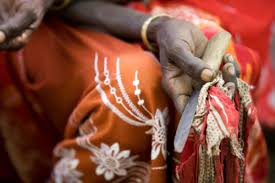
The United Nations Population Fund has warned that no fewer than 4.5 million girls are at risk of being subjected to female genital mutilation in 2026, despite decades of advocacy and legislative efforts to eliminate the practice worldwide.
According to UNFPA, an estimated 230 million girls and women globally have already been subjected to FGM, a procedure that involves altering or injuring the female genitalia for non-medical reasons and is internationally recognised as a violation of human rights.
The UN agency made the disclosure ahead of the International Day of Zero Tolerance for Female Genital Mutilation, observed annually on February 6, highlighting the persistent challenge of eradicating a practice that continues to inflict deep, lasting, and often life-threatening physical and mental consequences on survivors.
Read Also: Trump Unveils Controversial ‘Board Of Peace’ At Davos As Allies Balk And 35 Nations Sign On
Female genital mutilation, also referred to as female circumcision or cutting in some communities, encompasses a range of procedures that involve partial or total removal of the external female genitalia or other injury to the female genital organs for cultural, religious, or other non-therapeutic reasons. The World Health Organisation classifies FGM into four types, ranging from partial or total removal of the clitoris to the narrowing of the vaginal opening through the creation of a covering seal.
UNFPA described FGM as a global issue, noting that it is reported in 94 countries across all continents, including parts of Africa, the Middle East, Asia, and among diaspora communities in Europe, North America, and Australia. The practice is most prevalent in 31 countries in Africa and the Middle East, though data from international organisations indicate it also occurs in select communities in Asia and Latin America.
When carried out by a healthcare provider in clinical settings, the procedure is often described as “medicalised FGM.” However, UNFPA emphasised that even with a professional present and sanitised equipment available, the practice is neither safe nor necessary, and there is never any medical justification for it.
“Even with a professional present and sanitised equipment available, it is neither safe nor necessary, and there is never any medical justification for it,” the agency stated.
The UN sexual and reproductive health agency regretted that girls and women continue to live with the severe physical and mental consequences of genital mutilation despite sustained efforts to eradicate the practice. Health complications associated with FGM include severe bleeding, infections, complications during childbirth, increased risk of newborn deaths, chronic pain, urinary problems, cysts, sexual dysfunction, and psychological trauma including post-traumatic stress disorder, anxiety, and depression.
One of the reasons FGM remains so entrenched, according to UNFPA, is the false notion that foreign influence is driving efforts to abandon it. The agency stated that this misconception undermines local and community-led initiatives to end the practice, which have been championed by survivors, religious leaders, traditional authorities, and grassroots organisations within affected communities themselves.
“We’re busting this myth,” UNFPA declared, emphasising that opposition to FGM is neither a Western imposition nor a rejection of cultural identity, but rather a human rights imperative rooted in the protection of girls and women from harm.
Data from about a third of the countries where FGM is practised indicate a decline over the last three decades, with one out of three girls currently undergoing the procedure compared with one out of two girls previously. This represents a significant shift in prevalence, though the absolute number of girls affected continues to rise due to population growth in high-prevalence countries.
Surveys conducted across the world reveal that two thirds of men and women want female genital mutilation to end, suggesting that social attitudes are gradually shifting even in communities where the practice has been historically normalised. This growing opposition, particularly among younger generations, has been identified as a critical factor in accelerating efforts to abandon FGM.
“To protect these girls, we all must invest to meet the target of ending the harmful practice by 2030, by forming wider partnerships and implementing cost-effective interventions that challenge the social norms that perpetuate it,” UNFPA stated.
Read Also: Kwara Attacks: Tinubu Summons Security Chiefs as Death Toll Hits 160
The agency called on governments, donors, the private sector, communities, grassroots organisations, and individuals—including girls, women, boys, and men—to serve as agents of change to ensure that girls grow up free from female genital mutilation.
The 2030 target is part of the United Nations Sustainable Development Goals, specifically Target 5.3, which aims to eliminate all harmful practices, including child marriage and FGM. However, progress has been uneven, and experts warn that without accelerated action, millions more girls will be subjected to the practice before the deadline.
According to UNFPA, Africa bears the largest burden of female genital mutilation, with the highest prevalence rates recorded in countries including Somalia, Guinea, Djibouti, Mali, Egypt, Sudan, and Sierra Leone. In Ethiopia, three quarters of women and girls aged 15 to 49 have undergone some form of FGM, reflecting the scale of the challenge in the Horn of Africa region.
However, in many countries where female genital mutilation is deeply entrenched, new legislation is slowly turning the tide. Over the past two decades, several African nations have enacted laws criminalising the practice, including Nigeria, which passed the Violence Against Persons Prohibition Act in 2015, prohibiting FGM at the federal level. Individual states, including Ekiti, Edo, Osun, Oyo, and Cross River, have also passed specific legislation banning the practice, though enforcement remains inconsistent.
In Djibouti, Eritrea, and Somalia, Islamic scholars issued a national fatwa in 2025 stating that there are no religious grounds to justify FGM, marking a significant religious and cultural shift in countries where the practice has long been defended on Islamic grounds. Religious leaders in these countries have increasingly emphasized that FGM predates Islam and is not mandated by the Quran, challenging longstanding misconceptions that have sustained the practice in Muslim-majority communities.
Similar fatwas have been issued in other countries, including Mauritania, where the High Islamic Council declared in 2010 that FGM is not required by Islam. In Kenya, religious leaders from both Christian and Muslim communities have joined campaigns to end the practice, and the country has seen a notable decline in FGM prevalence among younger women.
Education has emerged as one of the most effective tools in combating FGM. Today, thousands of children hear about the dangers of genital mutilation in schools that increasingly teach comprehensive sexuality education, which includes information on bodily autonomy, reproductive health, and the harmful effects of FGM. In countries such as Senegal, community-based education programs led by local NGOs have been credited with helping entire villages publicly declare their abandonment of the practice.
Despite these gains, significant obstacles remain. In some communities, FGM is deeply intertwined with notions of femininity, marriageability, family honour, and religious identity, making abandonment a complex social process that requires sustained community engagement. Additionally, the practice has increasingly gone underground in countries where it has been criminalised, with some families arranging for procedures to be carried out in secret or across borders in neighbouring countries where enforcement is weaker.
The role of the diaspora has also become a growing concern. Reports indicate that some families living in Europe and North America take their daughters back to their countries of origin during school holidays to undergo FGM, a practice sometimes referred to as “vacation cutting.” Several countries, including the United Kingdom, France, and the United States, have enacted laws criminalising FGM and making it illegal to take a child abroad for the purpose of undergoing the procedure.
International organisations, including UNICEF, WHO, and UN Women, have partnered with UNFPA in the global campaign to end FGM. The joint UNFPA-UNICEF programme on FGM, launched in 2008, operates in 17 countries and has supported the passage of legislation, trained healthcare providers, and empowered communities to abandon the practice. According to reports from the programme, over 3.3 million girls and women have been reached with protection and care services since its inception.
Survivors of FGM have also become powerful advocates for change. Organisations led by survivors, such as The Girl Generation and Equality Now, have amplified the voices of women who have experienced the physical and emotional trauma of the practice, and have called for greater investment in prevention, education, and healthcare services for those affected.