
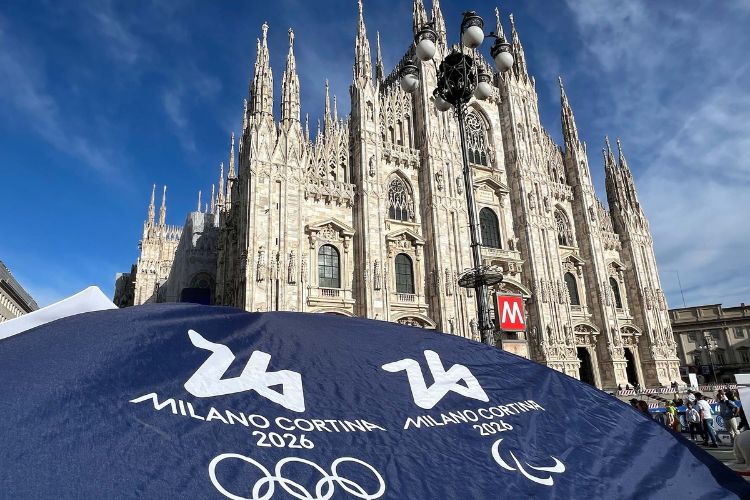
The 2026 Winter Olympics break every rule about how host cities stage the world’s biggest winter sports festival. Instead of cramming everything into one location, Italy spreads events across Milan, Cortina d’Ampezzo, and four other venues spanning 270 miles. This radical format transforms how athletes compete, how fans experience the games, and how future Olympics get planned.
2026 Winter Olympics Held in Which Country: Italy’s Bold Multi-City Experiment
Italy hosts the 2026 Winter Olympics across six distinct venues in the Lombardy and Veneto regions. Milan anchors ice sports in Italy’s financial capital. Cortina d’Ampezzo, tucked in the Dolomite mountains, handles alpine skiing and sliding sports. Valtellina covers cross-country and Nordic combined. Antholz hosts a biathlon. Val di Fiemme stages ski jumping and more Nordic events. Livigno rounds out the setup with freestyle skiing and snowboarding.
This geographic spread makes Milano-Cortina 2026 the most dispersed Winter Olympics in modern history. The International Olympic Committee pushed this model to reduce costs, leverage existing infrastructure, and minimize environmental impact from new construction. No billion-dollar stadiums built from scratch then abandoned. No permanent venues sitting empty for decades.
The approach makes financial sense. Italy saves an estimated €1.2 billion by renovating existing facilities instead of building new ones. Cortina’s bobsled track dates back to the 1956 Olympics. Rather than construct a fresh track elsewhere, organizers refurbished the historic run. Milan’s hockey arenas use structures already serving professional sports teams.
But spreading events across 270 miles creates logistical headaches that compact Olympics avoid entirely.
When Does the 2026 Winter Olympics Start: The Schedule Challenge
The 2026 Winter Olympics runs February 6 through February 22, 2026. The opening ceremony launches festivities on February 6 at Milan’s San Siro Stadium. From there, events scatter across Italy’s northern provinces with overlapping schedules that force tough choices on traveling fans.
Want to watch alpine skiing in Cortina at 10 AM, then catch figure skating in Milan that evening? You’re looking at a three-hour drive or train ride between venues. The gap makes same-day doubleheaders nearly impossible unless you’re willing to miss opening ceremonies or medal presentations.
Athletes face similar challenges. The hockey team stays in Milan for two weeks straight. Alpine skiers camp in Cortina. But mixed-sport couples or teammates competing in different disciplines might go days without seeing each other. The village concept that typically bonds athletes from different countries gets fragmented across multiple accommodation clusters.
Broadcast networks must deploy crews to six locations instead of one centralized hub. Equipment, personnel, and coordination costs multiply. NBC and other rights holders will spend significantly more producing these games compared to compact formats like PyeongChang 2018 or Beijing 2022.
2026 Winter Olympics Venue Strategy: Why Italy Chose This Path
The 2026 Winter Olympics venue selection came down to sustainability and legacy. The IOC learned hard lessons from Athens 2004 and Rio 2016, where massive construction projects bankrupted host cities and left rotting infrastructure nobody wanted.
Milan already had world-class hockey and figure skating facilities. Cortina’s alpine slopes have hosted World Cup races for 70 years. These venues needed upgrades, not complete rebuilds. The renovation approach preserves Olympic-quality competition while respecting fiscal responsibility.
Environmental groups applauded the decision. Building new ski resorts destroys fragile mountain ecosystems. Constructing temporary venues generates enormous carbon footprints from materials, transportation, and energy. Using established locations cuts those impacts dramatically.
The strategy also spreads economic benefits across multiple communities. Previous Olympics concentrated tourism and spending in single cities. Milano-Cortina 2026 funnels Olympic revenue into six regional economies. Hotels in Antholz, restaurants in Livigno, and shops in Val di Fiemme all see business they’d never receive under traditional formats.
Local communities invest in infrastructure upgrades that serve residents long after Olympics end. New train connections, improved roads, and modernized public transit benefit daily commuters, not just Olympic visitors. The games become catalysts for regional development rather than isolated sporting events.
How the Spread-Out Format Changes the Fan Experience
For fans, Milano-Cortina 2026 offers unprecedented variety but demands careful planning. You can’t wing it and hope to catch multiple sports like you might at compact games.
Book accommodations based on priority events. If alpine skiing matters most, stay in Cortina despite higher prices. Hockey and figure skating fans should base in Milan where nightlife and dining options outshine mountain villages. Budget travelers can lodge in smaller towns between major venues and commute via Italy’s excellent rail system.
Purchase multi-day passes instead of single-event tickets. The travel time between venues makes one-off attendance inefficient. Commit to spending three days in Cortina catching downhill, slalom, and super-G. Then shift to Milan for a week of ice sports. This clustering maximizes your time actually watching competitions instead of sitting on trains.
Pack for diverse weather conditions. Milan averages 5°C in February with occasional rain. Cortina sits at higher elevation where temperatures drop below freezing and snow falls regularly. You’ll need both waterproof urban gear and serious winter clothing depending on your daily itinerary.
Digital tools become essential. Official Olympic apps will feature real-time transport updates, venue capacity alerts, and schedule changes. Download Italy’s Trenitalia app for train tickets and track modifications. Google Maps works reliably across all venue locations for walking directions and transit routing.
What This Means for Future Olympics
Milano-Cortina 2026 sets a template that future host cities will either embrace or reject based on how smoothly Italy executes this experiment. The IOC wants sustainable, cost-effective games that don’t bankrupt hosts or destroy environments.
If Italy delivers compelling competitions without massive cost overruns, expect more multi-city bids. The 2030 and 2034 Olympics could see similar geographic spreads. Countries without single cities capable of hosting everything alone become viable candidates.
But if logistical nightmares plague Milano-Cortina, the IOC might retreat to compact formats. Athlete complaints about fractured village experiences, fan frustration with travel demands, or broadcast difficulties could all undermine the model’s viability.
Early indicators suggest Italy’s preparation is solid. Transport infrastructure improvements stayed on schedule through 2024. Venue renovations completed, testing events successfully. Local governments coordinated effectively despite managing six separate locations.
The biggest unknown remains fan reception. Will casual Olympic tourists embrace the multi-city adventure or find it overwhelming? Will television audiences notice production differences? These questions get answered only once the competitions begin.
The Milano-Cortina Promise: Olympics That Last
Traditional Olympics leave behind empty stadiums and debt. Milano-Cortina 2026 promises functional infrastructure, revitalized communities, and financial sustainability. The spread-out format makes these outcomes achievable in ways compact games cannot match.
Cortina’s bobsled track, already 70 years old, gets another generation of use. Milan’s hockey arenas continue serving professional teams. Nordic venues in Valtellina and Val di Fiemme host World Cup events annually. Nothing gets built and then abandoned.
The approach requires more from attendees. You’ll travel more, plan harder, and make strategic choices about which events to prioritize. But you’ll also experience authentic Italian culture across diverse regions. Mountain villages, urban centers, and everything between. It’s not just the Olympics. It’s Italy.
The 2026 Winter Olympics opening ceremony kicks off this grand experiment on February 6. Athletes will compete. Fans will travel. The world will watch. And the IOC will learn whether spreading games across entire regions works better than concentrating everything in single cities.
Will Milano-Cortina’s bold gamble reshape how the world stages Olympics, or prove that some traditions exist for good reasons?