
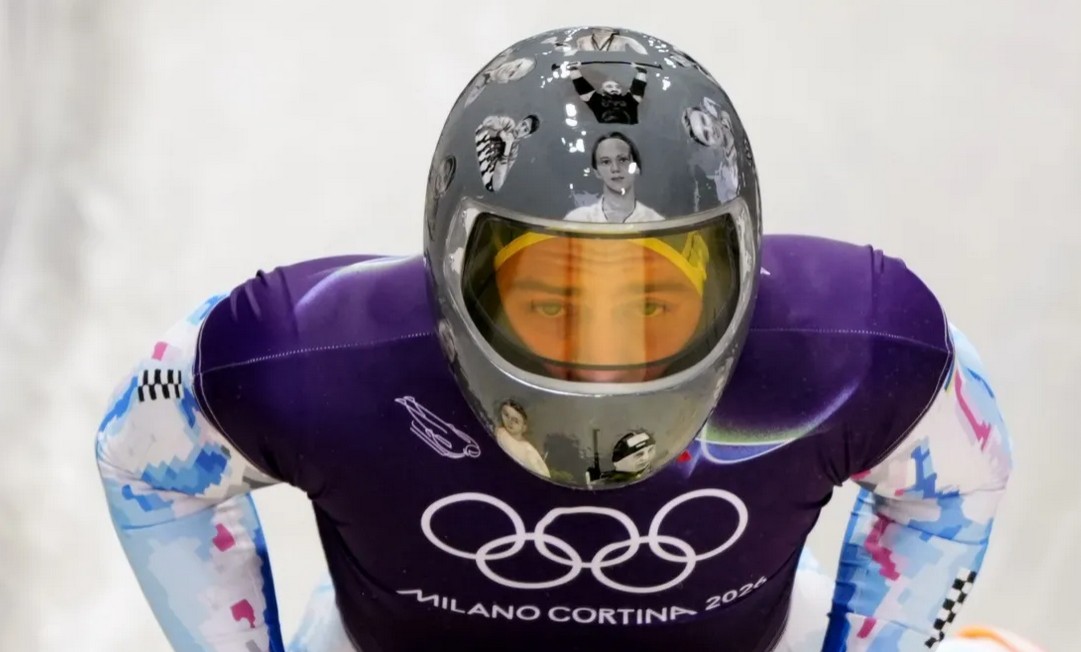
CORTINA D’AMPEZZO — Ukrainian skeleton pioneer Vladyslav Heraskevych has ignited a diplomatic firestorm at the 2026 Winter Olympics by wearing a helmet featuring fallen compatriots. During a Monday training session, the twenty-six-year-old athlete displayed the portraits of friends and fellow sportsmen killed in the ongoing Russo-Ukrainian conflict. This calculated act of defiance fulfills his earlier pledge to leverage the global stage for humanitarian awareness. Consequently, the International Olympic Committee (IOC) has launched an inquiry into whether the gear violates strict neutrality protocols. The sporting world now watches as a single athlete challenges the rigid boundaries of the Olympic Charter.
The helmet depicts several prominent Ukrainian figures, including teenage weightlifting prodigy Alina Peregudova and boxer Pavlo Ishchenko. Heraskevych also honored ice hockey star Oleksiy Loginov and figure skater Dmytro Sharpar among the gallery of the deceased. These individuals represent a staggering toll; official reports indicate that over 590 Ukrainian athletes have died since 2022. Furthermore, the skeletal racer serves as Ukraine’s flagbearer, magnifying the visibility of his silent, visual protest on ice. This maneuver follows his 2022 Beijing protest where he displayed a “No War” sign just days before the invasion.
Conversely, Rule 50.2 of the Olympic Charter strictly prohibits any form of political, religious, or racial propaganda. The IOC maintains that venues must remain sanctuaries of athletic performance, free from the world’s polarizing disputes. In a related development, the committee recently cleared thirteen Russian citizens to compete as Individual Neutral Athletes (AINs). This inclusion continues to draw sharp criticism from Kyiv, which views the presence of “neutrals” as institutional complicity. Meanwhile, the Ukrainian Olympic Committee remains in active dialogue with global officials regarding potential disciplinary sanctions against Heraskevych.
Ultimately, the controversy underscores the growing difficulty of separating elite international competition from visceral national suffering. Heraskevych argues that his tribute honors human lives rather than promoting a specific partisan or political agenda. However, the IOC must decide if allowing such gestures will open a floodgate of activism at future events. As the Games proceed in Italy, the tension between the “spirit of fair play” and raw reality deepens. For the commuter in Lagos or the fan in Kyiv, the helmet remains a haunting reminder of war.