
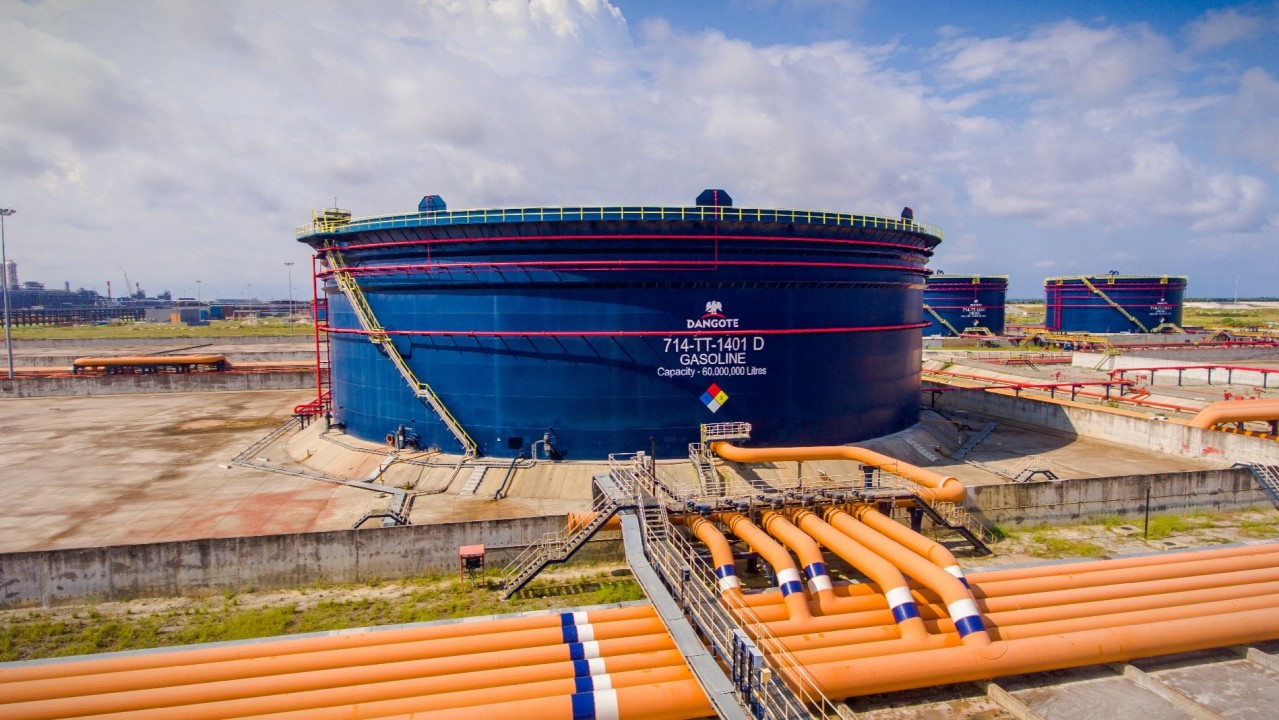
LAGOS — The Dangote Petroleum Refinery has achieved a definitive operational milestone by restoring its Crude Distillation Unit (CDU) to full nameplate capacity. In a statement released on Wednesday, the facility confirmed that both the CDU and the Motor Spirit (MS) production block have hit the 650,000 barrels per day (bpd) mark. This development follows a strategic maintenance “pit stop” designed to optimize the refinery’s most critical processing units. Consequently, the Lagos-based complex now stands as the world’s first single-train refinery to stabilize operations at this massive scale. For the Nigerian consumer, this technical success translates into a potential domestic supply of 75 million liters of petrol daily.
The refinery’s Chief Executive Officer, David Bird, emphasized that the current 72-hour performance test run validates the plant’s advanced engineering. Working alongside licensor UOP, the technical teams have successfully integrated the naphtha hydrotreater, isomerisation unit, and reformer unit. These components essentially comprise the “MS Block,” which upgrades intermediate streams into high-octane premium motor spirit (PMS). Furthermore, the refinery management expressed absolute confidence in meeting the nation’s total demand while retaining a significant surplus for export. The facility previously supplied nearly 50 million liters daily during the recent festive peak, effectively curbing the traditional end-of-year scarcity.
Conversely, the transition to full-throttle production marks the beginning of Phase 2 of the refinery’s technical validation. Bird confirmed that all remaining processing units will commence their respective performance tests starting next week. This final validation stage aims to ensure that the entire $20 billion integrated complex functions with world-class precision. Furthermore, the refinery’s ability to exceed the national daily requirement of 50 million liters offers a critical buffer against logistical disruptions. Industry analysts observe that this surplus could significantly reduce the pressure on Nigeria’s foreign exchange reserves by eliminating fuel imports entirely.
In a related development, the refinery continues to work closely with the Nigerian Midstream and Downstream Petroleum Regulatory Authority (NMDPRA). This collaboration ensures that all refined products meet strict international quality standards before reaching the gantry for distribution. Furthermore, the facility’s strategic focus now shifts toward sweating its assets to extract every possible drop of refining capacity. Bird reiterated that the project remains committed to driving industrial development and supporting economic diversification across the African continent.
Ultimately, the stabilization of the CDU and MS Block serves as a testament to the refinery’s operational resilience. The facility has moved past its initial “teething issues” to become a cornerstone of Nigeria’s energy security architecture. For commuters in Nigeria, the promise of a consistent 75 million-liter daily output offers hope for stable pump prices. As the refinery eyes a net-exporter status, the 2026 fiscal year looks to be the era of energy independence.