
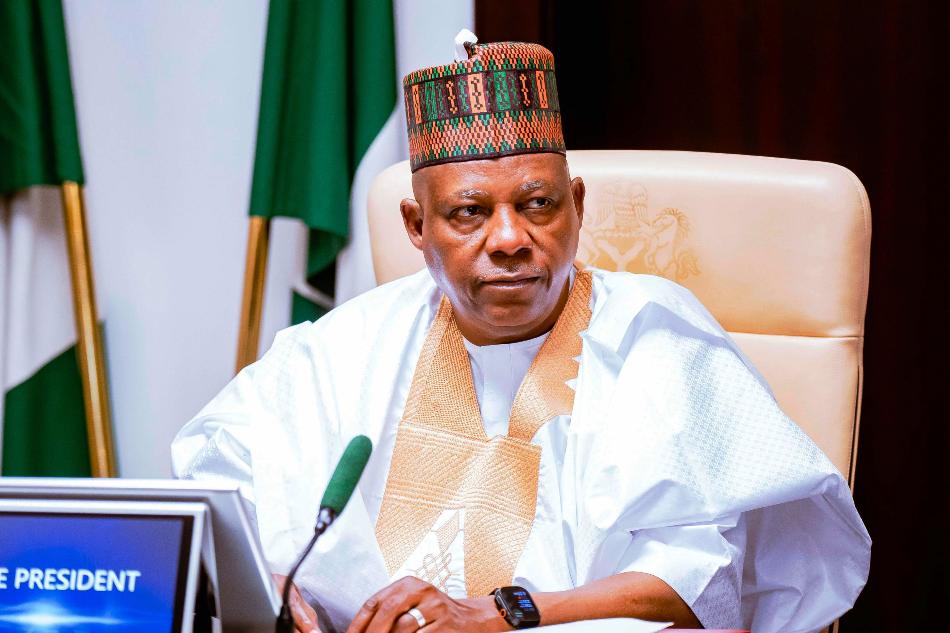
ADDIS ABABA — Vice President Kashim Shettima arrived in the Ethiopian capital on Thursday to represent President Bola Ahmed Tinubu at the 39th Ordinary Session of the African Union (AU) Assembly. This high-level mission marks a significant diplomatic victory for Nigeria as the continent’s economic powerhouse. Specifically, Foreign Affairs Minister Yusuf Tuggar confirmed that the AU has formally designated Nigeria as the host of the African Monetary Institute and the future African Central Bank. Consequently, this move positions Abuja at the absolute center of Africa’s long-term quest for monetary union and financial sovereignty.
The summit, themed “Assuring Sustainable Water Availability and Safe Sanitation Systems to Achieve the Goals of Agenda 2063,” addresses a critical survival challenge. Over 400 million people on the continent currently lack access to clean water, a crisis that threatens both regional stability and economic growth. Furthermore, Senator Shettima will champion a Nigerian-led initiative titled the “Regional Partnership for Democracy” (RPD) on the sidelines of the plenary. This strategic framework seeks to insulate African nations against the rising tide of unconstitutional changes in government by strengthening institutional resilience.
Nigeria’s engagement in Addis Ababa extends into the complex realm of development finance and infrastructure. The Vice President is scheduled to participate in high-level bilateral meetings with both political leaders and global business titans. These dialogues aim to attract the massive capital required to bridge Nigeria’s domestic infrastructure deficit while aligning with the AU’s broader Agenda 2063. In a related development, Tuggar noted that Nigeria has also secured a strategic seat on the board of the African Central Bank. Such representation ensures that Nigeria’s fiscal interests remain protected as the continent navigates the transition toward an integrated financial architecture.
Furthermore, the 39th Summit serves as a theater for navigating the “Water-Energy-Food-Ecosystems” (WEFE) nexus, a guiding framework for modern African planning. Leaders are expected to endorse the “Africa Water Vision 2026,” a policy document designed to harmonize water management across borders. By placing water at the heart of the security discourse, the AU acknowledges that traditional military solutions cannot solve the underlying causes of resource-driven conflict. Meanwhile, the Nigerian delegation remains focused on leveraging these multilateral platforms to project the “Renewed Hope” agenda onto the continental stage.
Ultimately, Shettima’s presence in Ethiopia reinforces Nigeria’s return to active and influential continental leadership. The dual victory of hosting the African Central Bank and leading the democratic partnership marks a decisive moment for Nigerian foreign policy. A sustained commitment to these continental ideals will ensure that Africa’s “giant” continues to stand tall in the global arena.