
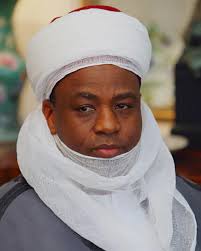
SOKOTO — The Nigerian Supreme Council for Islamic Affairs (NSCIA) has officially directed the Muslim Ummah to search for the Ramadan crescent on the evening of Tuesday, February 17, 2026. This mandate, issued by the Sultan of Sokoto and President-General of the NSCIA, Alhaji Sa’ad Abubakar III, follows the astronomical transition into the 29th day of Sha’aban 1447 A.H. Consequently, the Sultan, in a statement released via the Council’s Secretary-General, Prof. Is-haq Oloyede, noted that verified sightings on Tuesday would mark Wednesday, February 18, as the official start of the holy month. If the moon remains elusive, the 30-day completion of Sha’aban will push the commencement of fasting to Thursday, February 19.
To ensure scientific and spiritual accuracy, the National Moon Sighting Committee (NMSC) has synchronized its operations with the National Space Research and Development Agency (NASRDA). This inter-agency collaboration aims to provide real-time verification of lunar visibility across Nigeria’s diverse geographical zones. Furthermore, the NSCIA has published a comprehensive list of traditional and religious leaders authorized to receive and forward credible sighting reports to the Sultan. While it is true that modern technology aids the process, the final proclamation rests solely upon the verified physical sighting of the hilal (crescent).
The Council utilized this pre-Ramadan briefing to voice sharp criticisms against the Independent National Electoral Commission (INEC). The NSCIA expressed profound dissatisfaction with the proposed 2027 general election timetable, which appears to overlap with the Ramadan fast and the Eid al-Fitr festivities. Indeed, the Council warned that such a schedule could disenfranchise millions of voters or force a conflict between civic duties and religious obligations. Notably, the leadership has called for an immediate review of these dates to preserve the sanctity of the electoral process.
In a related development, the Sultan addressed the rising tide of Islamophobic rhetoric in national security discourses. He argued that Muslims often suffer as “double victims”—facing both the brutality of insurgency and the stigma of media bias. Significantly, the statement referenced the underreported murder of approximately 200 Muslims in Kwara State as evidence of lopsided reportage. Granting the complexity of Nigeria’s security architecture, the NSCIA maintains that framing faith as an aggressor only entenches national inequality. Subsequently, the Council urged the media to uphold objectivity rather than amplifying narratives that criminalize specific religious identities.
Finally, the NSCIA encouraged Muslims to embrace the virtues of charity, repentance, and devotion as they prepare for the spiritual rigors of the month. Despite the prevailing economic and security challenges, the Sultan prayed for national tranquility and divine protection for all citizens. Above all, he reminded the faithful that Ramadan serves as a period of profound reflection and communal solidarity.