
El-Rufai Arrives EFCC, Supporters and Critics Clash in Abuja
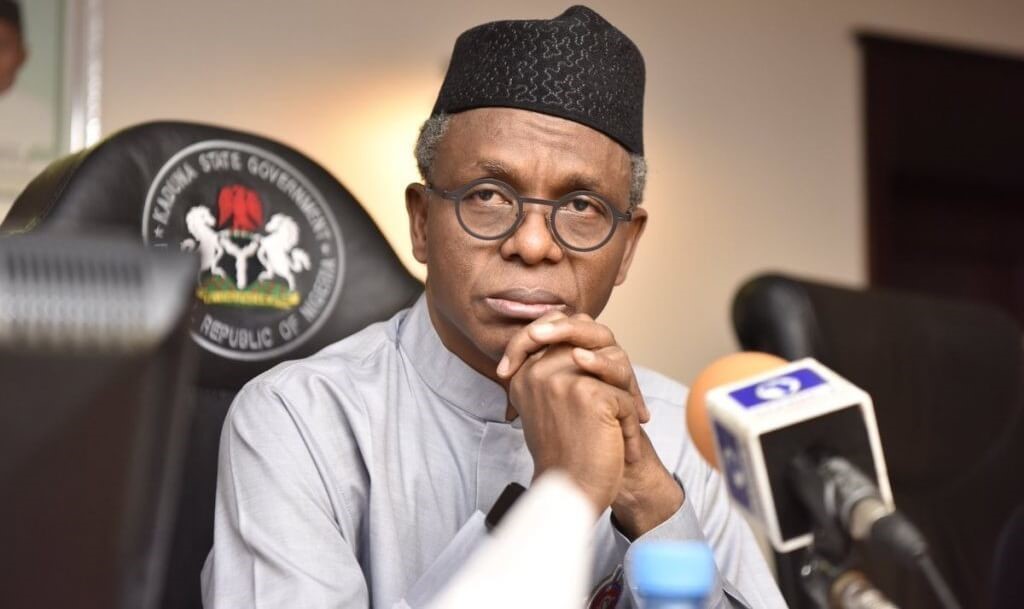
ABUJA — Former Kaduna State Governor Nasir El-Rufai arrived at the headquarters of the Economic and Financial Crimes Commission (EFCC) on Monday morning, fulfilling a voluntary pledge to confront allegations of massive financial impropriety. The arrival of the African Democratic Congress (ADC) chieftain, who appeared at the Jabi complex by 10:00 a.m., triggered immediate chaos as security operatives struggled to manage a sea of rival protesters. While hundreds of “Obidient” and ADC-aligned supporters chanted slogans in defense of the ex-governor, a counter-group demanded his immediate prosecution over a reported ₦432 billion debt and contract fraud. Consequently, the EFCC has formally commenced an interrogation session expected to span several hours, focusing on the findings of a Kaduna State House of Assembly probe.
The former governor’s entry followed a dramatic weekend standoff at the Nnamdi Azikiwe International Airport upon his return from medical treatment in Cairo. According to his media adviser, Muyiwa Adekeye, security agents attempted to arrest El-Rufai at the terminal on Thursday without a formal warrant. Furthermore, the aides alleged that operatives “snatched” the ex-governor’s international passport during a tense confrontation that only ended when a crowd of travelers intervened. Significant portions of the legal community have since condemned the airport scuffle as executive overreach. Meanwhile, the Presidency has dismissed El-Rufai’s claims of persecution as a “diversionary tactic” intended to mask domestic problems in his home state.
In a related development, the Kaduna State House of Assembly recently indicted the El-Rufai administration for allegedly mismanaging loans and diverting funds meant for the Kaduna Urban Renewal Project. Notably, El-Rufai’s hand-picked successor, Governor Uba Sani, has publicly lamented the “crushing debt profile” inherited from the previous eight years. While it is true that El-Rufai has challenged these findings in court, the EFCC and ICPC are now acting on a petition endorsed by all 28 members of the state legislature. Subsequently, former Senator Shehu Sani has called for a “holistic” probe, citing years of demolitions, sacker of workers, and human rights violations as further justification for an audit.
Furthermore, the rift between El-Rufai and President Bola Tinubu has moved from subtle coldness to open political warfare. El-Rufai, who was once a key architect of the APC’s 2023 victory, now accuses the National Security Adviser (NSA) of weaponizing anti-graft agencies against him. Above all, he recently alleged on Arise TV that he learned of his planned arrest by monitoring the ONSA’s leaked phone conversations. For this reason, the Presidency has accused him of “playing to the gallery” and attempting to incite public panic with unsubstantiated claims of toxic chemical procurements. Thus, the legal battle in Abuja is inextricably linked to the early maneuvering for the 2027 general elections.
As the interrogation continues behind closed doors, the nation remains divided on the intent of the probe. The sight of a once-powerful governor facing the anti-graft agency is a reminder that political alliances in Nigeria are often written in disappearing ink. Therefore, the outcome of today’s questioning will either solidify the government’s anti-corruption credentials or embolden those who see it as a targeted purge of the opposition. As a result, Abuja remains on a knife-edge, awaiting the first official statement from the commission.