


British High Commission Confirms February 25 Switch To Digital Visas For Nigerians
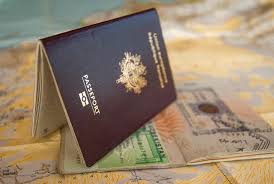
Nigerian travellers to the United Kingdom will no longer receive physical visa stickers in their passports from February 25, 2026, as the British High Commission in Abuja confirmed a full transition to electronic visas for all Nigerian nationals applying for UK visit visas.
The announcement was contained in a statement released on Monday by the Senior Communications Officer at the British High Commission in Abuja, Onyinye Madu.
“From 25 February 2026, all Nigerian nationals applying for a UK Visit visa will receive an eVisa, rather than a vignette (sticker) in their passports,” the statement read.
The shift marks a significant change in the United Kingdom’s visa issuance process, moving away from the familiar passport sticker format that has been the standard for decades toward a fully digital immigration record system.
Under the new arrangement, successful visa applicants will access their granted permission electronically through a UK Visas and Immigration account. The High Commission clarified that the underlying requirements for Nigerian applicants remain entirely unchanged.
“Travellers will continue to apply online, attend a Visa Application Centre to provide biometric information, and meet all existing eligibility criteria,” the statement explained, emphasising that only the format of the visa itself is changing.
Applicants who receive approval under the new system will be required to create a free UKVI account through which they can view and manage their immigration status, a process the Commission described as accessible from any location at any time.
Existing valid vignette stickers already issued to Nigerian travellers will not be affected by the transition. The High Commission confirmed that holders of current physical visa stickers are not required to take any action, as those documents will remain valid until they expire or require replacement in the normal course.
The British Deputy High Commissioner in Abuja, Gill Lever, weighed in on the development, describing the move as part of a broader effort to ease the travel process for Nigerians.
“We are committed to making it easier for Nigerians to travel to the UK. This move to digital visas will streamline a key part of the visa process, making it more secure while reducing dependence on paper documents. We look forward to continuing to welcome Nigerian visitors, students and workers to the UK,” she said.
The Commission outlined several practical benefits of the transition for Nigerian applicants. According to the statement, the digital system will allow passports to be returned to applicants more quickly following biometric submission, a common point of inconvenience under the sticker-based process where documents are retained for longer periods during processing.
Additionally, the High Commission noted that eVisas offer a stronger security profile compared to their physical counterparts. “The digital format offers stronger security as eVisas cannot be lost, stolen, or tampered with,” the statement noted, pointing to the vulnerability of physical stickers to damage, loss, or forgery as among the limitations the new system addresses.
The United Kingdom’s move to eVisas for Nigerian applicants reflects a broader digital transformation of immigration systems that has been underway across several major destination countries. The UK began rolling out its eVisa programme gradually across different nationalities over recent years, extending the system progressively as part of its transition away from the Biometric Residence Permit card and physical vignette sticker model. The February 25 date marks the point at which Nigerian nationals are formally brought into that fully digital framework.
Nigeria remains one of the highest-volume sources of visa applicants to the United Kingdom, with tens of thousands of Nigerians applying annually for visit, student, and work visas. The volume of applications has grown considerably in recent years, reflecting sustained demand driven by education, business travel, tourism, and diaspora ties. The UK is home to one of the largest Nigerian diaspora communities globally, with estimates placing the population of Nigerians in the United Kingdom at over one million.
The transition to eVisas is expected to reduce processing backlogs at visa application centres by shortening the physical handling time associated with printing and affixing stickers to passports. It also aligns with international aviation standards increasingly moving toward digital verification of travel authorisations, which border agencies and airlines can access electronically without requiring a physical stamp or sticker in a traveller’s passport.
Nigerian applicants seeking further information on the eVisa process or on creating a UKVI account were directed to official UK government channels for guidance.