
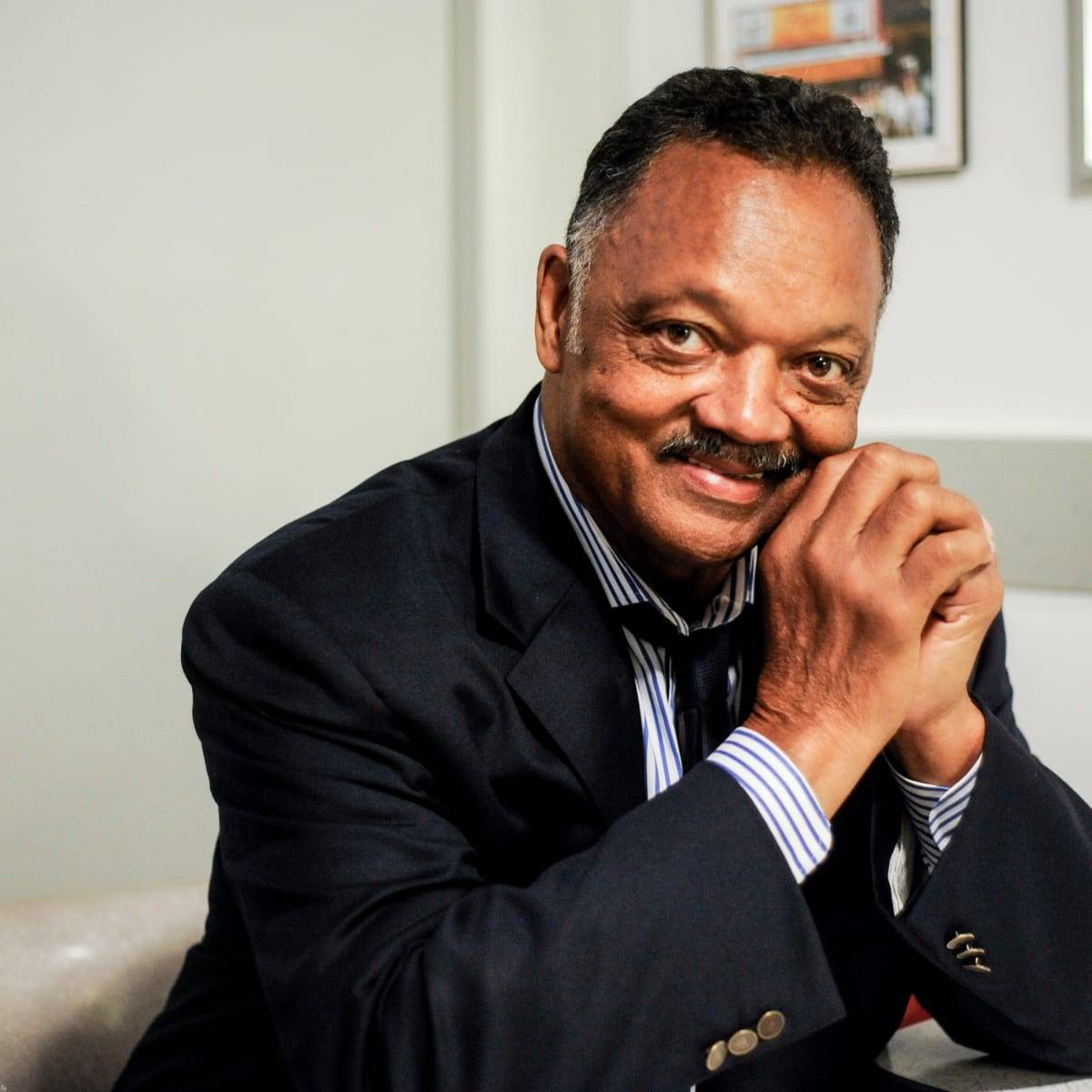
CHICAGO — The Reverend Jesse Louis Jackson Sr., the titanic civil rights campaigner who dismantled racial barriers for over six decades, died on Tuesday morning, February 17, 2026. He was 84. His family confirmed that the legendary orator passed away peacefully at his home in Chicago, surrounded by loved ones. While the family did not specify an immediate cause of death, Jackson had battled progressive supranuclear palsy (PSP) for more than ten years. Consequently, his death marks the end of an era for the global civil rights movement. He was the last remaining titan from the inner circle of Dr. Martin Luther King Jr.
Born in the segregated South of South Carolina in 1941, Jackson rose from poverty to become the “Conscience of the Nation.” He first gained national attention in 1960 after his arrest as part of the “Greenville Eight” for integrating a white-only library. Furthermore, his leadership during the Selma to Montgomery marches in 1965 cemented his role as a protégé of Dr. King. Indeed, Jackson was standing on the balcony of the Lorraine Motel when a sniper’s bullet claimed King’s life in 1968. That trauma redefined his mission. Later, he founded Operation PUSH and the Rainbow Coalition to bridge the gap between street activism and corporate boardrooms.
Jackson’s most profound impact was felt within the American political architecture. His 1984 and 1988 presidential campaigns shattered the myth that a Black candidate could not compete for the highest office. During the 1988 primary, Jackson secured approximately 7 million votes, proving the viability of a multi-racial “Rainbow Coalition.” Significantly, Barack Obama later credited Jackson’s electoral “pathfinding” as the foundation for his own historic victory in 2008. While it is true that Jackson faced cynicism from within his own community, he remained undeterred. Notably, he frequently reminded critics that the “arc of the moral universe” requires a deliberate pull to bend toward justice.
In a related development, Jackson spent his final years campaigning against the disproportionate impact of the Covid-19 pandemic on African Americans. He argued that 400 years of systemic segregation made the virus’s racial disparities a predictable tragedy. Previously, his international diplomacy secured the release of American hostages in Syria, Cuba, and Iraq. Above all, his slogan “I Am Somebody” became a global anthem for the marginalized and overlooked. Subsequently, President Bill Clinton awarded him the Presidential Medal of Freedom in 2000 for his “unwavering belief in equality.”
Finally, the Jackson family has requested that the world honor his memory by continuing the fight for justice. Although he lost his ability to speak in his final months, his message remains as punchy as his most famous rhymes. Therefore, the global community now prepares for a series of commemorations in Chicago to celebrate a man who “tore down walls to build bridges.” As a result, his name joins the immortal list of leaders who refused to surrender their spirits to the headwinds of hate. Thus, the quest for a more humane and just world continues in the shadow of this fallen giant.