
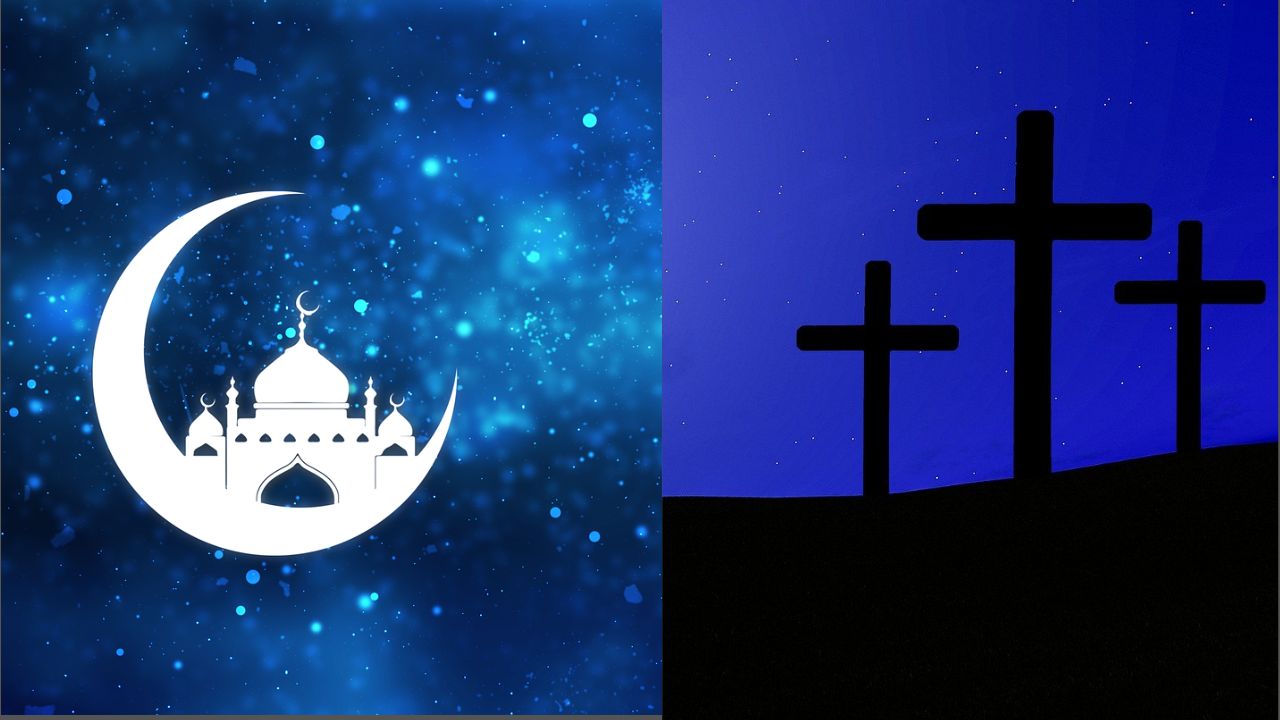
SOKOTO — In a historic convergence not witnessed in several decades, Nigeria’s two dominant faiths have entered a synchronized season of penitence and prayer. The Sultan of Sokoto and President-General of the Supreme Council for Islamic Affairs (NSCIA), Muhammad Sa’ad Abubakar III, officially confirmed the sighting of the Ramadan crescent on Tuesday evening. Consequently, the Sultanate Council has declared Wednesday, February 18, 2026, as the first day of the holy month of Ramadan 1447AH. This proclamation coincides perfectly with Ash Wednesday, the solemn commencement of the 40-day Lenten fast for the Christian faithful. For a nation often divided by sectarian lines, this rare astronomical and liturgical alignment offers a unique window for communal reflection and interfaith solidarity.
The Sultan, represented by the Shehu of Borno, Abubakar Ibn Garbai El-Kanemi, noted that verified reports of the new moon arrived from various monitoring committees across the federation. Following rigorous authentication, the Sultanate Council accepted the sighting, marking the end of Sha’aban and the beginning of a month-long dawn-to-dusk fast. Furthermore, the NSCIA urged Muslims to utilize this sacred period to seek divine intervention for the nation’s security challenges. While it is true that the Islamic calendar is strictly lunar, the Gregorian-based Christian calendar has also landed on the same starting block this year. Indeed, this 2026 overlap marks the first time since 1863 that the Lunar New Year, Ramadan, and Lent have converged within a 24-hour window.
The Lenten season begins today with the traditional distribution of ashes, symbolizing human mortality and the call to repentance. Catholic and Orthodox churches, alongside various Protestant denominations, will observe a period of abstinence and almsgiving leading up to Easter Sunday on April 5. In a related development, religious leaders have noted that both traditions emphasize self-discipline and empathy for the underprivileged. Granted, the methods of fasting differ—Christians typically abstain from specific luxuries while Muslims avoid all food and drink during daylight hours. Significantly, however, the shared focus on charity and spiritual renewal provides a common ground that transcends dogmatic differences.
Notably, the Sultanate Council has emphasized that the physical sighting of the moon remains the primary authority for the commencement of the Islamic fast. This year’s successful sighting in almost every part of the country has eliminated the usual ambiguities regarding the start date. Above all, the Sultan called on leaders at all levels to exercise wisdom and compassion during this period of national economic adjustment. Subsequently, interfaith groups are planning communal “Iftar” and Lenten meals to foster local ties and create a spirit of cooperation. Although the “headwinds” of political and economic stress persist, this “tailwind” of spiritual unity could offer a necessary reprieve for the weary citizen.
Finally, as millions of Nigerians begin their fast today, the focus shifts from partisan bickering to the universal virtues of faith and endurance. For the artisan in Lagos or the trader in Kano, the sight of neighbors from different faiths practicing simultaneous sacrifice serves as a powerful visual of our shared humanity. Therefore, the 2026 “Dual Fast” stands as a rare opportunity to rewrite the narrative of religious friction in Africa’s most populous nation. As a result, the success of this season will be measured not just in spiritual growth, but in the tangible peace it fosters across our borders. Accordingly, the quest for a more stable and harmonious Nigeria finds its latest anchor in this shared holy month.