
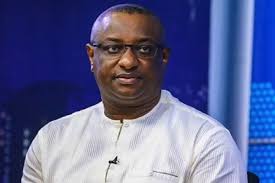
Aviation Minister Festus Keyamo has lambasted opposition parties for their criticisms of the Federal Capital Territory area council election outcomes, asserting that they only deem polls credible when victorious and accusing them of fabricating irregularities to incite unrest among Nigerians.
In a statement posted on his X account on Sunday, Keyamo dismissed the opposition’s allegations as unfounded excuses stemming from electoral rejection. “This set of opposition fellows are a bunch of lazy and shameless characters. The futile excuses they give for losing elections have become their opium to numb their pain, disappointment and shame for their rejection by the electorate after all their theatrics and grandstanding. Nigerians are NOT FOOLS,” he wrote. He challenged claims of widespread fraud by highlighting the scale of the polls. “Out of a total of 2,822 polling units in FCT, they display result sheets that were corrected (for whatever reason) in less than 10 units to attempt to prove that THE WHOLE ELECTION was marred by irregularities,” Keyamo stated. He argued that even if 50 units were affected, over 2,770 remained unchallenged, rendering the complaints insignificant.
Keyamo further accused the opposition of manipulative tactics. “They go further to use this flawed logic to create mass hysteria that ‘our democracy is in danger’ and attempt to stir social unrest amongst unsuspecting Nigerians,” he added. He contended that fairness is subjective for them: “The only election that can be free and fair, in their own warped minds, is when the ruling party loses.” His remarks targeted parties like the African Democratic Congress, which raised objections amid results favoring the All Progressives Congress in several councils.
The Independent National Electoral Commission declared APC’s Joshua Ishaku winner in Bwari Area Council with 18,466 votes, as announced by Returning Officer Mohammed Nurudeen. “I am the returning officer for the 2026 FCT Area Council, Bwari chairmanship election held on Feb. 21, 2026. That Joshua Ishaku, having satisfied the requirements of the law, is hereby declared the winner and is returned elected,” Nurudeen said. In Abuja Municipal Area Council, APC’s Christopher Maikalangu secured re-election with 40,295 votes out of 62,861 valid, per collation officer Andrew Abue. “That Maikalangu of the APC, having certified the requirements of the law is hereby declared the winner and is returned elected,” Abue stated. However, PDP’s Mohammed Kasim triumphed in Gwagwalada with 22,165 votes against APC’s Yahaya Shehu’s 17,788, as declared by Returning Officer Philip Akpen. “That Mohammed Kasim of PDP, having certified the requirements of the law, is hereby declared the winner and is returned elected,” Akpen announced.
Additional results showed APC’s Daniel Nuhu winning Kwali with 17,032 votes, contributing to the party’s dominance in five councils, echoing patterns from previous cycles. The elections covered six councils—Abaji, AMAC, Bwari, Gwagwalada, Kuje, and Kwali—with 570 candidates from 17 parties contesting 68 positions amid 1,680,315 registered voters across 2,822 units. Turnout varied, with Gwagwalada at 22.3 percent and AMAC at 7.8 percent, reflecting historical urban apathy. INEC uploaded results to its IReV portal, with AMAC at 60 percent by late Saturday. Observers like Yiaga Africa noted peaceful conduct but cited logistical delays, low turnout, and vote buying up to N10,000 in AMAC.
Opposition reactions included ADC’s concerns over FCT Minister Nyesom Wike’s presence at units, despite his Rivers registration, calling it partisan interference. Wike, however, expressed satisfaction with the process, urging winners to focus on development. President Bola Tinubu congratulated victors, praising Wike’s leadership and INEC’s conduct. Social media echoed divisions, with users like Aisha Yesufu criticizing Wike and Inibehe Effiong questioning his role, while supporters defended the outcomes.
FCT elections, uniquely INEC-managed since the territory lacks a state commission, have historically sparked disputes. In 2013, PDP dominated four councils amid low turnout; APC surged to five in 2016 with APGA taking Gwagwalada; retained three in 2019; and split evenly in 2022, with PDP in AMAC despite 9 percent average participation. Opposition often alleged rigging, as in 2022 when PDP claimed APC manipulations, leading to court challenges. Keyamo, a vocal APC figure since 2015 and minister since 2023, has frequently clashed with critics, defending elections like 2023’s presidential amid INEC controversies. As collation finalizes in remaining councils, debates persist on electoral integrity ahead of 2027.