

Trump Defies Supreme Court; Raises Global Tariffs to 15%
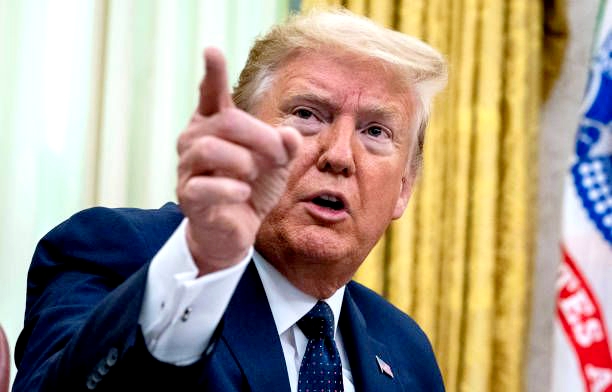
WASHINGTON — U.S. President Donald Trump has dramatically escalated his trade offensive, announcing a 15% global tariff on all imports just 24 hours after a stinging legal defeat. The move follows a landmark 6-3 Supreme Court ruling on Friday, February 20, 2026, which struck down the President’s previous tariff regime as an unconstitutional overreach of executive power. The court found that the International Emergency Economic Powers Act (IEEPA) does not authorize the unilateral imposition of taxes, a power strictly reserved for Congress. Consequently, Trump has pivoted to Section 122 of the Trade Act of 1974, a dormant, “gold-standard” era law, to bypass the judiciary. While the administration initially proposed a 10% levy, the President hiked the rate to 15% on Saturday via Truth Social, citing a “ridiculous and anti-American” court decision.
The new 15% “emergency surcharge” is scheduled to take effect on Tuesday, February 24, 2026, targeting a record $1.2 trillion goods trade deficit. Under the specific provisions of Section 122, the President can maintain these surcharges for 150 days before requiring formal congressional approval. Furthermore, the administration argues that the levy is essential to stem the outflow of dollars and incentivize domestic manufacturing reshoring. While it is true that critical minerals, pharmaceuticals, and certain electronics remain exempt, the broad nature of the tax has sent shockwaves through global markets. Indeed, the European Parliament’s Trade Committee has already threatened to pause ratification of a major EU-US trade deal in direct retaliation.
The Supreme Court ruling has opened a fiscal “black hole” for the US Treasury, with businesses now clamoring for billions in refunds. Industry experts estimate that the government has illegally collected over $130 billion since the inception of the IEEPA-based tariffs last year. In a related development, Democratic Senator Maria Cantwell has demanded a transparent reimbursement plan for the more than 200,000 small business importers affected. Granted, the President has vowed a protracted legal battle to prevent these payouts, claiming the process could take years to resolve. Notably, however, several trade groups have already signaled their intent to sue for immediate interest-bearing repayments to support domestic liquidity.
Significantly, the 15% hike jeopardizes several hard-won bilateral “mini-deals” negotiated with allies like the United Kingdom and Australia. Above all, the British Chambers of Commerce expressed profound fear that the new “patchwork” approach will weaken global economic growth and heighten consumer costs. Subsequently, the White House confirmed that previous agreements would not shield partners from the new Section 122 baseline. Although the administration claims these measures will “make the economy roar,” soybean farmers and steel fabricators remain sharply divided on the long-term consequences.
The focus of the international community shifts to the July 2026 deadline, when the 150-day window for these emergency tariffs expires. Therefore, the President must either secure a congressional majority or find yet another legal loophole to maintain his protectionist wall. As a result of this escalation, the 2026 global economic outlook has transitioned from “unstable” to “critically uncertain.”