
APC Convention: Tinubu Signals Continuity for Yilwatda, Basiru in New NWC
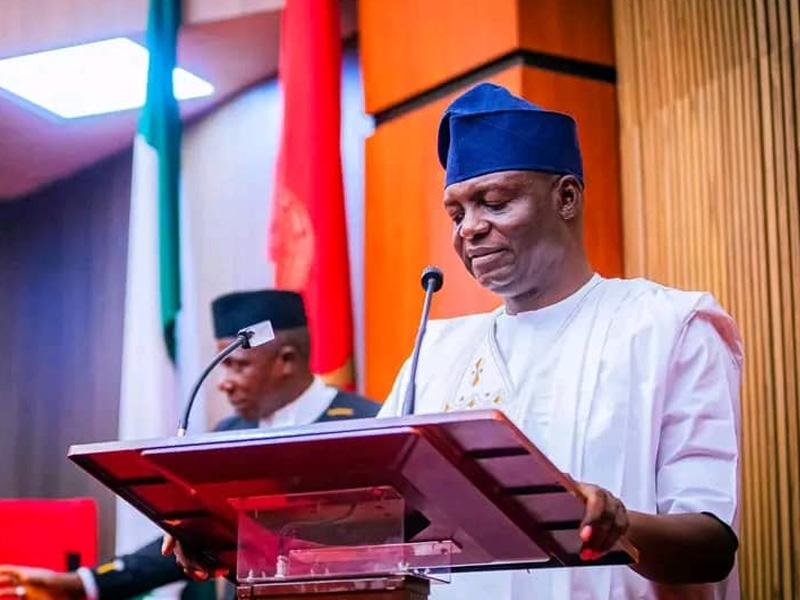
As the All Progressives Congress counts down to its national convention slated for March 27 and 28, the clearest signal yet from within the party’s inner circle is that President Bola Tinubu has made his preference known: retain Professor Nentawe Yilwatda as national chairman and Dr. Ajibola Basiru as national secretary, a position that senior party officials say has effectively settled the two most contested slots in the incoming National Working Committee.
The convention, which will culminate in the election of a new NWC, has been months in the making. Ward and local government congresses have already been conducted across most parts of the country, with only a handful of states yet to complete the exercise due to postponements. The party’s machinery is now focused on the national stage, and the overarching framework being adopted — consensus — signals that those at the apex of the APC’s decision-making hierarchy are determined to avoid the kind of bruising internal contest that has historically torn ruling parties apart ahead of mid-term political cycles.
A party source, speaking on condition of anonymity, disclosed that President Tinubu has communicated his preference for continuity at the top of the NWC to key party members. The source stated: “What I can tell you now is that the matter concerning the national secretary and the national chairman has been settled. From what we have gathered, and based on what the President has informed some party members, he prefers to retain Senator Basiru as the national secretary and have Prof Yilwatda continue as the national chairman of the party. If the President does not change his mind, it is highly likely that these two individuals will retain their positions in the next NWC. Discussions regarding other offices are still ongoing.”
That a sitting Nigerian president’s preference could effectively determine the outcome of an intra-party convention is, of course, not unusual in the country’s political landscape, where the presidency has historically exercised enormous gravitational pull over ruling party structures. What makes this moment noteworthy is the degree to which that preference has been openly acknowledged — even if guardedly — by party officials, suggesting a level of internal cohesion that the APC’s leadership is keen to project as the 2027 general elections begin to loom on the horizon.
One of the more quietly contested dimensions of the Basiru retention debate had centred on the fact that the national secretary and the President both hail from the Southwest — a regional overlap that had made some APC leaders uncomfortable with the optics of retaining him. A second party source acknowledged those earlier reservations but indicated they had largely been set aside.
The source stated: “Before now, some leaders of the party were sceptical about having the current national secretary retain that position because he is from the Southwest and the President is also from the Southwest. However, since he has served since 2023, many leaders believe he can continue for another term.”
This pragmatic reasoning — that Basiru’s existing familiarity with the role outweighs geographical symbolism — appears to have carried the day, at least for now. Nigerian political parties have historically balanced NWC compositions along regional, ethnic, and religious lines, and the APC is constitutionally required to reflect federal character in its leadership structure. The apparent willingness to waive that consideration in Basiru’s case speaks to the weight that the presidency’s preferences carry within the current party arrangement.
Beyond the two headline positions, the convention is set to be a busy affair for incumbents. Senior party officials confirmed that approximately 20 current NWC officeholders are actively seeking re-election to the committee. These officials are said to be engaging state governors and other influential party stakeholders to secure the endorsements and support that, within a consensus-driven convention model, effectively determine outcomes before any formal vote is cast.
The Deputy National Organising Secretary, Nze Duru, confirmed the consensus approach and defended it as a deliberate strategy to promote unity and reduce the internal friction that open contests can generate.
Duru stated: “We have devised the process of consensus to ensure that, at every level, we minimise friction. We conducted our congresses through consensus, which is cheaper and easier to coordinate. All offices will be filled by way of consensus in the forthcoming national convention.”
He also spoke specifically on the prospect of retaining Yilwatda and Basiru, offering an enthusiastic endorsement: “It will not be out of place if that is the case. I also wish that, by way of consensus, the national chairman be returned, and the national secretary be returned. You cannot find better individuals to occupy those offices, even in an intra-party setting in Nigeria. If that is the thinking and the consensus among the leaders of the party, it is supported by a large portion of the rank and file of the party.”
The re-election bids being mounted by current NWC members are constitutionally grounded. Article 17 of the APC Constitution, as revised and amended in March 2022, stipulates that party officers serve a four-year term and may be re-elected for one additional term. Most of the current NWC members were elected in August 2023, making them eligible for a second term if returned at the March convention.
Yilwatda’s timeline is slightly different. He assumed the national chairmanship in July 2025, having succeeded Dr. Abdullahi Umar Ganduje following the latter’s removal from office amid a broader internal party realignment. His shorter tenure at the top of the party means his re-election, if it occurs in March, would effectively begin his first full term as chairman under the constitutional clock.
The Convention Planning Committee, mandated to oversee the entire exercise, is chaired by former Katsina State Governor Aminu Masari — a veteran APC figure and close political associate of former President Muhammadu Buhari who has continued to occupy prominent roles in the party’s administrative machinery under the Tinubu presidency.
In a related development, the APC on Monday announced that the inauguration of the 2026 National Convention Central Coordination Committee would take place on Wednesday, February 25, 2026, at the NWC Hall of the APC National Secretariat in Abuja, commencing at 2 p.m.
The coordination committee’s composition reflects a deliberate effort to bring together the party’s various power blocs. Masari serves as chairman, while former Senate President Pius Anyim has been appointed as Vice Chairman I. The Chairman of the Nigeria Governors’ Forum and Governor of Kwara State, AbdulRahman AbdulRazaq, serves as Vice Chairman II. The Chairman of the Progressive Governors’ Forum and Governor of Imo State, Hope Uzodimma, has been named treasurer, while the Governor of Yobe State, Mai Mala Buni, will serve as secretary of the committee.
National Publicity Secretary Felix Morka, in a statement announcing the Wednesday inauguration, described the committee’s formation as part of the broader preparatory effort ahead of the convention.
Separately, the APC this week took a step that its leadership has framed as an investment in the party’s ideological and institutional future. The APC National Chairman, Professor Yilwatda, presided over the inauguration of the governing council of The Progressive Institute in Abuja — an initiative described as a policy research, leadership development, and institutional capacity body anchored to the party’s long-term vision.
Speaking at the inauguration, Yilwatda credited President Tinubu with the initiative, stating: “Let me express our leadership’s appreciation to His Excellency, President Bola Ahmed Tinubu, for his vision in establishing this premier political foundation in the country. I wish to assure him of our total commitment to ensuring that the President’s desire for a world-class institution is achieved.”
He also paid tribute to his predecessor, acknowledging that the groundwork for the institute predated his tenure: “I wish to thank my predecessor, His Excellency Dr Abdullahi Umar Ganduje, and others for their efforts in establishing this great institution.”
Yilwatda announced that he would serve as chairman of the governing council, with oversight responsibility for the institute’s policy and strategic direction. He outlined its statutory functions as including policy research, leadership development, intra-party governance training, election-related capacity building, and serving as the institutional memory of the APC — a function that would theoretically allow the party to accumulate and transmit organisational knowledge across successive leadership cycles.
The Director-General and Secretary of the Council, Dr. Lanre Adebayo, offered a brief but pointed commitment at the inauguration: “We will continue to give our best because we believe in APC.”
The APC was founded in 2013 through a merger of several opposition parties — the Action Congress of Nigeria, the Congress for Progressive Change, the All Nigeria Peoples Party, and a faction of the All Progressives Grand Alliance — with the explicit goal of dislodging the then-dominant Peoples Democratic Party from the presidency. It succeeded in 2015, bringing Muhammadu Buhari to power in what was Nigeria’s first democratic transfer of power from an incumbent to an opposition candidate.
Since then, the party has held multiple national conventions, each revealing the underlying tensions between its constituent blocs, regional power centres, and successive presidential preferences. The 2022 convention, which produced the APC’s candidate selection process for the 2023 elections, was particularly contentious and exposed deep divisions over zoning, delegate manipulation, and the relative influence of governors versus the party’s national organs.
The August 2023 NWC elections that installed the current crop of officers were themselves conducted in the immediate aftermath of Tinubu’s inauguration, meaning the new NWC was effectively constituted under direct presidential influence from the outset. Critics within and outside the party have long argued that this structural proximity between the presidency and the party secretariat has eroded the independence of the NWC and concentrated decision-making power in the Villa rather than at the party’s own organs.
The consensus model being deployed for the March 2026 convention is, in that sense, both a practical tool and a political statement a way of managing the ambitions of approximately 20 incumbent officeholders and an unknown number of aspirants without the embarrassment of public division in an election year runway period.
Whether the convention proceeds as smoothly as the party leadership is projecting remains to be seen. The APC has a track record of last-minute disruptions, court injunctions from aggrieved members, and delegate-related controversies that have tested the party’s cohesion at critical moments. The appointment of a high-profile coordination committee and the early projection of consensus outcomes appear designed, in part, to preempt precisely those kinds of disruptions.