


Fifteen Adamawa Lawmakers Quit PDP Amid National Crisis
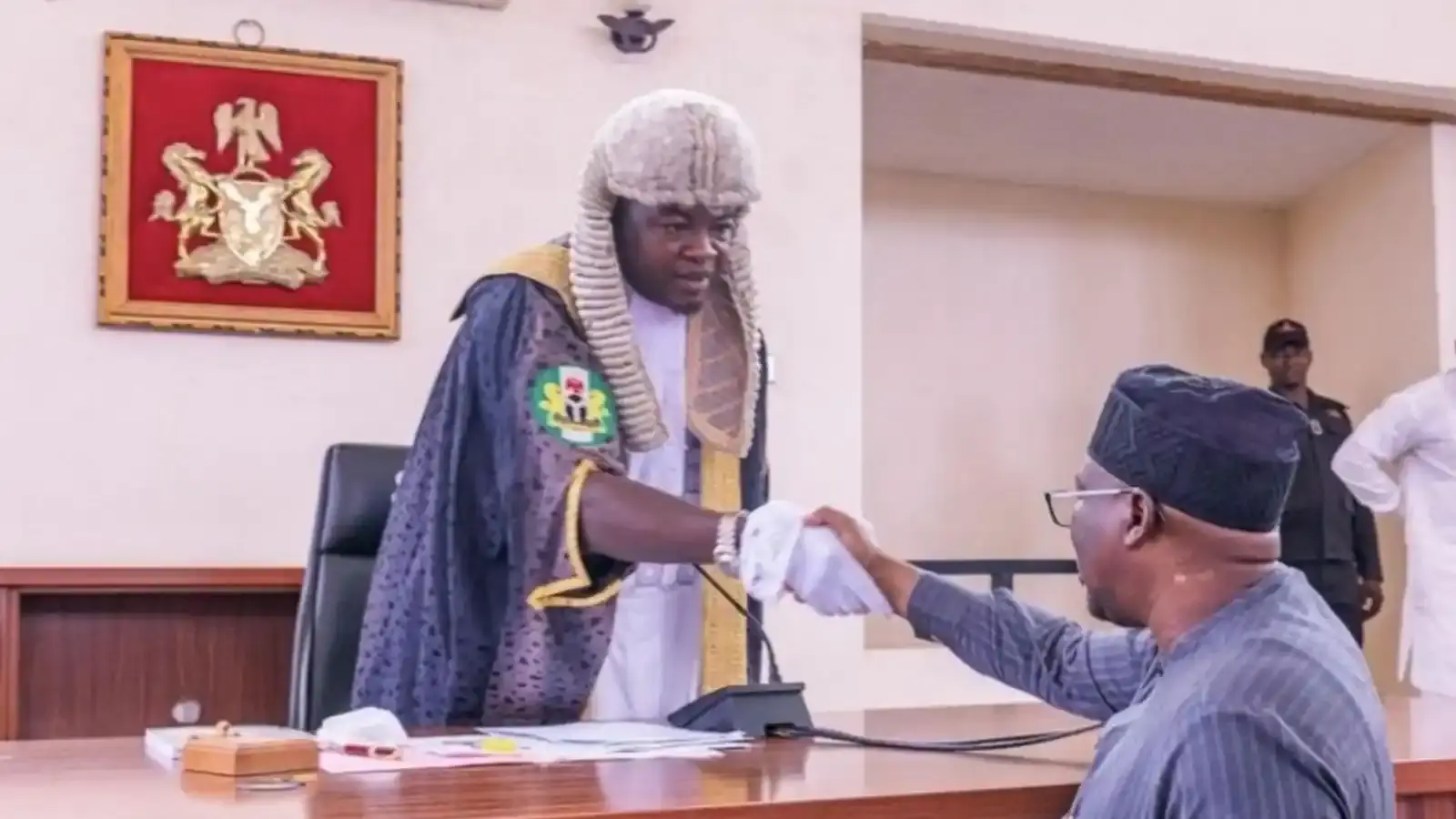
A major political shift unfolded in Adamawa State this week as fifteen members of the state House of Assembly formally resigned from the Peoples Democratic Party, pointing to deep-seated divisions within the party’s national structure that have persisted for years and eroded its unity.
Speaker Bathiya Wesley made the disclosure during Wednesday’s plenary session, revealing that he and Deputy Speaker Buba Jijiwa were among those stepping away from the PDP. “All the resignation letters conveyed the same message,” Wesley stated. “The lawmakers pointed to the prolonged crisis at the national level of the PDP as the main reason for their decision. They also expressed gratitude to the party for the opportunity to contest and win elections on its platform.”
The lawmakers who submitted their resignation letters include Kefas Calvin from Toungo Constituency, Bulus Geoffrey from Leko Constituency, Haruna Jilantikiri from Madagali Constituency, Kefas Emmanuel from Song Constituency, Ahmed Belel from Jingi Constituency, Moses Zah from Yerima Constituency, Kate Mamuno from Demsa Constituency, Pwamwakeno Mackondo from Ganye Constituency, Adun Alaba from Guyuk Constituency, Bulus Kantom from Shelleng Constituency, Musa Kallamu from Mayo Belwa Constituency, and Japhet Hammanjabu from Verre Constituency. This group, combined with the speaker and deputy, represents a significant portion of the 25-member assembly, where the PDP had held a commanding majority since the 2023 elections.
Separately, Abubakar Abdullahi, the representative for Girei State Constituency, tendered his resignation from the PDP on Tuesday, citing similar concerns over the party’s national turmoil. His move preceded the larger wave announced the following day, underscoring a coordinated undercurrent of discontent among the state’s legislators.
Reports from multiple sources indicate that these departing members are poised to align with the All Progressives Congress, though no official declaration has been issued yet. This potential migration aligns with broader speculations surrounding Governor Ahmadu Fintiri, who is said to be in the final stages of preparations to switch to the APC. Last Saturday, Fintiri hosted APC national and state leaders at an iftar event during Ramadan at the Government House in Yola. He described the occasion as a platform to enhance dialogue, promote cooperation, and reinforce commitments to peace, stability, and sustainable development in Adamawa State.
The resignations come against the backdrop of unrelated but positive administrative actions by Fintiri’s government, including the approval for recruiting 4,000 new staff into the Adamawa civil service, the presentation of a staff of office to Gadiga as Mbege Ka Michika, and a New Year message soliciting continued public support for his administration’s initiatives.
This development in Adamawa reflects a longstanding pattern of political instability within the PDP, Nigeria’s oldest major party, which has been plagued by internal fractures since its founding in 1998. Formed as a broad coalition to usher in the Fourth Republic after years of military rule, the PDP dominated Nigerian politics from 1999 to 2015, controlling the presidency under Olusegun Obasanjo, Umaru Musa Yar’Adua, and Goodluck Jonathan, while holding majorities in most state assemblies and governorships. At its peak, it governed 27 states, but internal rifts began to surface early, driven by godfatherism, power-sharing disputes, and a lack of institutional discipline.
A pivotal moment came in 2013 with the Nigeria Governors’ Forum election crisis, where then-Rivers Governor Rotimi Amaechi’s victory over Jonah Jang split the party. This led to the formation of the “new PDP” faction, culminating in the defection of five governors—including Adamawa’s Murtala Nyako—to the emerging APC, contributing directly to the PDP’s loss of the presidency in 2015. Subsequent crises included the 2016 leadership tussle between Ali Modu Sheriff and Ahmed Makarfi, resolved only through Supreme Court intervention, and the 2023 G-5 revolt led by Nyesom Wike and allies like Seyi Makinde, who openly opposed the party’s presidential candidate, Atiku Abubakar, exacerbating electoral defeats.
Currently, the PDP’s national woes persist with factional battles between Wike’s camp and Makinde’s, including disputes over a planned March 2026 convention amid ongoing court cases. The Independent National Electoral Commission’s recognition of the Wike-led faction has deepened divisions, raising questions about the party’s ability to field candidates in 2027 and its role as a viable opposition. Analysts note that these issues stem from a lack of internal democracy, frequent leadership turnovers, and policy inconsistencies, reducing the PDP to governing just four states today from its former dominance.
In Adamawa specifically, political defections have a rich history intertwined with national trends. The state has seen multiple high-profile switches, such as Nyako’s 2013 defection from PDP to APC amid impeachment threats, which reshaped local power dynamics. More recently, Senator Elisha Abbo defected from PDP to APC in 2020, citing similar national crises, while former Governor Jibrilla Bindow’s moves between parties highlighted the fluid alliances in the region. These shifts often align with federal power balances, as incumbents seek central government favor for resources and security, a pattern evident in Fintiri’s recent overtures.
Nationally, defections have been a fixture in Nigerian politics since the Second Republic, with figures like Abubakar Rimi and Akin Omoboriowo sparking crises in the 1980s. In the Fourth Republic, over 100 lawmakers defected between 2015 and 2019 alone, often driven by personal ambitions, ethnic sentiments, or party mismanagement, undermining democratic consolidation. Legal frameworks, such as Section 68(1)(g) of the 1999 Constitution, mandate seat vacancies for defectors without proven party division, but enforcement remains inconsistent, as seen in cases like Atiku Abubakar’s 2006 switch and Aminu Tambuwal’s 2014 defection.
If confirmed, the Adamawa lawmakers’ move to APC could tip the assembly’s balance, potentially easing Fintiri’s path if he defects, though it risks internal resistance within the APC from established figures wary of newcomers dominating the 2027 ticket. Adamawa Assembly Shaken By Mass PDP Resignations