
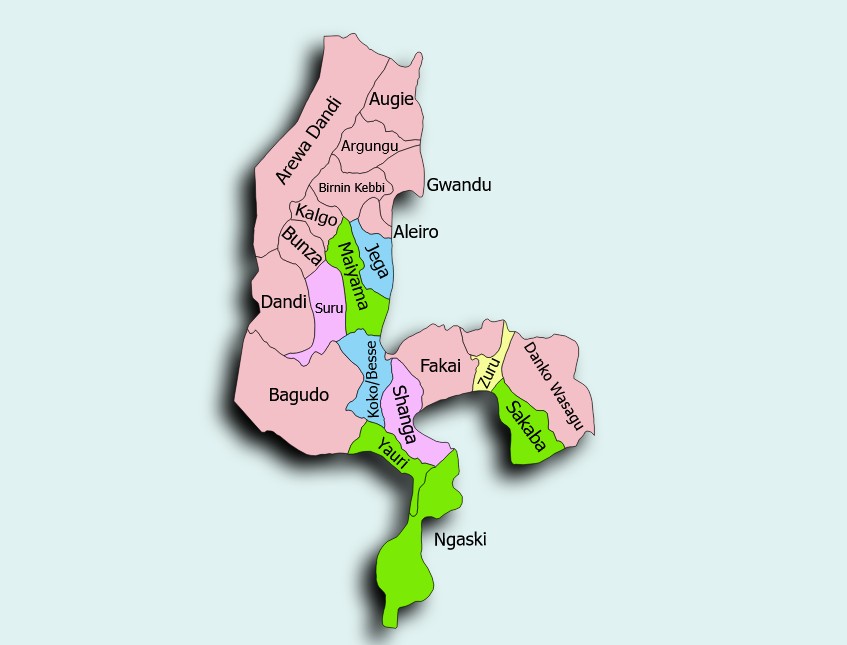
A fragile sense of security in Kebbi State was shattered on Wednesday evening. Suspected Lakurawa terrorists attacked a mosque in Dadinkowa, Maiyama Local Government Area, killing five worshippers. Three others sustained gunshot wounds as the gunmen opened fire during evening prayers. This was not a random act of banditry but a calculated strike. The police confirm the massacre was a reprisal for a failed ambush on a high-ranking military officer.
The violence began on 24 February near Maiyama Hill. Armed elements of the Lakurawa group targeted the convoy of Major-General Bemgha Koughna. As the General Officer Commanding the 8 Division, Koughna was visiting frontline troops when his vehicle came under heavy fire. The military responded with superior force, killing five of the attackers and forcing the rest to retreat into the forest. It was a tactical victory for the army but a death sentence for the local civilians.
Retaliation followed with predictable and tragic speed. Unable to best the soldiers, the terrorists turned their weapons on the unarmed. Attacking a house of worship during prayer is a hallmark of the Lakurawa group’s desperation. It signals a shift from territorial ambition to pure, vengeful terror. The community of Dadinkowa now joins a growing list of settlements paying the price for military successes.
The Lakurawa group remains a relatively new but lethal presence in Nigeria’s northwest. Their ability to ambush a divisional commander suggests a high level of intelligence and firepower. While the army successfully foiled the initial hit, the subsequent mosque attack reveals a gaping hole in rural protection. Soldiers win the battles in the hills, but villagers lose their lives in the valleys. This cycle of strike and counter-strike defines the current security failure.
Evacuating the injured to medical facilities offers little comfort to a traumatised town. The police command claims to have identified the “terrorist elements” responsible, yet the gunmen remain at large in the forests. Surveillance must now move beyond protecting convoys to shielding soft targets. If the state cannot prevent reprisals, every military victory will feel like a pyrrhic one.
The Governor of Kebbi and the military high command must rethink their strategy for the borderlands. Protecting a General is a necessity; protecting a congregation is a duty. Until the Lakurawa are flushed out of their forest hideouts, no mosque or market in Maiyama is truly safe. The blood on the mats of Dadinkowa is a grim reminder of a war that is far from over.