
A Delhi court on Friday discharged former Chief Minister Arvind Kejriwal and 22 others from all charges in the high-profile excise policy case, marking the end of a nearly four-year legal battle that had ensnared key opposition figures and fueled allegations of political vendetta against Prime Minister Narendra Modi’s government.
The ruling by Special Judge Jitender Singh at the Rouse Avenue Court stated there was “no overarching conspiracy or criminal intent” behind the now-scrapped Delhi Excise Policy 2021-22, and that the Central Bureau of Investigation had built its case on conjecture rather than concrete evidence. The court refused to take cognisance of the CBI chargesheet, noting significant lacunae and a failure to substantiate claims of corruption or intent to defraud the state. This discharge, distinct from an acquittal after trial, means the court found insufficient grounds even to frame charges, effectively closing the CBI’s probe unless appealed.
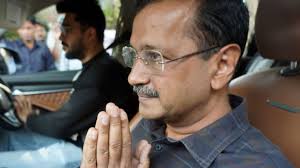
Kejriwal, 57, a prominent leader of the opposition Aam Aadmi Party and a key opponent of Modi who had consistently denied wrongdoing, wept as he left the court. “Truth has won,” Kejriwal told reporters after the verdict, accusing Prime Minister Narendra Modi and Home Minister Amit Shah of using a “political conspiracy” to finish AAP. He described the case as the “biggest political conspiracy” in the history of independent India, asserting it was fabricated to target his party and that the court had proven AAP leaders are “kattar imaandar” or deeply honest.
On Friday, the Delhi court cleared him, his former deputy Manish Sisodia, and 21 others of all charges. The accused included Telangana politician K Kavitha, AAP leader Vijay Nair, and others implicated in the alleged irregularities. Kejriwal spent several months in jail after he was arrested in March 2024 on accusations that his administration received kickbacks from the allocation of liquor licenses. He was detained by the Enforcement Directorate on March 21, 2024, and later taken into CBI custody in June 2024, before resigning as chief minister in September 2024 amid the proceedings. Sisodia was arrested by the CBI in February 2023.
The case stemmed from the Delhi Excise Policy 2021-22, introduced by the AAP government in November 2021 to reform liquor sales in the capital by privatizing retail outlets and aiming for higher revenue through competitive licensing. It was scrapped in July 2022 following complaints of procedural lapses. A report by Delhi Chief Secretary Naresh Kumar to Lieutenant Governor Vinai Kumar Saxena in July 2022 alleged arbitrary decisions by Sisodia, resulting in financial losses exceeding 580 crore rupees to the exchequer. The CBI’s August 2022 FIR claimed irregularities in policy formulation, including reduced license fees, fixed profit margins benefiting private players, and kickbacks used to fund AAP’s campaigns in Punjab and Goa elections. The Enforcement Directorate probed money laundering aspects, estimating losses over 580 crore rupees and alleging a criminal conspiracy at the policy’s inception.
Kejriwal, who began his career as a tax collector but quit his civil service job to become an anti-corruption crusader, bringing him national fame, had labeled the probe a ploy by the ruling Bharatiya Janata Party to dismantle his party. A mechanical engineer from IIT Kharagpur, he joined the Indian Revenue Service in 1995 and founded Parivartan in 1999 to fight corruption in public services using the Right to Information Act. He won the Ramon Magsaysay Award in 2006 for his activism. In 2011, he played a pivotal role in the India Against Corruption movement under Anna Hazare, demanding a Jan Lokpal Bill to combat graft. Ideological differences led to the formation of AAP on November 26, 2012, as a political alternative focused on transparency and governance.
AAP, born from the 2011 anti-corruption protests amid scandals during the Congress-led UPA regime, positioned itself as a post-ideological populist party. It debuted strongly in Delhi’s 2013 assembly elections, winning 28 of 70 seats, and formed governments in 2015 and 2020 with landslides. By 2022, it governed Punjab and held seats in Gujarat, Goa, and Jammu and Kashmir. However, the excise case overshadowed Kejriwal’s tenure, contributing to AAP’s loss in the February 2025 Delhi elections, where BJP secured 48 seats to AAP’s 22.
Rekha Gupta, a member of Modi’s Hindu-nationalist Bharatiya Janata Party, was elected as chief minister of the sprawling megacity of more than 30 million people in February 2025. The 50-year-old former student leader and first-time MLA from Shalimar Bagh took oath on February 20, 2025, marking BJP’s return to power in Delhi after 27 years. In her first year, Gupta released a report card highlighting achievements like education reforms, including smart classrooms and digital libraries, and a 1 lakh crore rupee budget for 2025-26 focused on development. She pledged to resolve pending issues from previous governments and transform Delhi’s work culture.
Several of Modi’s opponents have faced criminal investigation or trial in recent years, including two state chief ministers. Since 2014, 95 percent of Enforcement Directorate and CBI cases have targeted opposition politicians, with 121 prominent leaders investigated, 115 from opposition parties. Of 25 opposition leaders facing probes who joined BJP, 23 saw their cases stalled or closed. Critics argue this reflects selective justice, with agencies like ED and CBI weaponized against rivals while sparing BJP allies. In August 2025, the government introduced a bill to remove politicians if they are arrested and detained for 30 days, which opponents called a “chilling” bid to crush constitutional safeguards. The Constitution (130th Amendment) Bill, 2025, proposed automatic removal of PM or CM if detained 30 days for offenses punishable by five years or more, allowing bail applications within that period. Opposition labeled it a tool to destabilize non-BJP governments via framed arrests.
This verdict comes amid unrelated global developments, including Bill Gates pulling out of an India AI summit as world leaders gather, a court freeing an ex-police officer after colleagues’ frame-up led to jail, and Trump cutting India tariffs while stating Modi will halt Russian oil imports.
The CBI and ED have yet to comment on potential appeals, leaving the situation evolving as political reactions unfold.