

UCH Operations Paralyzed as Unions Strike Over Power Rationing
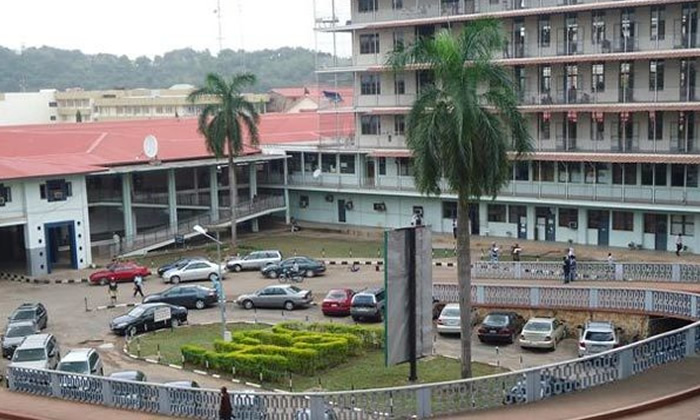
A five-day warning strike has brought the University College Hospital (UCH), Ibadan, to its knees, as medical staff protest what they call “deliberate internal power rationing.” The industrial action, which began on Monday, March 2, has forced the premier teaching hospital to stop admitting new patients and cancel routine surgeries. While the Ibadan Electricity Distribution Company (IBEDC) restored the national grid connection in February, the Council of UCH Union Leaders (CUUL) alleges that management is withholding power from critical service areas and residential quarters to cut costs.
The human cost of the blackout is staggering for a facility once famed for treating royalty. Surgeons are reportedly operating under headlamps, while nurses use mobile phone torches to navigate wards at night. The unions, a coalition of 11 groups including resident doctors and nurses, warn that the lack of steady power has broken cold chains, destroying vital vaccines and medications. Laboratory results are delayed, and life-saving diagnostic equipment remains idle, turning a 21st-century hospital into what staff describe as a “facility from a bygone era.”
This crisis is the climax of a long-standing financial dispute between the hospital and its energy provider. IBEDC previously disconnected the facility over a debt that has ballooned to nearly N3.1 billion since 2019. Despite a recent N25 million partial payment against a N500 million outstanding bill, the underlying liquidity crisis remains unresolved. Management’s attempt to ration electricity to stay within a meager budget has instead triggered a revenue collapse, as the hospital now loses millions of naira daily from suspended services.
Secondary effects of the power cuts are compounding the misery. The inability to power pumping machines has led to acute water shortages across the hospital complex and staff hostels. This has heightened the risk of hospital-acquired infections and forced relatives of patients to manually fetch water to upper floors. Students at the University of Ibadan have also seen their clinical training come to a halt, prompting previous rounds of street protests and petitions for federal intervention.
Political intervention has so far failed to provide a permanent fix. Minister of Power Adebayo Adelabu recently criticized IBEDC for its poor meter rollout and summoned management to explain the “unacceptable” service delivery indices for 2026. While the federal government has approved a 15MW solar project for the university and hospital axis, these off-grid solutions remain in the construction phase. For now, the hospital relies on expensive, intermittent generator power that cannot sustain the entire complex.
The unions have warned that they may embark on an indefinite strike if their demands are not met by Saturday morning. They are calling for an immediate end to internal rationing, the restoration of water supply, and a reversal of “arbitrary” rent increases in staff quarters. Without a significant injection of funds from the Federal Ministry of Health to clear the debt backlog, Nigeria’s foremost referral center risks total functional collapse.