
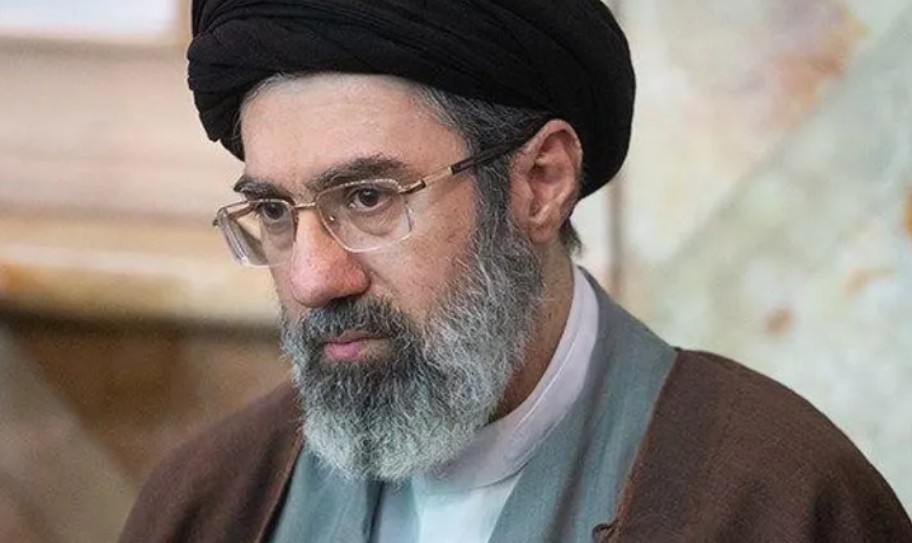
Iran has appointed Mojtaba Khamenei as its new Supreme Leader following the death of his father, Ayatollah Ali Khamenei, in a recent U.S.-Israeli strike. The 88-member Assembly of Experts finalised the appointment this morning, marking the first dynastic succession since the 1979 Islamic Revolution. Mojtaba, a hardline cleric with deep institutional ties to the Islamic Revolutionary Guard Corps (IRGC), now holds absolute authority over Iran’s nuclear programme, military strategy, and internal security apparatus.
Global energy markets suffered an immediate convulsion as the news broke. Brent crude surged past the $100 mark, settling near $108 per barrel amid fears that the new leadership will retaliate by closing the Strait of Hormuz. Analysts warn that Mojtaba’s ascension signals a “no-compromise” era for Tehran, as the region teeters on the edge of a total conventional war. This price spike has already triggered a fresh round of fuel price hikes at pumps from Lagos to London.
The appointment consolidates the power of the IRGC within the Iranian political structure. Mojtaba has long been viewed as the “shadow” operator behind his father’s office, managing the crackdown on domestic dissent and coordinating regional proxy networks. His formal elevation ends years of speculation regarding a civilian or moderate successor. Military commanders across the “Axis of Resistance” have already pledged their loyalty to the new leader, heightening the risk of coordinated strikes against Western interests.
Reaction from Washington and Jerusalem has been predictably swift and hostile. Officials in the United States described the transition as a “coronation of a hardline extremist,” warning that diplomacy is now effectively dead. Israel has placed its northern and southern fronts on the highest state of alert, anticipating that Mojtaba may authorise a significant escalatory response to his father’s assassination. The “succession by blood” has also sparked quiet unease among some of Iran’s traditional clerical elite in Qom.
Geopolitically, this move reshapes the Middle East into a more volatile bipolar landscape. With a younger, more ideologically aggressive leader in Tehran, the threshold for regional conflict has lowered significantly. The displacement of over 100,000 civilians in the last week of fighting is likely only the beginning of a broader humanitarian crisis. For global markets, the “Mojtaba Era” begins with the highest energy prices seen in over two years.
The world now watches the Strait of Hormuz, where 20% of the world’s oil passes daily. If Mojtaba makes good on previous IRGC threats to weaponise energy flows, $108 per barrel will seem like a bargain. For Nigeria, the irony is sharp: while the treasury may benefit from higher crude prices, the average citizen faces a brutal inflationary wave at the fuel pump. The transition in Tehran is no longer a local affair; it is a global economic emergency.