

CBN: FX Fixes, $50B Reserves Defy Oil Price Surge
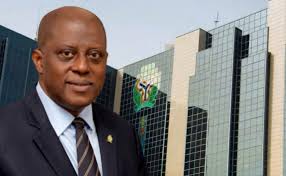
Governor of the Central Bank of Nigeria, Olayemi Cardoso, has expressed confidence that the country’s ongoing macroeconomic reforms have fortified the economy against potential shocks from escalating geopolitical tensions in the Middle East, particularly the evolving crisis involving the United States, Israel and Iran.
Cardoso made the assertion on Wednesday while delivering a Distinguished Alumni Lecture at the Founders Day celebration of St Gregory’s College Lagos, where he outlined how policy interventions implemented over the past two years have strengthened Nigeria’s capacity to withstand external economic pressures.
“Today, the global economy is facing renewed shocks, including continued geopolitical tensions and developments in the US-Israel-Iran conflict. These events have the potential to push energy prices higher, disrupt supply chains and increase risk aversion among global investors,” Cardoso stated. “But the macroeconomic reforms and policy buffers we have built over the past two years have placed Nigeria in a far stronger position to navigate these challenges. The storms may come, but our house will stand firm.”
The CBN governor’s remarks come amid heightened concerns over the impact of Middle Eastern tensions on global oil markets, with crude prices hitting $100 per barrel in recent weeks, raising fears of inflationary pressures in import-dependent economies like Nigeria. Analysts have warned that sustained escalation could disrupt global supply chains, trigger capital flight from emerging markets, and compound economic challenges for developing nations already grappling with debt servicing and foreign exchange shortages.
Nigeria, Africa’s largest oil producer with a production capacity exceeding 1.5 million barrels per day according to OPEC data, remains vulnerable to global energy market fluctuations despite being a major crude exporter. The country imports the bulk of its refined petroleum products due to decades of refinery underperformance, making it susceptible to international price shocks. However, recent subsidy removal reforms and efforts to stabilize the foreign exchange market have been positioned by authorities as measures to cushion the economy from external volatility.
Cardoso disclosed that Nigeria’s foreign exchange market has undergone significant transformation following policy reforms introduced by the apex bank, with deliberate measures eliminating distortions and restoring investor confidence.
“Today, the foreign exchange market operates with far greater liquidity and efficiency, while the backlog of unmet demand has been cleared. Market participants are now able to transact without relying on extraordinary Central Bank interventions,” he said.
The CBN governor also revealed that Nigeria has witnessed a substantial improvement in capital inflows as investor confidence gradually returns, noting that the country’s external reserves have strengthened significantly in recent months.
He disclosed that Nigeria’s external reserves recently exceeded $50 billion, the highest level in more than a decade, supported by improved balance of payments and increased foreign investment.
According to data from the Central Bank of Nigeria, the country’s external reserves stood at approximately $33 billion in May 2023 when President Bola Tinubu assumed office. The reserves had declined from over $62 billion in 2008 during the global financial crisis to fluctuating levels between $23 billion and $45 billion over the past decade, largely due to foreign exchange pressures, declining oil revenues, and capital flight.
The recent surge past $50 billion represents a significant recovery attributed to improved dollar inflows from foreign portfolio investors, diaspora remittances, reforms in the Investors’ and Exporters’ window, and enhanced transparency in foreign exchange allocation. The Central Bank unified Nigeria’s multiple exchange rate windows in June 2023, collapsing the official and parallel market rates into a single Investors’ and Exporters’ window to eliminate arbitrage and restore market confidence.
The CBN also cleared a backlog of over $7 billion in unmet foreign exchange demand owed to airlines, manufacturers, and importers, a move that had constrained foreign investor sentiment and triggered threats of service withdrawal by international carriers. The settlement of these obligations has been credited with improving Nigeria’s credibility in international financial markets.
However, the naira has remained under pressure despite the interventions, trading at approximately N1,550 to the dollar at the official market and higher at the parallel market as of March 2026, compared to around N460 to the dollar before the June 2023 unification. Inflation has also surged, reaching over 30 percent in recent months according to the National Bureau of Statistics, driven by fuel subsidy removal, exchange rate adjustments, and rising food prices.
Cardoso’s optimism about Nigeria’s resilience contrasts with concerns among economists and business groups over the country’s vulnerability to external shocks, particularly in the context of rising global oil prices and potential capital outflows from emerging markets. While higher oil prices could boost government revenues, they simultaneously increase the cost of petroleum imports, widen fiscal deficits, and exacerbate inflationary pressures on households and businesses.
The International Monetary Fund and World Bank have acknowledged Nigeria’s reform efforts but have cautioned that sustained implementation, fiscal discipline, and structural adjustments in key sectors remain critical to achieving macroeconomic stability and inclusive growth.
Addressing students at the Founders Day event, Cardoso urged young Nigerians to equip themselves with skills relevant to the emerging digital and technology-driven global economy, emphasizing that the careers of the future will increasingly favor individuals with multidisciplinary skills and adaptability.
“The careers of the future will increasingly favor individuals who possess multidisciplinary skills and the ability to adapt to rapidly changing technological environments,” he stated, advising students to cultivate curiosity, discipline, integrity and adaptability as essential foundations for leadership and success in an increasingly complex global economy.
St Gregory’s College Lagos, founded in 1928 by the Catholic Mission, is one of Nigeria’s oldest and most prestigious secondary schools, with an alumni network that includes prominent figures in Nigeria’s political, business, and professional spheres. The annual Founders Day celebration brings together former students to reflect on the institution’s legacy and engage with contemporary national issues.
Cardoso’s lecture is part of a broader communication strategy by the Central Bank to build public confidence in Nigeria’s economic trajectory amid criticisms of the reform policies’ impact on living standards and business costs. The CBN has maintained that short-term pains are necessary to achieve long-term macroeconomic stability, sustainable growth, and improved investor sentiment.
The governor’s assessment of Nigeria’s resilience will be tested in the coming months as global geopolitical tensions evolve and their impact on energy markets, capital flows, and trade dynamics becomes clearer.