
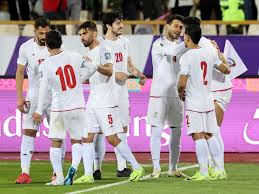
The Iranian national football team has issued a firm rebuke to United States President Donald Trump, declaring that “no one can exclude” them from the 2026 World Cup after Trump suggested their participation would be inappropriate “for their own life and safety.” The war of words, playing out on social media platforms, has thrust the month’s premier sporting event into the centre of an escalating geopolitical crisis following recent American and Israeli military strikes on Iranian territory.
In a post on his Truth Social platform on Thursday, Trump appeared to contradict assurances he had given to FIFA President Gianni Infantino just two days earlier. “The Iran National Soccer Team is welcome to The World Cup, but I really don’t believe it is appropriate that they be there, for their own life and safety,” Trump wrote, adding a signature flourish: “Thank you for your attention to this matter! President DONALD J. TRUMP.” The statement, posted without further explanation, immediately cast a shadow over the tournament’s carefully cultivated image of international unity .
The Iranian team responded within hours through an official social media statement that was subsequently reposted by head coach Amir Ghalenoei. The statement grounded its argument in the authority of football’s global governing body rather than engaging directly with Trump’s security concerns. “The World Cup is a historic and international event and its governing body is FIFA — not any individual, country,” the team said. “Iran’s national team, with strength and a series of decisive victories achieved by the brave sons of Iran, was among the first teams to qualify for this major tournament” .
The response turned Trump’s warning back onto the host nation itself. “Certainly, no one can exclude Iran’s national team from the World Cup; the only country that can be excluded is one that merely carries the title of ‘host’ yet lacks the ability to provide security for the teams participating in this global event,” the statement continued, directly challenging America’s capacity to guarantee safety for visiting teams .
Trump’s Thursday posting represented a sharp reversal from the message conveyed to FIFA’s leadership earlier in the week. On Tuesday, Infantino had taken to Instagram to announce that he met with Trump in Washington and that the president “reiterated that the Iranian team is, of course, welcome to compete in the tournament.” White House sources, speaking on condition of anonymity, confirmed the meeting and Trump’s assurance at that time. Infantino had thanked Trump, posting that “it shows once again that Football Unites the World” .
What changed in the intervening 48 hours remains unclear. Trump’s latest statement offered no elaboration on what specific threats might await Iranian players on American soil, nor did it address how the tournament might proceed if a qualified team withdraws under such circumstances. The White House has not clarified the president’s meaning .
The diplomatic confusion follows an earlier, seemingly contradictory signal from Tehran itself. On Wednesday, Iranian Sports Minister Ahmad Donyamali told state television that Iran would not participate in the World Cup following the military strikes. “Given that this corrupt regime has assassinated our leader, under no circumstances do we have the appropriate conditions to participate in the World Cup,” Donyamali said, according to multiple translations. “Our players do not have security, and fundamentally the conditions for participation do not exist” .
This statement from a government minister appeared to place Iran’s participation in grave doubt. Yet the national team’s defiant response on Thursday suggests a potential disconnect between political leadership in Tehran and the football establishment, or perhaps a strategic recalibration after Trump’s latest intervention.
The military context lending urgency to these exchanges began on February 28, when United States and Israeli forces launched strikes against Iran. The attacks resulted in the death of Iran’s Supreme Leader Ayatollah Ali Khamenei, an event that has fundamentally altered the strategic landscape of the Middle East. Iran subsequently launched retaliatory strikes against Israel and four Gulf Arab countries hosting American military bases: Bahrain, Kuwait, Qatar, and the United Arab Emirates .
For the World Cup, the timing could hardly be more sensitive. Iran qualified for what would be its fourth consecutive appearance at the finals by topping its group in the Asian qualifying rounds. The team is drawn in Group G and scheduled to open its campaign against New Zealand on June 15 at the SoFi Stadium in Inglewood, California. Four days later, they face Belgium at the same venue, before travelling to Seattle to meet Egypt on June 26 at Lumen Field .
The tournament, running from June 11 to July 19, represents the first expanded 48-team edition and the first to be co-hosted by three nations: the United States, Canada, and Mexico. Organisers have projected an influx of more than five million international visitors, with all the attendant complexities of cross-border coordination, visa processing, and security management .
Trump’s comments add a political dimension that organisers and FIFA had hoped to avoid. While athletes and coaches from nations subject to American travel restrictions are typically exempt, the explicit suggestion from a sitting president that a participating team’s safety cannot be guaranteed creates an unprecedented situation. James Kitching, a former director of football regulatory at FIFA, told Reuters that no modern precedent exists for a team withdrawing from the World Cup finals under such circumstances. FIFA regulations grant the governing body wide discretion to determine replacements and impose sanctions, though Kitching noted that “if Iran withdrew for any reason related to this current conflict, I doubt FIFA would impose any sanctions given the circumstances” .
Iran’s football team, known as Team Melli, has previously navigated politically charged encounters with American sides. The most famous meeting came at the 1998 World Cup in France, when Iran defeated the United States 2-1 in a match laden with diplomatic symbolism that nonetheless proceeded without incident. Players from both teams exchanged flowers and posed for joint photographs beforehand, a moment often cited as evidence of sport’s capacity to transcend political division.
The current crisis, however, unfolds against a backdrop of active military conflict rather than diplomatic tension. Iran has already withdrawn from the Milan-Cortina 2026 Paralympic Winter Games, citing travel safety concerns, a decision confirmed by the International Paralympic Committee .
In a subsequent post on Truth Social following the initial controversy, Trump sought to reaffirm American readiness to host the global event. “The United States of America looks very much forward to hosting the FIFA World Cup,” he wrote. “Ticket sales are ‘through the roof!'” .
The contradiction between welcoming the tournament while suggesting one qualified team should not attend for safety reasons remains unresolved. FIFA, which has invested heavily in the expanded World Cup format and its North American hosting arrangement, now confronts a situation where one host government’s statements directly challenge the inclusive principles the organisation promotes.
For Iranian players who secured qualification through months of competition, the prospect of watching the tournament from home while other nations compete represents an outcome neither sporting merit nor diplomatic protocol anticipated. The team’s statement made clear their view that athletic achievement, not political circumstance, should determine participation. Whether that principle will prevail against the weight of geopolitical conflict remains uncertain as the opening kick-off approaches.