

Crude Slides as US-Iran Talks Hint at De-escalation
 Crude Oil, Fossil Fuel, Price, Reduction, Graph
Global oil prices dropped sharply and stock markets rallied on Wednesday after reports emerged that the United States had transmitted a peace proposal to Iran, while Tehran announced it would allow vessels it deemed non-hostile through the Strait of Hormuz, offering the first concrete signs that nearly four weeks of conflict could be winding down.
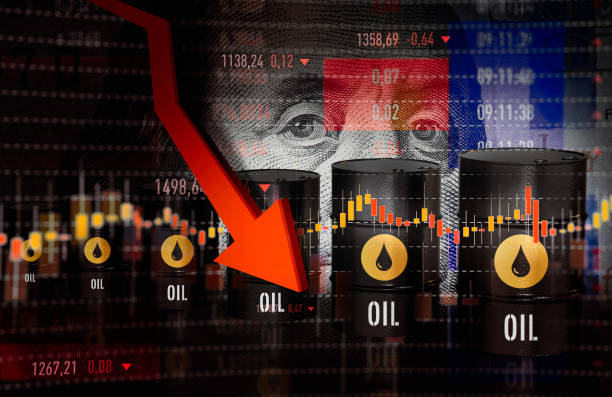
Both major crude benchmarks fell more than six per cent, with Brent North Sea Crude dropping back below $100 a barrel to $100.54, while West Texas Intermediate slid 3.1 per cent to $89.46. Gains were pared as trading progressed, reflecting lingering uncertainty over whether a ceasefire would materialise.
Speaking to reporters in the Oval Office, US President Donald Trump voiced optimism, saying officials were “in negotiations right now.” He told reporters Iran “did something yesterday that was amazing, actually. They gave us a present, and the present arrived today. And it was a very big present worth a tremendous amount of money,” adding: “That meant one thing to me — we’re dealing with the right people.” Trump did not elaborate but indicated the development related to the Strait of Hormuz, through which approximately a fifth of global oil and gas flows.
The New York Times, citing unnamed officials, reported Washington had transmitted a 15-point peace proposal via Pakistan. Israel’s Channel 12 reported the proposal included a proposed one-month ceasefire, a discussion on transferring Iran’s enriched uranium, a ban on further enrichment, and guaranteed passage through the strait. In return, Iran would reportedly receive full sanctions relief and support for civilian nuclear development.
Tehran separately circulated a message through the International Maritime Organisation assuring safe passage through the strait to non-hostile vessels.
Equity markets responded swiftly. Indices in Tokyo, Seoul, Shanghai, Hong Kong, Sydney, Singapore, Mumbai, Bangkok, Jakarta, Wellington and Taipei all closed higher. London’s FTSE 100 rose 0.7 per cent while New York’s Dow edged down 0.2 per cent.
International Energy Agency chief Fatih Birol added support to the mood, saying he was “ready to move forward” with additional releases from oil reserves if required.
However, analysts cautioned against premature optimism. Pepperstone’s Chris Weston warned that “developments on the ground do not fully support a de-escalation narrative,” pointing to reports that the US 82nd Airborne Division could deploy roughly 3,000 additional troops to the region, alongside discussions about raising the military enlistment age from 34 to 42.
The economic fallout from the crisis has grown increasingly visible worldwide. Vietnam raised diesel prices to 39,660 dong per litre, more than double pre-war levels. The eurozone reported a significant slowdown in business activity in March. France trimmed growth forecasts for the first and second quarters. The Philippines declared a national energy emergency. Sri Lanka ordered street lighting switched off. Bangladesh raised jet fuel prices 79 per cent, and Ireland cut excise duties on fuel to ease pressure at filling stations.