

Health Unions Storm National Assembly Over Contentious Reform Bills
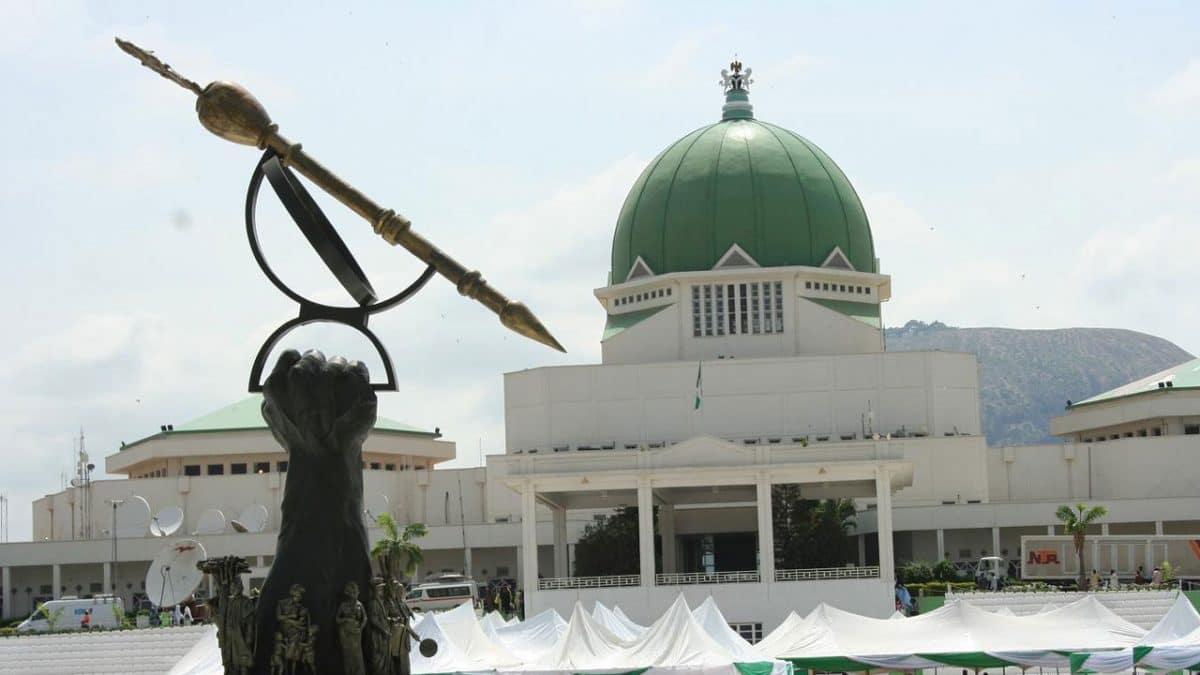
Healthcare professionals under the banner of the Joint Health Sector Unions (JOHESU) and the Assembly of Healthcare Professional Associations have converged on the National Assembly today, Thursday, March 26. The national protest aims to halt the “Health Sector Executive Bills 2026,” a legislative package unions claim threatens the professional autonomy and welfare of non-physician health workers. Participants gathered at the Unity Fountain in Maitama before marching to the legislative complex, marking a significant escalation in the sector’s long-standing labour tensions.
The unions argue that the proposed reforms, which have already scaled their first reading in the Senate, would fundamentally alter the existing power structures within Nigerian hospitals. JOHESU National Secretary, Martin Egbanubi, described the demonstration as an “existential struggle,” warning that the bills could permanently marginalise allied health professionals. While the executive branch frames the bills as a necessary modernisation of the health system, the unions see a coordinated attempt to solidify the dominance of specific professional groups in policy decisions.
This legislative friction arrives as Nigeria’s healthcare system buckles under an unprecedented “brain drain.” Thousands of doctors and nurses continue to migrate to Europe and North America, leaving domestic facilities understaffed and overstretched. Critics of the 2026 bills argue that introducing structural uncertainty now will only accelerate this exodus. Rather than stabilizing the workforce, the proposed changes to salary structures and hazard allowances appear to be doing the opposite.
JOHESU is a powerful coalition comprising the Medical and Health Workers Union of Nigeria and the Nigeria Union of Allied Health Professionals. Historically, this group has been the primary driver of industrial action in the sector, capable of shutting down public hospitals nationwide. Their grievance today centres on a perceived lack of consultation; they claim the executive bills were drafted without input from the very professionals required to implement them.
The Federal Government, however, maintains that the 2026 reforms are essential to address chronic funding gaps and governance failures. High-ranking officials have hinted that the bills aim to streamline hospital management and reduce the administrative bottlenecks that often lead to service disruptions. For the government, the protest is a reactionary response to much-needed efficiency. For the workers, it is a fight for professional survival and fair compensation in a high-inflation economy.
As the protest unfolds in Abuja, the National Assembly leadership faces a difficult choice: push forward with the executive’s agenda or pause to engage in mediated dialogue. Given the fragility of the public health system, a full-scale strike following today’s protest would be catastrophic for millions of patients. The “hard news” for the Tinubu administration is that legislative reform cannot succeed if it alienates the people who actually run the wards.