
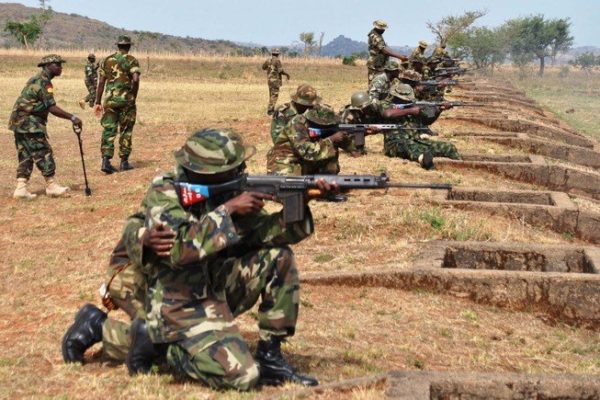
The Nigerian Army is systematically dismantling the command structure of the Islamic State West Africa Province (ISWAP). Major General Abdulsalam Abubakar, Theatre Commander of Operation Hadin Kai, confirmed on Friday that a series of intensified ground and air offensives have neutralised several high-ranking insurgent leaders. These operations are not random skirmishes; they are targeted strikes designed to shatter the logic of the insurgency in Borno State. By focusing on “high-value targets,” the military is successfully triggering leadership vacuums and internal purges within the terrorist ranks.
The most significant breakthrough occurred along the Madagali–Gwoza axis. Troops eliminated Modu Kundiri, a top ISWAP commander who served as the Qa’id of the strategic Pulka axis. This corridor is a vital link between the Sambisa Forest and the Mandara Mountains. Kundiri’s death has reportedly thrown the local command into disarray, disrupting the movement of fighters and supplies. In the Kukawa region, the army also neutralised Malam Bako Gorgore, a senior member of ISWAP’s Shura Council responsible for recruitment and ideological direction.
Air power is proving to be the decisive factor in this phase of the war. Intelligence-led airstrikes in the Yuwe axis of Sambisa Forest took out four other major commanders: Saddam, Saleh Garin Kago, Hussaini Ubaida, and Ba Alayi Benbem. These strikes destroyed command centres and logistics hubs, preventing insurgents from regrouping. In the Ngoshe–Pulka corridor, a rapid-response air mission neutralised over 50 fighters following a failed insurgent attack. The coordination between ground intelligence and aerial strikes has reached a level of precision that denies the enemy any safe withdrawal routes.
The insurgents are also being defeated by their own internal friction. Reports indicate that Abu Kasim, another ISWAP figure, was killed by an improvised explosive device (IED) planted by a rival faction. Another leader, Abu Nazir, fell during internal purges. These “factional disputes” suggest that the military’s pressure is forcing the groups to turn on themselves as resources and territory dwindle. When a movement begins to eat its own, the end of its operational coherence is usually near.
The most violent encounter took place in Malam Fatori, Abadam Local Government Area. ISWAP attempted a sophisticated assault on a military formation using advanced tactics, including armed drones. The troops repelled the attack with a combination of coordinated ground fire and precision airstrikes. The aftermath left 84 terrorists dead, including several senior field commanders. Large caches of weapons and explosives were recovered, further draining the group’s dwindling arsenal.
Despite the fluid nature of the conflict, the Nigerian forces are now extending their operations deeper into the “Timbuktu Triangle” and the shores of Lake Chad. General Abubakar maintains that while the threat remains, the tide has shifted in favour of the state. The focus remains on “dismantling the operational backbone” of the insurgency. By holding ground and pushing into previously untouched enclaves, the army is finally narrowing the geography of terror in the North-East.