
Stop Premature Campaigns, Governance Suffering — Falana
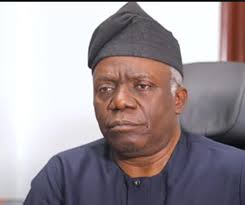
Human rights lawyer and Senior Advocate of Nigeria, Femi Falana, has called for the immediate suspension of all ongoing political campaigns across the country, warning that premature electioneering is undermining governance and worsening insecurity ahead of the 2027 general elections.
Falana, who serves as Chair of the Alliance on Surviving COVID-19 and Beyond (ASCAB), issued the demand in a statement released on Wednesday, citing growing concerns that political actors have abandoned governance responsibilities in favour of early campaigning .
The Independent National Electoral Commission (INEC) has scheduled the presidential and National Assembly elections for January 16, 2027, while governorship and state Assembly elections will hold on February 6, 2027, following revisions introduced under the Electoral Act, 2026 . Despite elections being approximately ten months away, Falana expressed alarm that some political parties and elected officials have intensified campaigns, celebrating defections by governors and legislators while governance takes a back seat.
“It is common knowledge that some political parties have commenced political campaigns even though elections will not hold until 10 months’ time,” Falana said. “The governance of the country has since been abandoned for the celebration of defections by elected governors and legislators, as well as other forms of political campaigns” .
The senior lawyer linked the neglect of governance to worsening insecurity across the country. “This premature abandonment of governance has directly contributed to widespread insecurity, including kidnapping, killings by terrorists and bandits, weak accountability, and deepening poverty,” he stated .
Falana also drew attention to what he described as a misplacement of priorities in public spending, noting that significant public funds were being expended on illegal campaigns while critical sectors remain underfunded. He highlighted that many state governments, including authorities of the Federal Capital Territory, have failed to pay counterpart funds needed to access a N98 billion matching grant from the Universal Basic Education Commission (UBEC) .
Data obtained through Freedom of Information requests indicate that 21 states and the Federal Capital Territory failed to access their UBEC allocations as of March 2026, with Imo State leading defaulters with ₦10.6 billion in unaccessed funds. Ogun State follows with ₦9.7 billion, while Rivers ranks third with ₦7.8 billion . The FCT accounts for ₦5.07 billion in idle education funds . This comes as Nigeria faces a deepening education crisis, with approximately 18.5 million children out of school—the highest number globally—according to UNICEF data cited in multiple policy briefs .
Citing legal provisions, Falana reminded political actors of the Electoral Act, which regulates campaign timelines. “Section 98(1) of the Electoral Act, 2026, clearly provides that the period of campaigning shall commence 150 days before polling day and end 24 hours prior to that day,” he said . Under the INEC timetable, public campaigns for presidential and National Assembly elections are scheduled to begin on August 19, 2026, while governorship and state Assembly campaigns will commence on September 9, 2026 .
Falana urged INEC, the Nigeria Police Force, and the State Security Service (SSS) to enforce compliance with the law and halt all ongoing political campaigns. “We are compelled to call on the relevant authorities to halt further political campaigns in strict compliance with the provisions of the Electoral Act,” he said . “The governance of the country must take precedence over premature political celebrations” .
Political analysts note that early campaigning has become a recurring feature in Nigeria’s electoral cycle, often blurring the line between governance and electioneering . The International Institute for Democracy and Electoral Assistance (International IDEA) observed in a February 2026 analysis that “overt campaign activities began immediately after the 2023 elections,” reflecting “weak accountability mechanisms that perpetuate a culture of impunity, threatening the credibility of the forthcoming elections” .