
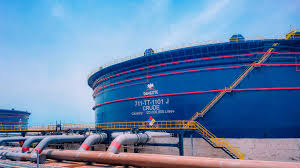
The Nigerian National Petroleum Company Limited has increased crude oil supply to the Dangote Petroleum Refinery to seven cargoes for May 2026, up from the five cargoes supplied in previous months, two trade sources and a refinery official told Reuters.
The increase follows a directive to prioritise domestic crude supply and comes as the 650,000 barrels-per-day facility continues to operate below its crude intake capacity despite running at full installed capacity. Fuel prices in Nigeria have reached record highs, and the refinery has previously disclosed it could source only about five cargoes monthly, far short of the 13 to 15 cargoes it requires to meet domestic fuel demand, forcing it to import the remainder at prices dictated by the impact of the Iran war.
“NNPC has allocated more cargoes to Dangote for May,” a senior Dangote official said. “While this will not completely meet our demands, it can help. We are also in negotiation with NNPC for more volumes”. NNPC did not respond immediately to a request for comment.
The refinery has recently been forced to pay premiums as high as $18 a barrel above the Brent crude benchmark to secure cargoes from the international spot market, equivalent to roughly $137 a barrel based on Tuesday’s Brent price. NNPC cargoes are cheaper for the refinery because of lower shipping costs, as domestic deliveries incur substantially lower shipping expenses than barrels sourced from international suppliers.
David Bird, Chief Executive Officer of the refinery, said during an interview on ARISE News that the facility is expected to receive between 13 and 15 crude cargoes monthly under the crude-for-naira programme but is currently receiving only five. “Under the agreement, we should be getting about 13 to 15 cargoes a month. That’s what we could process to meet Nigeria’s domestic fuel requirements. Currently, we’re only getting five. So, that’s an underperformance against that pre-agreed volume contract,” Bird said.
He further noted that the gap between crude purchase prices and prevailing premiums represents revenue losses to international traders rather than Nigeria. “That value between the purchase price and the premium we’re now seeing is money Nigeria is leaking to the international trading community,” he added. Clarifying the crude-for-naira policy, Bird explained that the initiative is often misunderstood. “Crude-for-naira is not there to benefit Dangote Refinery. It is meant to provide resilience to foreign exchange. It is in the country’s interest to process domestic crude in local currency,” he said.
The National President of the Oil and Gas Services Providers Association of Nigeria, Colman Obasi, said the planned increase remains inadequate given the refinery’s capacity. “The government has over the years promised to supply adequate crude oil to the Dangote Petroleum Refinery and other plants. But seven cargoes appear to be insufficient, considering the 650,000 barrels-per-day capacity of the refinery,” Obasi said. “From all indications, the refinery and others need more crude oil cargoes, and it is in the best interest of Nigeria to prioritise supply, especially now that Middle East crises have disrupted oil production and global trade flows,” he added.
Another industry expert, who spoke on condition of anonymity, stressed the need for greater domestic allocation. “As a major crude oil producer, Nigeria is expected to set aside more cargoes for domestic refining and distribution. We should reduce crude oil importation in order to conserve foreign exchange,” the expert said.
An increase in crude allocations to the refinery could also curb volumes of Nigerian crude available for export at a time when the Iran war has drastically cut supply from the Middle East, forcing buyers to hunt far and wide for available cargoes. Nigeria pumps roughly 1.5 million barrels per day, though chronic pipeline theft and maintenance outages have long kept actual output below its OPEC quota.
Dangote has raised gasoline supplies to Nigeria’s domestic market this month, meeting the needs of a little more than two thirds of Nigeria’s daily requirements of 60 million litres. It has also had to increase petrol depot prices by about 13 percent.
Despite the supply constraints, Bird maintained that the refinery is operating at full capacity, supplying both domestic and regional markets. Meanwhile, the Group Chief Executive Officer of NNPC Limited, Bashir Bayo Ojulari, recently led a delegation to the Dangote Refinery complex in Ibeju-Lekki for high-level discussions aimed at strengthening collaboration. Ojulari commended Aliko Dangote, President of the Dangote Group, for delivering the refinery, describing it as a landmark project that positions Nigeria as a major downstream hub in Africa.