
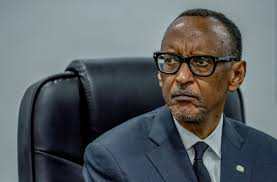
Rwanda’s President Paul Kagame has fired back at Washington with some of his sharpest language yet, describing United States sanctions against his country’s military as an affront to Rwandan sovereignty and accusing the Americans of applying pressure unevenly in a conflict that has destabilised the Great Lakes region for years.
Speaking in an interview with Jeune Afrique published on Friday, Kagame said the sanctions were nothing short of a diplomatic insult. “Sanctions and threats are nothing but insults thrown in the face of my country,” he said, adding that the US government “must not give the impression of exerting heavy pressure on one while treating the other delicately.”
On March 2, 2026, the US Treasury Department’s Office of Foreign Assets Control sanctioned the Rwanda Defence Force and four of its senior commanders, Army Chief of Staff Vincent Nyakarundi, Major-General Ruki Karusisi, Chief of Defence Staff Mubarakh Muganga, and Special Operations Force Commander Stanislas Gashugi, for what Washington described as “direct operational support” to the M23 rebel group in eastern Democratic Republic of Congo.
The US Department of the Treasury stated that the rebels’ territorial gains would not have been possible without Rwandan backing. M23, a US and UN-sanctioned entity, has been accused of summary executions and widespread violence against civilians, including women and children.
Kagame, however, maintains that Kigali has been holding up its end of the bargain. “Rwanda was fulfilling all its obligations under the agreements signed in Washington,” he said in the Jeune Afrique interview, arguing that it is the DRC that “only very partially meets them or not at all.”
The Washington Accords, formally the Joint Declaration of the Washington Accords for Peace and Prosperity, were signed on December 4, 2025, with US President Donald Trump presiding over the agreement between DRC President Félix Tshisekedi and Kagame himself. Despite the fanfare surrounding the signing, the peace has not held. Days after the deal was concluded, M23 seized the major Congolese city of Uvira on the border with Burundi, drawing an angry response from Washington.
The broader conflict predates the Washington Accords by years. M23 made significant advances in early 2025, capturing the major eastern cities of Goma and Bukavu, both of which serve as economic and administrative hubs in the mineral-rich provinces of North and South Kivu.
Rwanda has consistently insisted its involvement in eastern DRC is driven not by territorial ambition but by legitimate security concerns. Kigali maintains it is only involved to counter an enemy militia formed from remnants of those responsible for the 1994 Rwandan genocide of Tutsis, and denies direct military involvement despite considerable evidence from United Nations observers and others.
Kagame was blunt about the limits of what he would accept. “Don’t expect me to lift our defence measures while you are doing nothing to stop what threatens my country,” he said.
Beyond the DRC crisis, Kagame also used the interview to weigh in on Mozambique’s deteriorating security situation in Cabo Delgado province, calling on oil majors Total, ExxonMobil, and Eni to “find a way to finance the security they need” in the region.
Rwanda last month threatened to withdraw its troops fighting Islamist insurgents in Cabo Delgado if financing was not guaranteed by the European Union, which funds the deployment. Rwandan forces have been in the area since 2021, with the EU providing 40 million euros, approximately $46 million, in backing for equipment and strategic airlift.
The eastern DRC conflict has created one of the world’s most significant humanitarian crises, with more than seven million people displaced, according to the UN refugee agency.