
Obi Knocks Presidency Over Airport Blackout
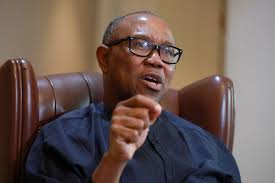
A brief airport stopover by President Bola Tinubu in Jos has handed Labour Party’s 2023 presidential candidate, Peter Obi, a fresh political opening to revisit one of the administration’s most consequential campaign promises and to argue, pointedly, that the president has failed on his own terms.
In a post on his verified X account on Saturday, Obi recalled that Tinubu, while campaigning ahead of the 2023 presidential election, had made an unusually direct pledge to Nigerians.
“If I don’t give you constant electricity in four years, don’t vote for me for a second term,” Obi quoted the president as saying.
Obi anchored his latest intervention on events of Thursday, April 2, 2026, when Tinubu flew to the Yakubu Gowon Airport in Hyeipang, approximately 40 kilometres from Jos city centre, to condole with families of victims of the recent Palm Sunday attack in Angwan Rukuba, which killed at least 28 people and left 22 injured. While addressing the gathering at the airport, the president reportedly noted that airport lights for the runway were not working, and said he had only ten minutes before he had to leave.
“You have no light at the airport and I have to fly back within the next ten minutes,” he told the gathering.
The Presidency later explained that the airport runway does not support night flights due to the absence of navigational aids, making it impractical for the president to drive into Jos, meet victims at the attack scene, and return before dusk. Presidential spokesman Bayo Onanuga attributed the time constraints to a bilateral meeting with the Chadian President, Mahamat Idriss Déby Itno, which ran longer than scheduled.
For Obi, the airport remark was damning precisely because it came from the president himself.
“At a time when Nigerians are enduring days without power, our leaders cannot even stay a few minutes without it,” he wrote, framing the incident as evidence of a leadership class shielded from the hardship it had imposed on ordinary citizens.
On the substance of his electricity argument, Obi pointed to data suggesting Nigeria’s power situation had worsened rather than improved under the current administration. He stated that average power generation had fallen below the over 4,000 megawatts recorded when Tinubu assumed office in May 2023, while electricity tariffs had risen considerably. The national grid reportedly collapsed about twelve times in 2025, and had already collapsed twice in January 2026 alone, before that month ended.
Obi further cited figures placing Nigeria’s per capita electricity consumption at 144 kilowatt-hours, against an African average of 617 kWh, describing Nigeria’s consumption rate as less than 30 percent of the continental average.
Despite power sector privatisation in 2013 and over $1.5 billion in intervention from the World Bank and other development partners, Nigeria’s electricity supply has remained largely stagnant, oscillating between 4,000 and 5,000 megawatts for a population of over 200 million.
Calling on Nigerians to use future elections as an accountability mechanism, Obi said: “Now is the time to stop incompetent leaders those lacking the capacity and compassion who prioritise their own comfort over the well-being of the people and make empty promises.”