


Nigeria Halts Onion Exports to Ghana
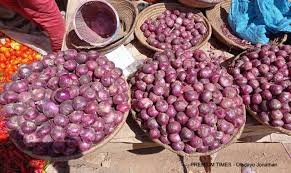
Cross-border onion trade between Nigeria and Ghana has ground to a halt following a suspension announced by the National Onion Producers, Processors and Marketers Association of Nigeria, citing persistent harassment of its members and the alleged seizure of onion-laden trucks at the Kotoku Market in Accra.
The National President of NOPPMAN, Isa Aliyu, announced the decision, describing the situation as one that could no longer be tolerated.
“Our members have endured persistent harassment, intimidation, and unfair treatment in Ghanaian markets. The recent confiscation of our trucks is unacceptable and a clear violation of trade norms,” Aliyu said.
He directed an immediate halt to all onion shipments along the Ghana corridor, stating that the suspension would hold until the safety and rights of Nigerian traders were clearly guaranteed.
“We cannot continue to expose our traders to losses and danger. This suspension will remain until there is a clear commitment to restoring a safe and lawful trading environment,” he stated.
The crisis is said to have escalated after a disagreement between traders from both countries spiralled into the physical impounding of trucks transporting Nigerian onions. Industry sources said the development had created fear and uncertainty, disrupting normal market operations on both sides of the border. With exports now on hold, stakeholders have warned of possible supply shortages in Ghana and financial losses for Nigerian farmers if the impasse is not quickly resolved.
An affected Nigerian trader, who spoke on condition of anonymity, described the situation as alarming. “We have invested heavily in this business. Seeing our goods seized without justification is heartbreaking. Many of us are now stranded and unsure of what comes next,” the trader said.
The suspension carries significant commercial weight. Nigeria ranks second in Africa for onion production, generating approximately 2.1 million metric tonnes annually, with output valued at around N1.17 trillion. In 2024, Nigeria, Niger, and Mali together accounted for 86 percent of total onion production in West Africa, underscoring Nigeria’s centrality to regional supply chains.
NOPPMAN called on both governments and regional institutions to intervene urgently, and specifically invoked the framework of the Economic Community of West African States, which guarantees the free movement of goods and fair trade practices among member states.
“We urge both governments to investigate these incidents and ensure the protection of Nigerian traders. Dialogue must be facilitated to resolve this dispute quickly,” Aliyu said.
The association also moved to counter a separate narrative that had been circulating online. Reports claiming that armed men attacked and seized Ghanaian trucks inside Nigeria were rejected outright.
“There was no attack on any Ghanaian truck. The vehicles seen at the border were there as a result of the ongoing strike, not due to any security incident,” Aliyu clarified.
Reports indicate that over 100 Ghanaian trucks are currently stranded in Nigeria, with drivers in Samia watching their goods spoil while awaiting resolution.
Disputes between local and foreign traders over market access, pricing, and control are not new within the region. Complex trade patterns driven by both price differences and product types have long shaped onion flows between Nigeria and neighbouring countries, making the corridor economically sensitive for farmers, merchants, and retailers across the value chain. Neither the Ghanaian authorities nor trade representatives from Ghana had issued a public response to the allegations at the time of this report.