
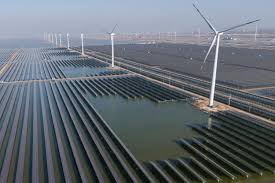
Global renewable energy capacity reached an unprecedented 5,149 gigawatts in 2025, marking a watershed moment in the worldwide transition away from fossil fuel dependence. The International Renewable Energy Agency disclosed the figures in its Renewable Capacity Statistics 2026 report, which documents the addition of 692 GW during the year and positions renewables as the dominant force in power sector expansion.
The data arrives against a backdrop of persistent geopolitical instability, particularly escalating tensions in the Middle East, which IRENA identifies as exposing the structural vulnerabilities of fossil fuel-reliant energy architectures. The agency positions renewable energy as a strategic hedge against such volatility, citing its locally sourced nature, cost competitiveness, and rapid deployability as critical advantages for national energy security.
Francesco La Camera, Director-General of IRENA, emphasised the reliability of clean energy expansion amid global uncertainty. “Amid uncertain times, renewable energy remains consistent and steadfast in its expansion,” he stated. La Camera noted that nations prioritising clean energy investment gain insulation from international shocks while improving economic competitiveness and reducing susceptibility to fluctuating fuel markets.
Solar technology emerged as the primary growth driver, contributing 511 GW—approximately 75 per cent of all renewable additions—fueled predominantly by solar photovoltaic deployment. Wind energy ranked second with 159 GW of new capacity. Combined, these two technologies constituted nearly 97 per cent of renewable expansion in 2025, while bioenergy, hydropower, and geothermal sources registered relatively modest increments.
Regional analysis reveals stark disparities in clean energy adoption. Asia commanded 74.2 per cent of new capacity installations, with China serving as the principal contributor to solar and wind deployment. Europe secured its standing as the second-largest regional market. Conversely, Central America and the Caribbean demonstrated comparatively limited growth trajectories.
Africa achieved its strongest annual renewable capacity growth on record, expanding by 15.9 per cent with 11.3 GW of additions. Ethiopia, South Africa, and Egypt spearheaded this continental advance. Nevertheless, Africa’s aggregate share of global renewable capacity remains negligible, reflecting entrenched obstacles encompassing constrained financing mechanisms, deficient infrastructure, and irregular policy frameworks.
The report casts renewed scrutiny on Nigeria’s energy transition trajectory. Despite possessing substantial renewable potential, Africa’s largest economy maintains heavy reliance on gas-fired generation while grappling with endemic electricity deficits. Stakeholders have consistently advocated for accelerated solar and off-grid solution deployment to address energy access gaps, particularly in rural areas where grid extension remains economically prohibitive. IRENA’s findings amplify existing concerns regarding the pace of Nigeria’s diversification efforts, especially in light of previous policy considerations to restrict solar imports.
Off-grid renewable electricity registered 1.7 GW of global growth, predominantly solar-powered installations. This segment carries particular significance for sub-Saharan Africa, where millions remain disconnected from reliable electricity services. The expansion of decentralised renewable solutions offers a viable pathway to circumvent traditional infrastructure limitations that have historically impeded universal energy access across the region.