


Dangote Refinery Records 78% Local Crude Supply
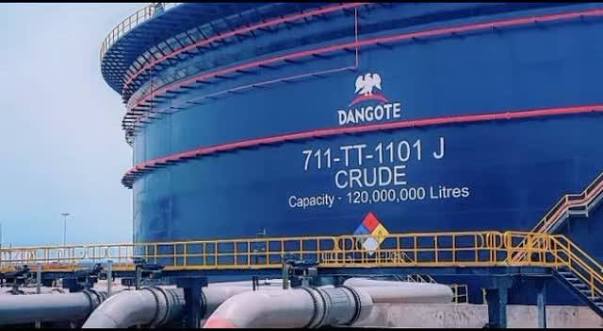
Nigerian crude oil supplied nearly four out of every five barrels processed by the Dangote Petroleum Refinery between May and June 2026, according to the plant’s own cargo discharge and pricing records, a pattern that firmly reestablishes the country as the dominant feedstock source for the 650,000 barrels per day facility in Lekki.
An analysis of those records shows the refinery received a total of 40.40 million barrels over the two months, of which 31.43 million barrels, or about 78 per cent, came from Nigerian fields. The balance of 8.97 million barrels, roughly 22 per cent, was imported from Angola, Libya, Guyana, Ghana and various international trading blends. Deliveries stood at 21.47 million barrels in May and 18.93 million barrels in June.
The month by month split was remarkably steady. In May, local grades accounted for 16.74 million barrels, or 77.97 per cent, with foreign cargoes at 4.73 million barrels. In June, domestic supply came to 14.69 million barrels, or 77.58 per cent, while imports stood at 4.24 million barrels.
The refinery released the figures to counter suggestions that its pricing tracks daily movements in international crude markets. It explained that crude is bought weeks or months ahead under contracts tied to monthly average pricing rather than spot rates.
Nigerian grades on the slate included Bonny Light, Qua Iboe, Forcados, Amenam, Bonga, Escravos, Agbami, Cawthorne, Okwori, Utapate and ABO. Bonny Light was the single largest feedstock at 5.90 million barrels, followed by Qua Iboe with 4.80 million, Amenam with 4.00 million and Forcados with 3.89 million. Together, those four supplied more than 18.5 million barrels, nearly half of total intake.
On the imported side, Libya’s El Sharara led with 2.10 million barrels, or 5.2 per cent, while combined CJ Blend and EA Blend trading cargoes contributed 2.95 million barrels, or 7.3 per cent. Guyana’s Payara added 1.02 million barrels, Angola’s Cabinda 996,349 barrels and Ghana’s Jubilee 956,001 barrels. Cargoes under the Chile Prosperity designation accounted for a further 948,917 barrels.
The records also captured a sharp fall in crude costs. In May, the refinery paid as much as 134.37 dollars per barrel for some Qua Iboe cargoes and 134.24 dollars for Bonga, with total deliveries valued at about 2.68 billion dollars. By June, most cargoes traded between 90 and 97 dollars, although Cabinda came in at 123.30 dollars, and total spending fell to roughly 1.80 billion dollars. The retreat followed easing international prices linked to concerns over slower global demand, calmer geopolitical conditions and higher output from some producers.
The figures land against a long-running dispute over feedstock. The refinery had earlier accused federal agencies of failing to enforce the domestic crude supply obligation under the Petroleum Industry Act, a claim the Nigerian National Petroleum Company Limited and regulators have rejected. NNPC and the refinery signed a fresh two year crude supply agreement running to 2027, and allocations have since risen from five cargoes monthly toward seven. The plant, which began petrol production in 2024 and now operates slightly above nameplate capacity, has cut fuel imports sharply and expanded exports across Africa.
Reacting publicly, the Chief Executive Officer of Petroleumprice.ng, Olatide Jeremiah, welcomed the shift. “For me, it is quite impressive that the crude feedstock from indigenous producers has increased significantly to over 70 per cent,” he said, adding, “This should reflect in pricing, and I believe it would reflect this month of July.” He argued that cheaper cargoes and lower logistics costs could give the refinery room to reduce ex-depot prices further.