
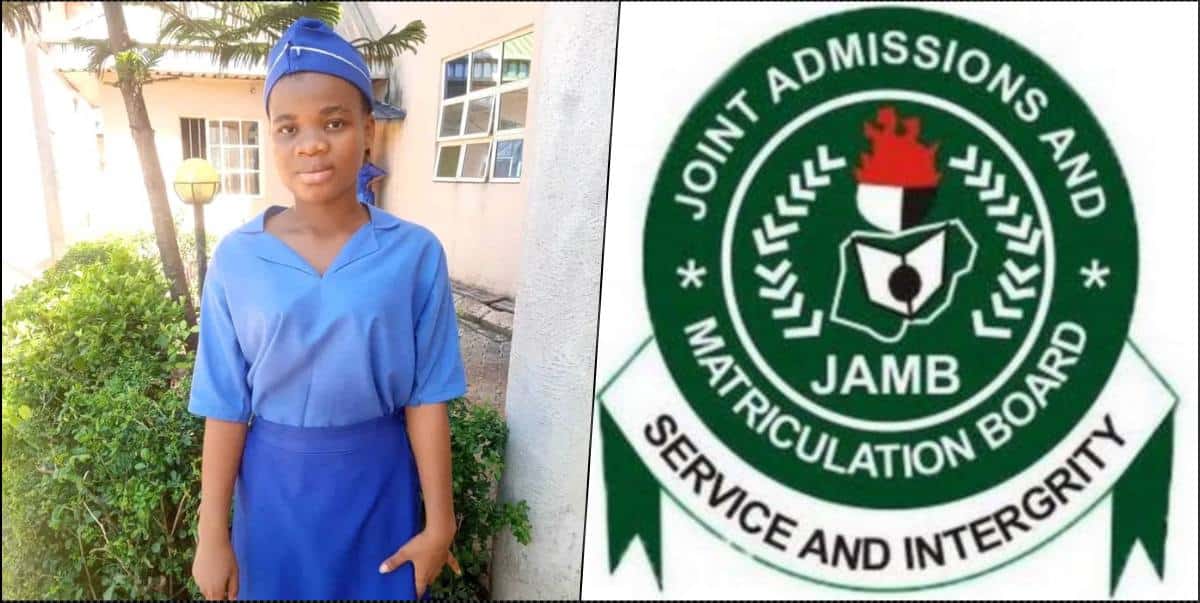
Three years after her name dominated national headlines and split public opinion, Ejikeme Joy Mmesoma is once again free to sit Nigeria’s most consequential school examination. The three year sanction the Joint Admissions and Matriculation Board imposed on the Anambra teenager in July 2023, following one of the most talked about examination fraud controversies in recent memory, lapses this month, restoring her eligibility to register for the Unified Tertiary Matriculation Examination should she choose to pursue tertiary admission.
The story began in the weeks after the 2023 UTME, when Mmesoma, then a pupil of Anglican Girls Secondary School, Nnewi, went viral for a result slip showing 362 out of a possible 400. That figure would have placed her among the highest scoring candidates in the country. The claim drew immediate goodwill, and Innoson Vehicle Manufacturing quickly announced a scholarship reportedly worth about three million naira after saying it had verified the result. Sympathy hardened into anger, however, when JAMB declared the slip false.
The board maintained that her genuine score was 249, and alleged that she had doctored the result using her mobile phone before printing a forged copy at a cybercafé. JAMB pointed to a string of inconsistencies in the document she circulated, among them mismatched registration details, date of birth, examination centre and, crucially, the format of the slip itself. The board noted that the notification of result template she used had been retired after the 2021 UTME precisely because candidates were falsifying it. In its account, the slip she paraded actually belonged to another candidate who sat the examination in 2021.
To settle the dispute, the Anambra State Government set up an independent panel of inquiry chaired by Prof. Nkemdili Nnonyelu. The panel questioned JAMB officials, Mmesoma, her school authorities and other parties. In its report released on July 8, 2023, it confirmed that her true score was 249 and that the 362 figure had been manipulated. According to the panel, she admitted altering the result herself using an Airtel line before taking it to a cybercafé for printing, said she acted alone, and apologised to JAMB, the state government and her school.
JAMB then withdrew the result and announced the sanction. “In the meantime, the management of the Board, after considering the weighty infraction committed by Ms. Ejikeme Joy Mmesoma, and in line with its established procedures, has withdrawn her 2023 UTME result and also barred her from sitting the Board’s examination for the next three years,” the board’s spokesman, Fabian Benjamin, said at the time. JAMB insisted its system had not been breached, stressing that she had merely falsified a slip.
The fallout was heavy. Innoson withdrew the scholarship, and the offer later went to a candidate who scored 360. Her father, Romanus Ejikeme, apologised publicly through the Nigerian Television Authority, saying, “My daughter didn’t open up to me on time. When I realised the mistake she did, I blamed her a lot but I’m still apologising to JAMB and Nigerians to pardon her.” Governor Chukwuma Soludo directed that she undergo three months of psychotherapy and counselling. The House of Representatives had earlier urged JAMB to suspend the ban pending investigation, while former Education Minister Oby Ezekwesili and former Aviation Minister Osita Chidoka appealed for compassion rather than public condemnation.
The case has since become a fixture in national conversations about examination ethics and digital result verification, and it gained fresh relevance in May 2025 when JAMB itself admitted a technical error that compromised the results of 379,997 candidates across 157 centres, largely in Lagos and the South East, forcing a mass resit. Registrar Prof. Ishaq Oloyede wept publicly and accepted responsibility, a moment that reopened debate over the fairness of the treatment Mmesoma had received.
Now nineteen at the time of the scandal and older today, she stands at a quiet crossroads. Whether she returns to the examination hall or steps away from it altogether, the expiry of the ban closes a formal chapter in a saga that tested public trust in Nigeria’s examination system.