
Adebutu: All Governors Divert LG Funds
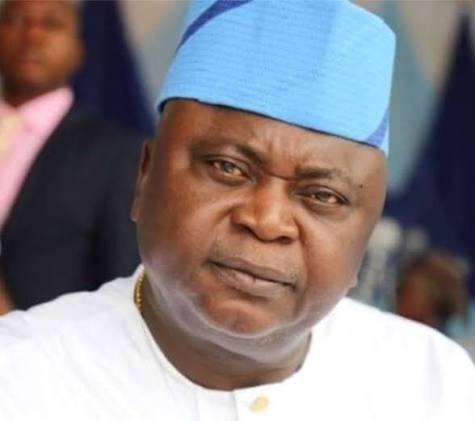
An accusation that every governor in Nigeria is misappropriating local government allocations has thrust the country’s stalled fiscal autonomy reform back into public debate, after the Peoples Democratic Party (PDP) governorship candidate in Ogun State, Oladipupo Adebutu, told traditional rulers in Abeokuta that the diversion of council money cuts across party lines.
Adebutu made the allegation at the Ake Palace during a meeting with the Egba Traditional Council, where he sought the endorsement of monarchs ahead of the 2027 governorship election. He was accompanied by his running mate, Dr. Lateefat Sowunmi-Kolapo; the PDP senatorial candidate for Ogun Central, Iyabo Obasanjo; the state party chairman, Abayomi Tella; and other party leaders.
“It’s not a party thing. Both APC and PDP, all the governors are embezzling local government allocations. It’s not a secret,” he said, pledging that granting councils full financial autonomy would become a defining policy of his administration if elected. “I will do something that will stun this nation and put us in the right direction. Local governments shall get their own money,” he added.
The charge lands at a moment when the gap between judicial pronouncement and practical reality has become one of the most closely watched governance questions in the federation. On July 11, 2024, a seven member panel of the Supreme Court, in a suit filed by the Attorney General of the Federation, Lateef Fagbemi, on behalf of the Federal Government against the Attorneys General of the 36 states, ruled that allocations from the Federation Account must be paid directly to the 774 local government councils. Delivering the lead judgment, Justice Emmanuel Agim held that the long standing practice of governors receiving and disbursing council funds through the State and Local Government Joint Account was unconstitutional. The verdict was widely celebrated as a turning point for grassroots governance, reinterpreting Section 162 of the 1999 Constitution, which governors had relied upon since 1999 to control the third tier’s finances.
Two years on, that order has largely not translated into practice. Findings published by The PUNCH in July 2026, drawn from an analysis of Federation Account Allocation Committee reports alongside data from the National Bureau of Statistics and the Office of the Accountant General of the Federation, showed that councils received about N10.48 trillion between the July 2024 and June 2026 FAAC meetings, yet direct payment had not commenced. The National Union of Local Government Employees has repeatedly said no council in the country had begun receiving its statutory allocation directly from the Federation Account. “Up till now, they have not started the implementation of the financial autonomy. You know the allocation comes from the Federal Government, so they are the ones to commence the implementation,” the union’s national president, Aliyu Kankara, said.
The scale of the sums at stake continues to grow. At the July 2026 FAAC meeting in Abuja, chaired by the Minister of Finance and Coordinating Minister of the Economy, Taiwo Oyedele, the three tiers shared N2.551 trillion from June 2026 revenue, with the 774 councils receiving N591.390 billion. That distribution marked the latest in a steady monthly climb, up from N2.3 trillion shared from May revenue and N2.04 trillion from March, according to figures released by the Office of the Accountant General of the Federation. With gross federation revenue reaching N4.5 trillion for the month, the resources flowing toward the local tier are substantial, which is precisely why the question of who controls them has remained politically charged.
Nineteen months after the ruling, the Nigeria Governors’ Forum, which historically resisted full autonomy, has publicly voiced support for administrative and financial independence for councils, even as compliance on the ground remains uneven. Analysts and civil society groups have pointed to constitutional ambiguities, the timing of council elections and administrative structures at the state level as reasons the judgment has proven difficult to enforce. The Federal Government, which secured the ruling in its own suit, has issued directives for implementation, but the mechanism for direct payment has yet to take effect nationwide.
Adebutu framed his intervention around his record and his family’s history of community development. Recalling his time in the National Assembly, he said, “I have been reiterating it to you that I, Oladipupo Olatunde, son of Adebutu, was at the National Assembly twice and I can boast that I didn’t embezzle public funds. How many politicians can say this?” He argued that councils delivered more visible development when they controlled their finances directly. “When PDP was in power and local governments were getting their funds, there were developments and they carried monarchs along in the scheme of things,” he said.
Beyond the autonomy question, the candidate outlined proposals on infrastructure and power. He said governments must move away from borrowing to fund capital projects. “You don’t borrow money for infrastructure anymore,” he said, while promising roads to improve connectivity between Ogun and Lagos. On electricity, he pledged to prioritise private sector partnership, adding that improved supply would lift household incomes and create jobs. He claimed to have personally distributed more transformers than the state government, putting the figure at more than 600 across Ogun communities. “Any day we install a transformer in any community, it ceases to be mine. It becomes the property of the electricity distribution company,” he said.
The Alake and Paramount Ruler of Egbaland, Oba Adedotun Aremu Gbadebo, welcomed the candidate warmly, recalling his long relationship with Adebutu’s father, the businessman and philanthropist Sir Kensington Adebutu. “I am pleased to present Oladipupo Adebutu to all of you as a man who is trustworthy and reliable. May God be with you and continue to stand by you,” the monarch said, publicly endorsing him before the council.
The renewed push carries a distinct political backdrop. Adebutu was the PDP’s candidate in the March 18, 2023 governorship election, in which the incumbent, Dapo Abiodun of the All Progressives Congress (APC), was returned for a second term. Official results credited Abiodun with 276,298 votes against Adebutu’s 262,383, a margin of about 13,900 votes. Adebutu challenged the outcome at the election petition tribunal, which upheld Abiodun’s victory in September 2023, a decision he pursued through the appellate courts. He formally declared his 2027 ambition in a letter dated April 30, 2026, addressed to the party leadership, setting up another contest for a seat Abiodun will vacate at the end of his term.
For now, the substance of Adebutu’s central allegation, that governors across the political divide are withholding council funds, mirrors the documented concerns of unions, legal analysts and the courts. The governors have not collectively responded to his specific remarks, and no state government named in the broader autonomy debate has publicly admitted to diverting allocations. What is not in dispute is that, more than two years after the Supreme Court spoke, the money reaches the councils on paper long before it reaches them in practice.