
DSS Rejects Life Sentence for Ansaru Terror Chiefs

A Federal High Court in Abuja on Monday closed one of Nigeria’s most consequential terrorism trials by handing life sentences to two senior commanders of the Ansaru group, only for the Department of State Services to reject the punishment within hours and announce plans to seek a stiffer penalty at the Court of Appeal.
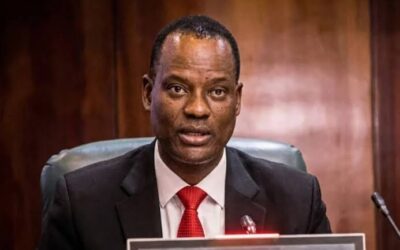
Justice Emeka Nwite convicted Mahmud Usman, known variously as Abu Bara’a, Abbas and Mukhtar and described as the self styled Emir of Ansaru, alongside his deputy Abubakar Abba, also called Mahmud al-Nigeri or Malam Mamuda. The two men reversed their earlier not guilty stance and admitted every count in a 32 count charge filed by the DSS on behalf of the Federal Government, covering terrorism, terrorism financing, kidnapping for ransom, illegal mining to fund terrorism and the fabrication of improvised explosive devices.
The judge, who said he was minded to temper justice with mercy after a plea by defence counsel Bala Dakum, imposed life imprisonment on counts 30 and 31 and 20 years on each of the remaining counts, ordering that the terms run from the dates of arrest. Count 30 alleged that the pair financed terrorism by channelling proceeds of illegal mining in Boko village, Moriki District of Anka Local Government Area in Zamfara State, into the purchase of arms and explosives between 2015 and 2025. Count 31 alleged the same offence using ransom collected from kidnap victims in Katsina and Niger states. Both fall under Section 21 of the Terrorism (Prevention and Prohibition) Act, 2022. Usman had earlier been handed 15 years on a separate illegal mining count.
In his allocutus, Dakum told the court the convicts had shown honest remorse and accepted full responsibility. He described Usman as a 50 year old man with 19 children who suffers from arthritis and wishes to return to school, and Abba as a 34 year old breadwinner with a wife and three children. The lawyer said both men deposed in affidavits that they had been coerced into terrorism, that their families remained under threat from others still at large, and that they were willing to share intelligence on terrorist networks, financing and operations if shown leniency. “They have come to the court in an honest show of remorse and acceptance of full responsibility for their actions,” he said. Usman, addressing the court himself, pleaded for medical treatment, saying, “I am pleading, my lord, under your mercy, to please assist me in our situation.”
Prosecution counsel David Kaswe urged conviction under Section 274 of the Administration of Criminal Justice Act, 2015, arguing that the guilty plea pointed irresistibly to culpability. The court agreed and entered convictions on all counts under the charge marked FHC/ABJ/CR/464/2025.
The DSS, however, made clear it was dissatisfied. A senior official said the Service considered the sentence “too light” given the gravity of the offences and would challenge it. The official linked the defendants’ sudden change of plea to the recent rescue of pupils and teachers seized in Oyo State, stating that their abductors had demanded the unconditional release of the same two commanders. “For the nearly 60 days the kidnappers held on to the pupils and teachers of Oriire, the Ansaru commanders in our custody changed,” the official said, alleging that captives were killed to pressure the government into freeing them.
That reference ties the judgment directly to the abduction of 15 May 2026, when gunmen simultaneously raided Baptist Nursery and Primary School in Yawota, Community Grammar School and L.A. Primary School in the Esiele area of Oriire Local Government Area. According to official accounts, 39 pupils and seven teachers, including a principal, were taken. The assistant headmaster of L.A. Primary School, Joel Adesiyan, was killed during the raid while attempting to escape, and another teacher, Michael Oyedokun, was later killed in captivity, an account the DSS has framed as part of a pressure campaign for the commanders’ release.
The victims regained their freedom on 10 July 2026 after 56 days, in an intelligence led operation coordinated by the General Officer Commanding 2 Division of the Nigerian Army, Major General C.R. Nnebeife, and drawing in the National Counter Terrorism Centre, Defence Headquarters special forces, the DSS, the National Intelligence Agency, the Nigeria Security and Civil Defence Corps, Amotekun, local hunters and vigilantes across the Old Oyo National Park. The Army said 44 people were rescued and eight suspects arrested, while presidential spokesman Bayo Onanuga insisted no ransom or concession was granted. The attack had earlier triggered a strike by the Nigeria Union of Teachers and protests in Ibadan.
Ansaru, formally Jama’atu Ansarul Muslimina fi-Biladis Sudan, emerged in 2012 as a splinter of Boko Haram and later aligned with al Qaeda in the Islamic Maghreb, making it Nigeria’s principal al Qaeda affiliate. National Security Adviser Nuhu Ribadu, who announced the arrests in August 2025, described the operation as one of the country’s most significant counterterrorism breakthroughs, saying the pair ran sleeper cells stretching across Mali, Niger and Burkina Faso and around the Kainji National Park axis linking Niger and Kwara states to the Benin Republic. Ribadu identified Usman as the coordinator of those cells and the mastermind of high profile kidnappings and armed robberies used to fund terrorism, and said Mamuda trained in Libya between 2013 and 2015 under foreign jihadist instructors from Egypt, Tunisia and Algeria, specialising in weapons handling and IED fabrication.
The group’s record is long. Investigators tie it to the July 2022 Kuje prison break, in which more than 600 inmates including 64 Boko Haram suspects escaped, the 2022 assault on the Nigerian Army’s Wawa Cantonment in Niger State, the 2013 abduction of French engineer Francis Collomp in Katsina, and the 2019 kidnapping of Musa Uba, the Magajin Garin Daura.
The case unfolds against a kidnapping economy that has hardened into an industry. The socio political risk firm SBM Intelligence recorded at least 4,722 people abducted in 997 incidents between July 2024 and June 2025, with at least 762 killed and kidnappers demanding roughly N48 billion, of which about N2.57 billion was paid. The National Human Rights Commission documented 3,012 kidnappings and 3,584 killings between January 2024 and April 2025. Schools remain a preferred target. More than 1,600 students have been abducted since the 2014 Chibok kidnapping of 276 girls, dozens of whom are still unaccounted for, and analysts estimate that nearly 600 schoolchildren have been seized since President Bola Tinubu took office in May 2023.
The pattern showed no sign of easing this year. In November 2025 gunmen took 303 students and 12 teachers from St. Mary’s School in Papiri, Niger State, and 25 girls from a school in Maga, Kebbi State, where the vice principal was shot dead. On the same day the Oyo children were abducted, Boko Haram fighters struck a school in the Askira/Uba area of Borno State and seized 42 students. Tinubu reaffirmed a no ransom policy on the tenth anniversary of Chibok, though critics argue enforcement remains inconsistent.
For now, the life terms mark the most decisive judicial outcome yet against Ansaru’s top tier. Whether they stand, or give way to the harsher penalty the DSS is demanding, will be decided at the Court of Appeal.