

After Long Wait, Nigeria Gets New Ambassadors in Washington, London, Paris
President Bola Tinubu on Thursday approved the posting of three ambassador-designates to key diplomatic missions in France, the United States and the United Kingdom, ending a prolonged absence of substantive Nigerian envoys to these strategic nations more than two years after all ambassadors were recalled.
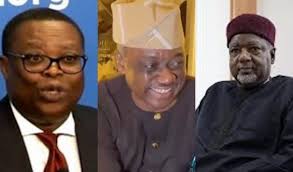
The posting covers Colonel Lateef Are for the United States, Ambassador Ayodele Oke for France, and Ambassador Amin Dalhatu for the United Kingdom, according to an official announcement from the presidency.
The development comes over two years after Tinubu, in September 2023, shortly after assuming office, ordered the recall of all ambassadors from Nigeria’s 109 foreign missions worldwide. The directive affected envoys serving across 76 embassies, 22 high commissions and 11 consulates spanning several continents.
Read Also: Senate Confirms Dambazau, Yakubu, Ugwuanyi, Fani-Kayode, Omokri as Ambassadors
Since that mass recall, most of Nigeria’s diplomatic missions have been run by chargés d’affaires or senior consular officers operating with limited authority to represent the country in formal diplomatic negotiations, bilateral agreements, or high-level state engagements. The prolonged vacuum has raised concerns among diplomatic observers about Nigeria’s ability to effectively project its interests and protect its citizens abroad during this period.
The United States, United Kingdom and France represent three of Nigeria’s most important bilateral relationships, covering economic partnerships, security cooperation, diaspora engagement, and international diplomacy.
The US remains Nigeria’s largest trading partner and a key ally in security matters, particularly in the fight against terrorism in the Sahel and Northeast Nigeria. The UK hosts one of Nigeria’s largest diaspora communities and maintains historical ties dating back to the colonial era, while France’s influence spans francophone West Africa and extends to energy and defence partnerships.
The posting of substantive ambassadors to these missions signals a renewed effort by the Tinubu administration to strengthen diplomatic engagement with Western powers at a time of growing global geopolitical shifts and domestic economic challenges
With Are, who hails from Ogun State, now named as Nigeria’s envoy to Washington, attention has turned to his extensive background in intelligence, security and diplomacy.
Are was commissioned as a Second Lieutenant in December 1974 from the Nigerian Defence Academy as part of Regular Course 12. He graduated among the best ten student officers and was deployed to the Nigerian Army Intelligence Corps after completing his training.
Some of his course mates later rose to national prominence in Nigeria’s security architecture, including the late General Owoye Andrew Azazi, who served as Chief of Defence Staff and later National Security Adviser; Colonel Sambo Dasuki, who became National Security Adviser under President Goodluck Jonathan; and Admiral Ganiyu Adekeye.
Beyond his military training, Are distinguished himself academically. He graduated with a First Class Honours degree in Psychology from the University of Ibadan in 1980, winning the University Senate Prize, Faculty of Social Sciences Prize and the Department of Psychology Prize as the best graduating student. He later obtained a master’s degree in International Law and Diplomacy from the University of Lagos in 1987, further equipping him for diplomatic responsibilities.
Read Also: Diplomatic Spat With US Largely Resolved – FG.
Are’s career trajectory took him through the highest echelons of Nigeria’s intelligence community. He worked closely with General Aliyu Gusau at the Directorate of Military Intelligence during his military career, a relationship that would shape his future appointments.
In 1999, when Gusau was appointed National Security Adviser by President Olusegun Obasanjo, he recommended Are to the president, who subsequently named him Director-General of the State Security Service, then known as the SSS. His appointment attracted public attention at the time, with reports speculating that his shared Owu ethnic ties with Obasanjo may have influenced the decision, though both men dismissed such suggestions as reductive.
Are’s tenure as head of Nigeria’s domestic intelligence agency placed him at the centre of national security decision-making during a critical period of Nigeria’s democratic transition and early challenges including the Niger Delta militancy and emerging sectarian tensions in parts of the country.
In April 2010, Are was appointed Deputy National Security Adviser by President Goodluck Jonathan. Following the resignation of Aliyu Gusau as NSA that same year, Are briefly took over as Acting National Security Adviser. However, Jonathan later relieved him of the position and appointed General Owoye Andrew Azazi as substantive NSA, effective October 4, 2010.
After leaving active government service, Are again came into public spotlight in 2015 following a protracted dispute with the State Security Service over his Ikoyi residence in Lagos, which had been allocated to him as a post-service benefit.
The SSS asked him to vacate the property, a move Are challenged in court, arguing that the residence was part of his legitimate entitlements. At the time, Are told Premium Times that SSS operatives pulled down doors, chased his family away and threw out their belongings despite a subsisting court order restraining such action. A Federal High Court in Lagos subsequently ordered the SSS to reinstate Are and his family to the residence pending the determination of the substantive suit.
The incident highlighted tensions that sometimes arise between retired senior security officials and their former agencies over entitlements and protocol.
Nigeria’s diplomatic service has undergone several reforms and restructuring exercises since independence in 1960. Successive administrations have grappled with balancing political patronage, federal character considerations, and merit in ambassadorial appointments.
President Tinubu’s mass recall of ambassadors in September 2023 followed a pattern seen in previous administrations, where incoming presidents typically recall envoys appointed by their predecessors to make way for fresh appointments aligned with their diplomatic priorities.
However, the extended duration between the recall and the deployment of new ambassadors—over two years—represents an unusually long period by historical standards. Previous transitions typically saw new envoys deployed within 12 to 18 months of recalls.
During the administrations of Presidents Olusegun Obasanjo, Umaru Yar’Adua, Goodluck Jonathan and Muhammadu Buhari, ambassadorial appointments often generated controversy over allegations of favouritism, political compensation, and inadequate consideration of professional diplomatic experience.
The Tinubu administration has faced mounting pressure from civil society groups, retired diplomats, and international partners to fill the vacant positions, particularly in strategic missions where Nigeria’s interests require active high-level representation.