

Amaechi, Obi back demands for mandatory electronic transmission of election results
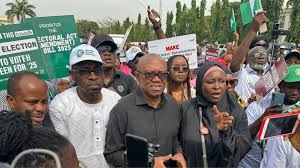
A former Rivers State Governor and ex-Minister of Transportation, Rotimi Amaechi, on Tuesday joined protesters at the National Assembly Complex in Abuja, demanding the mandatory inclusion of real-time electronic transmission of election results in the proposed Electoral Act amendment.
In a video shared on Tuesday by X user #ImranMuhammed, Amaechi was seen standing side by side with protesters clamoring that their demands are met.
The protest comes amid ongoing controversies surrounding the amendment of the Electoral Act (Amendment) Bill ahead of the 2027 general elections, particularly over whether the Independent National Electoral Commission should be mandated to transmit results electronically in real time from polling units.
PUNCHONLINE reports on Monday that former presidential candidate of the Labour Party, Peter Obi, had also joined the protesters, lending his voice to calls for electoral transparency and credibility.
Read Also: Over N300m is Generated from Abuja-Kaduna Train Service Monthly – Amaechi
The unusual scene of protesters carrying mattresses and pillows to the National Assembly drew widespread attention on social media, with many interpreting the gesture as a symbolic declaration that they would not leave until lawmakers acceded to their demands.
Demonstrators, comprising civil society groups, youth organisations and concerned citizens, insist that the proposed legislation must explicitly include the phrase “real-time electronic transmission” to prevent any ambiguity that could undermine electoral integrity.
While many Nigerians have called on lawmakers to make real-time electronic transmission compulsory, some legislators have argued that the provision should remain discretionary, citing logistical and infrastructural concerns.
The Senate has repeatedly denied reports that it rejected the clause, with several clarifications issued to address what it termed “misinformation” about its position on the matter.
However, protesters have maintained their stance, arguing that explicit language is necessary to prevent manipulation and ensure that INEC cannot exercise discretion in transmitting results.
The controversy over electronic transmission of results dates back to previous attempts to reform Nigeria’s electoral system. During the consideration of the 2022 Electoral Act amendment, the issue generated intense debate, with civil society organisations and opposition parties pushing for mandatory electronic transmission while some lawmakers expressed reservations about the country’s technological readiness.
The Electoral Act 2022, which currently governs elections in Nigeria, contains provisions for electronic voting and result transmission, but critics have argued that the language leaves room for INEC to opt out of electronic transmission under certain circumstances.
Section 60(5) of the Act states that “voting at an election and transmission of results under this Act shall be in accordance with the procedure determined by the Commission.” This wording, according to electoral reform advocates, grants INEC too much discretion and could allow the commission to revert to manual transmission methods even when electronic systems are functional.
The 2023 general elections, conducted under the 2022 Electoral Act, were marred by widespread complaints about INEC’s failure to upload results in real time to its Result Viewing Portal, despite assurances from the commission that it would do so. The delays and technical glitches fueled allegations of result manipulation and led to several legal challenges, including petitions at the Presidential Election Tribunal.
The current push for explicit language mandating real-time electronic transmission reflects lingering mistrust in INEC’s handling of the 2023 elections and concerns that similar issues could recur in 2027 if the law does not remove ambiguity.
Amaechi’s participation in the protest is significant given his background as a two-term governor and federal cabinet minister under the administration of former President Muhammadu Buhari. His decision to join street protesters represents a departure from the more traditional forms of political advocacy typically associated with senior political figures in Nigeria.
Read Also: Tinubu Holds Closed-Door Meeting with Wike, Fubara to Ease Rivers Tensions
The former minister has been vocal on national issues since leaving office in 2023, often critiquing aspects of governance and calling for reforms. His presence at the National Assembly protest signals alignment with broader civil society demands for electoral credibility.
Obi’s involvement on Monday also underscores the political dimension of the agitation. As a candidate in the 2023 presidential election, Obi and his party, the Labour Party, were among the most vocal critics of INEC’s performance, particularly its handling of result transmission. His continued engagement with electoral reform advocacy reflects ongoing concerns within opposition circles about the integrity of future elections.
The National Assembly has been considering various amendments to the Electoral Act, but details of the specific provisions under debate have not been made fully public. Lawmakers have held closed-door sessions on the matter, leading to speculation and conflicting reports about the status of the electronic transmission clause.
Senate spokesperson and other legislative officials have issued statements denying that the upper chamber rejected mandatory electronic transmission, but have not provided clear details on the exact wording of the provisions being considered or when the bill will be made available for public scrutiny.
This lack of transparency has fueled frustration among activists and ordinary Nigerians, many of whom believe that electoral reforms should be conducted in an open and consultative manner, with input from all stakeholders.
The argument advanced by some lawmakers against mandatory electronic transmission centres on concerns about infrastructure deficits, particularly in rural and underserved areas where internet connectivity remains poor or nonexistent. They contend that mandating real-time transmission could disenfranchise voters in such areas if technical failures prevent results from being transmitted.
Proponents of mandatory transmission counter that INEC has had years to address infrastructural challenges and that making the provision discretionary undermines accountability. They argue that the commission should be required to demonstrate readiness and invest in necessary infrastructure, rather than being allowed to bypass electronic systems when convenient.
The protests at the National Assembly have been largely peaceful, with demonstrators occupying sections of the complex and engaging in chants, displays of placards, and symbolic acts such as bringing sleeping materials to emphasize their determination to remain until their demands are addressed.
Security personnel have maintained a visible presence at the complex, but no major confrontations have been reported. Lawmakers have continued their legislative activities, though the presence of protesters has drawn media attention and increased pressure on the National Assembly leadership to respond.
Civil society groups involved in the demonstrations have called on the Senate President, Godswill Akpabio, and the Speaker of the House of Representatives, Tajudeen Abbas, to engage directly with protesters and provide clarity on the status of the Electoral Act amendment bill.
As the 2027 general elections draw closer, the question of how results are transmitted is expected to remain a contentious issue. Electoral observers and international partners have consistently emphasized the importance of transparent and verifiable processes in building public confidence in Nigeria’s democracy.
The outcome of the current legislative debate and the response of the National Assembly to public pressure will likely shape the conduct of the next election cycle and influence perceptions of the credibility of Nigeria’s electoral system.