
Amaju Pinnick Rules Out Return to NFF Presidency, Closes Door on Third Term Speculation
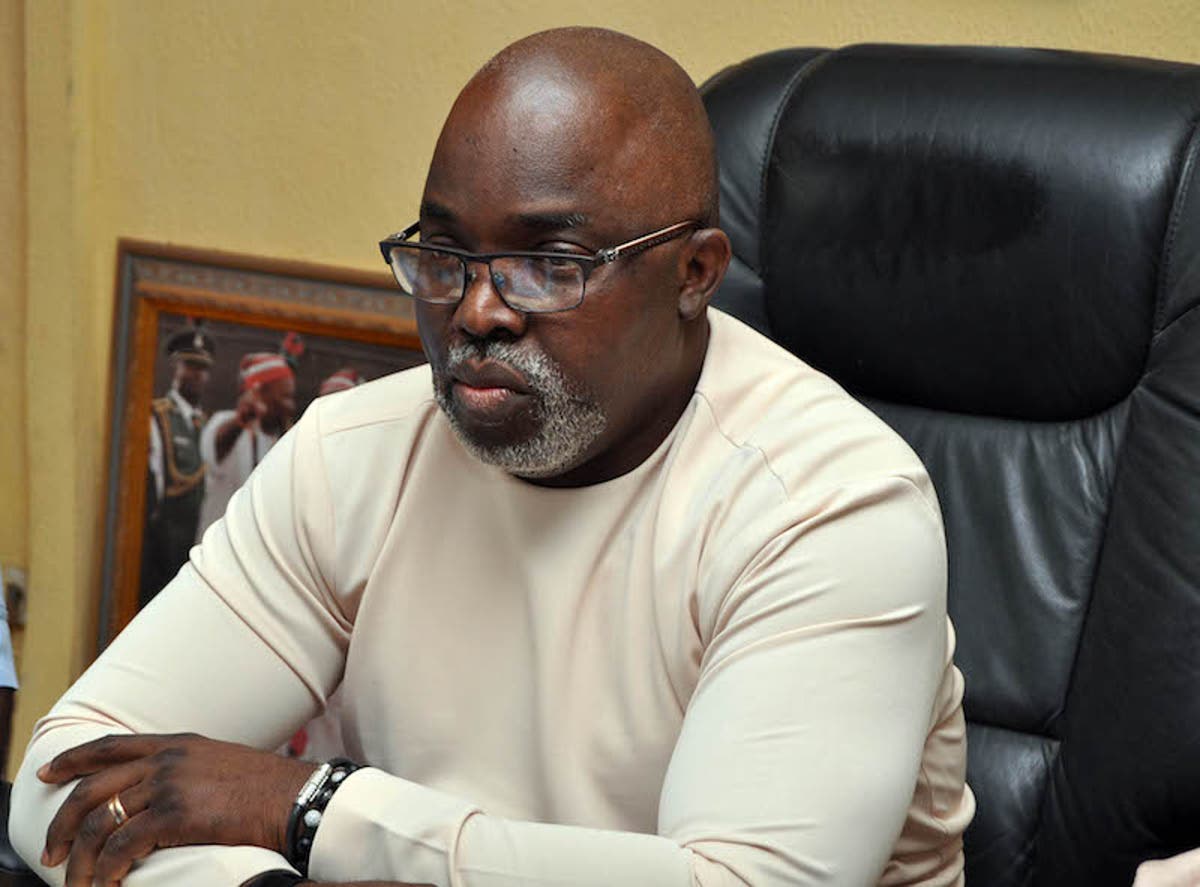
Former Nigeria Football Federation President Amaju Pinnick has definitively ruled out any possibility of returning to lead the country’s football governing body, bringing an end to years of speculation surrounding a potential third term in office.
Speaking in an interview with News Central TV while in Morocco, the 55-year-old football administrator made clear that despite being technically eligible and still relatively young, he has no interest in seeking the NFF presidency again.
“I’m young. I’m 55. I can still be an NFF president. But do I want to be? Never,” Pinnick stated emphatically.
Read Also: 10-Year Soccer Masterplan: A Rescue Mission For Domestic Football
Pinnick served as NFF president for eight years between 2014 and 2022, completing two full terms during which Nigerian football experienced both notable achievements and significant controversies. His tenure also saw him rise to prominence on the continental and global stage, serving as First Vice President of the Confederation of African Football and as a member of FIFA’s Organising Committee for competitions.
Reflecting on his time at the helm of Nigerian football, Pinnick expressed satisfaction with his stewardship and indicated a willingness to contribute to the federation’s progress from outside the presidency.
“I’ve done eight years and I’m okay with it. So it’s moving forward. It’s helping the federation, seeing some of their inadequacies and see how to make it adequate,” he said.
The former administrator’s decision to step away permanently from the NFF presidency comes against the backdrop of a turbulent period that marked the final years of his leadership. His tenure concluded amid legal and political controversies surrounding the federation’s electoral process and questions about constitutional compliance regarding term limits.
Pinnick was succeeded in 2022 by Ibrahim Gusau, chairman of the Zamfara State Football Association, who was elected as the 40th president of the Nigeria Football Federation at the body’s 78th elective congress held in September of that year.
Prior to that election, Pinnick had publicly stated that he was “eligible to run for a third term” based on his interpretation of NFF statutes, a position that sparked considerable debate within Nigerian football circles and drew criticism from government officials and stakeholders.
The controversy centred on the conflict between NFF statutes and the Nigerian constitution regarding tenure limits for sports federation leaders. The Nigerian constitution limits leadership tenure in national federations to two terms, a provision that applies to all sports governing bodies in the country.
Former Minister of Youth and Sports Development Solomon Dalung was among the most vocal critics of any attempt to extend Pinnick’s tenure beyond two terms. Dalung repeatedly argued that “limitation of tenure is already in the constitution” and insisted that governance of Nigerian sports federations should reflect national law rather than relying solely on international statutes or federation-specific provisions.
The tension between NFF statutes and national law highlighted broader questions about the autonomy of sports federations in Nigeria and the extent to which they must comply with domestic governance frameworks, particularly on matters of democratic transition and accountability.
Before Pinnick’s eventual departure, the Federal Government intervened directly to ensure the elective congress proceeded in accordance with established regulations and constitutional requirements. The then Minister of Youth and Sports Development, Sunday Dare, instructed the NFF to convene elections at the expiration of the board’s term in 2022 and mandated amendments to the federation’s statutes to accommodate broader stakeholder representation and ensure compliance with national law.
The government also facilitated the withdrawal of several court cases that had threatened to delay or derail the electoral process, reinforcing the importance of a legally compliant and orderly transition of leadership within the football federation.
Pinnick’s eight-year tenure as NFF president was marked by a mix of accomplishments and challenges. Under his leadership, Nigeria’s senior men’s national team, the Super Eagles, qualified for two FIFA World Cups—Russia 2018 and Qatar 2022—and reached the semi-finals of the 2019 Africa Cup of Nations in Egypt, the team’s best performance at the tournament since finishing third in South Africa in 2010.
Read Also: NNPP Disowns Planned Protest Against INEC, Describes Organisers as Expelled Members
The period also saw increased attention to the development of youth and women’s football, with Nigeria’s youth teams achieving notable results at global competitions. The Golden Eaglets won the 2015 FIFA U-17 World Cup in Chile, while the Super Falcons maintained their dominance in African women’s football, qualifying for multiple Women’s World Cups.
However, Pinnick’s administration also faced criticism over issues including financial transparency, management of national team preparations, and the handling of contractual arrangements with sponsors and technical partners. Several legal disputes and public disagreements with coaches, players, and stakeholders marked the latter part of his tenure.
Despite these controversies, Pinnick’s influence extended beyond Nigeria’s borders. His elevation to the position of First Vice President of CAF and his involvement in FIFA structures reflected his growing stature within African and global football governance. He played a visible role in continental football politics and was often seen as a bridge between Nigerian football and the broader African football community.
His decision to rule out a return to the NFF presidency suggests a desire to move beyond the controversies that characterised the end of his tenure and to allow the current leadership under Gusau to chart its own course without the shadow of potential succession battles.
Since taking office in 2022, Gusau has faced his own set of challenges, including managing the expectations surrounding the Super Eagles, addressing financial constraints within the federation, and navigating the complexities of Nigerian football politics. The team’s recent climb to 26th in the FIFA rankings—the highest position in 16 years—and their third-place finish at the 2025 Africa Cup of Nations have provided some positive momentum for the current administration.
Pinnick’s public declaration that he will not seek another term may also serve to reduce speculation and allow the NFF to focus on long-term planning and institutional stability. The history of Nigerian football administration has been marked by frequent leadership changes, legal disputes, and political interference, all of which have at times undermined the federation’s ability to execute strategic plans consistently.