


Artemis 2 Crew Breaks Deep-Space Distance Record
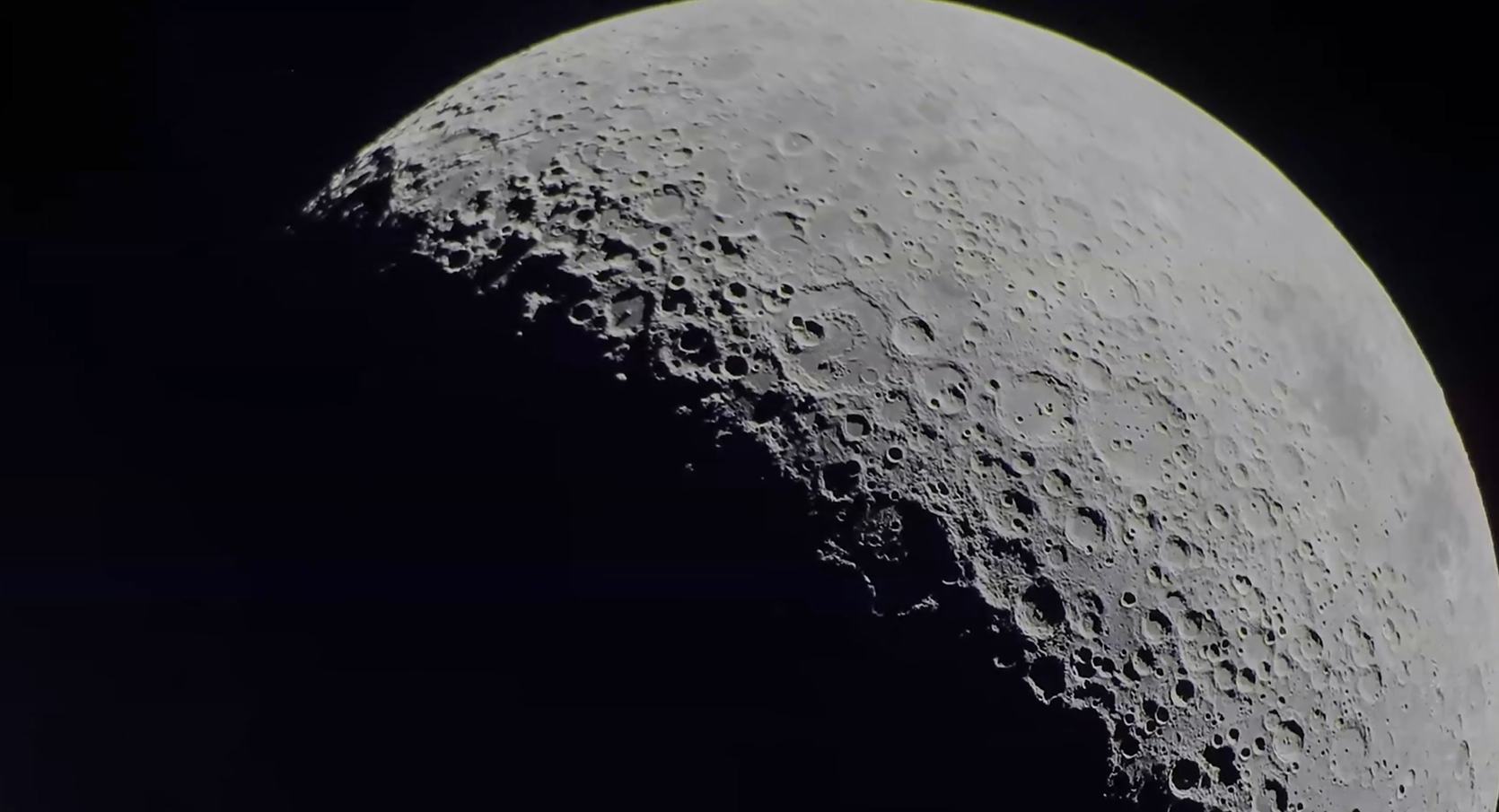
The four-member crew of NASA’s Artemis 2 mission has travelled further from Earth than any human in history, eclipsing a record held for over half a century. On Monday, the Orion spacecraft reached a distance of 406,711 kilometres from our home planet. This achievement surpasses the previous milestone of 400,171 kilometres set by the ill-fated Apollo 13 mission in 1970. The crew, Victor Glover, Christina Koch, Reid Wiseman, and Jeremy Hansen, is now on the final leg of a historic lunar loop.
The record-breaking moment occurred as the spacecraft entered the Moon’s sphere of gravitational influence. At this tipping point, lunar gravity began to pull on the Orion capsule more strongly than Earth’s. This trajectory allowed the astronauts to become the first humans to see portions of the lunar far side with their own eyes. During the flyby, the crew also witnessed a rare solar eclipse from their unique vantage point in deep space.
This mission marks several social and international milestones for the American space programme. Christina Koch is the first woman on a lunar mission, while Victor Glover is the first person of colour to travel to the Moon. Jeremy Hansen also carries the distinction of being the first Canadian to leave Earth’s orbit. Despite the cramped quarters of the Orion capsule, the crew reported high spirits as they began their 2.3-million-kilometre journey back to Earth.
The astronauts used their time near the lunar surface to propose names for two previously unnamed craters. One is to be named “Integrity” in honour of their spacecraft. The second, a more personal tribute, is named “Carroll” to honour the late wife of mission commander Reid Wiseman. These names will be formally submitted to the International Astronomical Union for official recognition once the crew returns.
NASA Administrator Jared Isaacman noted that the mission represents a restoration of American capability to achieve the “near-impossible.” The Artemis 2 flight path follows a complex figure-of-eight trajectory designed to test the systems required for a future lunar landing. The United States remains the only country to have landed humans on the Moon, a feat last achieved by the Apollo 17 mission in 1972.
The mission is not yet over, as the most dangerous phase, re-entry, remains. The Orion capsule is scheduled to splash down in the Pacific Ocean off the coast of San Diego this Friday. If successful, the mission will pave the way for Artemis 3, which aims to return humans to the lunar surface. For now, the crew is focused on a safe return, having pushed the boundaries of human presence in the solar system.