


Avalanche Derails Swiss Regional Train; Five Injured
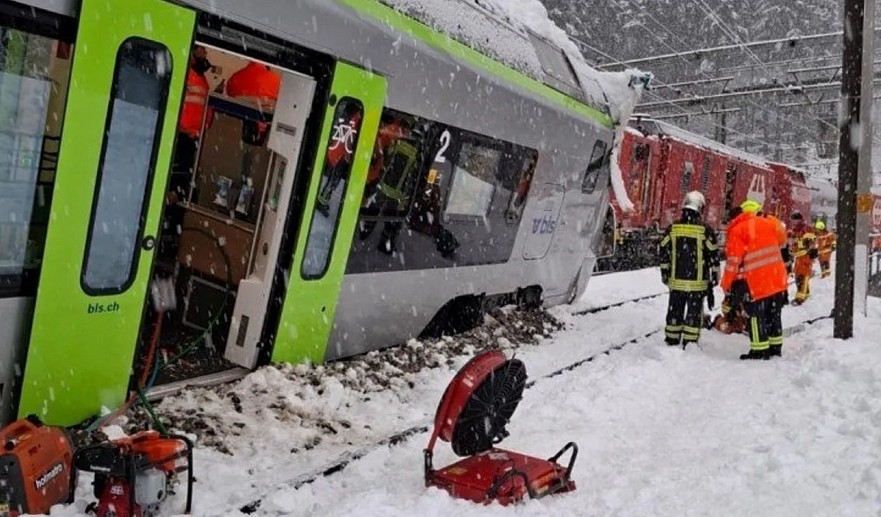
GOPPENSTEIN — A regional passenger train derailed in the early hours of Monday, February 16, 2026, after a massive avalanche swept across the railway tracks in southern Switzerland. The accident occurred at approximately 7:00 a.m. local time near the mountain hamlet of Goppenstein, a vital transport hub at the exit of the Lötschberg tunnel. Valais cantonal police confirmed that five individuals sustained injuries, with one victim requiring urgent hospitalization in Sion. At the time of the impact, 29 people were on board the RegioExpress service traveling from Spiez toward Brig. Consequently, rescue teams utilized helicopters and ambulances to evacuate the remaining passengers through heavy snowfall and freezing temperatures.
The derailment followed a period of extreme meteorological instability, as the region remains under a Level 4 avalanche warning—the second-highest alert level. Initial police findings suggest that a torrent of snow crossed the rails just moments before the train emerged from the tunnel. Furthermore, the federal rail operator, CFF, has suspended all traffic between Goppenstein and Brig until at least Tuesday morning. This closure severs a primary north-south artery through the Alps, forcing commuters to seek alternate routes via the Grimsel Pass. Significantly, investigators from the public prosecutor’s office arrived at the cordoned-off scene to determine if mechanical failure or environmental factors triggered the crash.
The disaster at Goppenstein is not an isolated weather event in the Swiss Valais canton this week. An avalanche previously buried a section of the main road linking the Lötschental valley just last Thursday, disrupting the vital car-shuttle service. In a related development, authorities in the nearby municipality of Orsières issued an evacuation order on Monday following reports of severe winds and torrential rain. While it is true that Switzerland maintains the world’s most extensive rail network, the increasing frequency of “extreme winter events” is testing its structural resilience. Notably, experts at the WSL Institute for Snow and Avalanche Research warn that wind-drifted snow remains highly unstable across the southern slopes.
Furthermore, rail enthusiasts often celebrate the Swiss system for its exceptional punctuality and steep, picturesque climbs. Indeed, government statistics show that the Swiss are the heaviest rail users in Europe by kilometers traveled per person. Above all, the safety record of the network has improved over decades, despite the inherent risks of Alpine geography. Nevertheless, today’s derailment echoes a similar catastrophe in 2023, where two trains came off the tracks near Bern during a fierce storm. Subsequently, the Swiss Federal Railways must now re-evaluate its “all-weather” operational protocols as the climate shifts toward more unpredictable patterns.
Finally, emergency services have advised journalists and travelers to avoid the Goppenstein area due to a high risk of secondary avalanches. Therefore, the focus now shifts to the recovery of the derailed carriages and the restoration of the Lötschberg line. As a result of this morning’s impact, the global standard for rail safety faces a rigorous and public investigation. Accordingly, the findings of the Swiss authorities will likely influence mountain rail management across the European continent.